Health Risks Increase with Long-Term Exposure
Suspicions Raised Over Use of Cheap Chemicals Instead of Tea Extract
Sanitary Pad Company Denies Safety Concerns
A controversy has erupted after a popular Chinese sanitary pad brand was found to contain harmful chemicals exceeding safety standards.
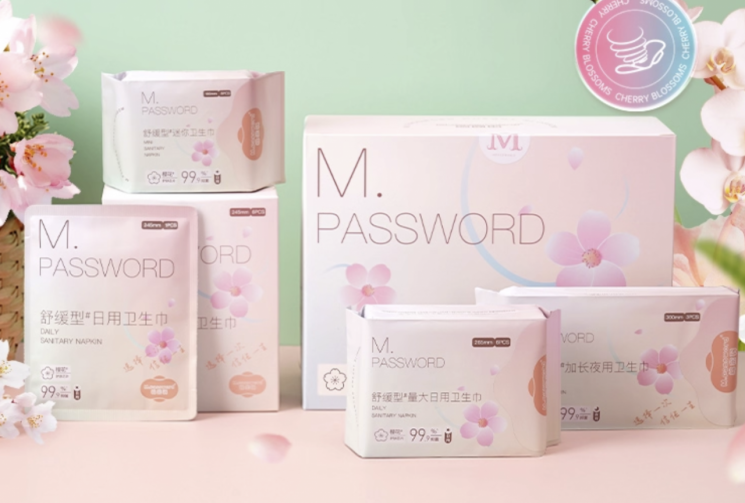 A controversy has arisen after excessive levels of thiourea were detected in sanitary pads from a Chinese hygiene product brand. Taobao website
According to reports from China’s National Business Daily and other outlets on July 25, a group of consumers commissioned a third-party agency to test products from the sanitary pad brand “Mianmima” that were sold between September 2019 and January 2025. The results showed that several products contained high concentrations of thiourea. In particular, the “Mianmima Sakura·Soothing Sanitary Pad” was found to contain thiourea at a concentration of 16,653.4679μg/g.
Thiourea is an organic sulfur compound widely used in industrial, agricultural, and pharmaceutical fields. In China, it is listed in the “Catalogue of Hazardous Chemicals.” The International Agency for Research on Cancer (IARC) classifies it as a Group 3 carcinogen. Long-term exposure is known to increase health risks. Animal studies have confirmed abnormalities in thyroid function, liver toxicity, reproductive toxicity, and immune toxicity.
According to data provided by a consumer group, hundreds of consumers who used Mianmima reported experiencing adverse reactions after using the product. Among them, more than 30 were diagnosed with thyroid cancer. Some consumers reported symptoms such as redness, itching, inflammation, gynecological disorders, urticaria, and thyroid diseases. In addition, among consumers who used the sanitary pads before pregnancy, cases of early miscarriage, abnormal pregnancy, and neonatal hyperthyroidism have also been reported.
Mianmima is a hygiene product brand launched in 2017 by Xinba, a well-known live commerce host in China. Xinba promoted it as “the first product I personally participated in developing.” Mianmima has emphasized that its sanitary pads contain antioxidant ingredients extracted from tea, and by 2023, it had expanded its distribution channels to over 600 offline stores across China.
According to China Daily, “This brand recorded 549,000 sales and over 100 million yuan (approximately 19.2 billion KRW) in revenue as of August 2023.”
It has been reported that thiourea was most frequently detected in the inner part of the sanitary pads, which is designed to provide antioxidant effects. Xinnet News, citing experts, reported, “Thiourea offers antioxidant effects and is very inexpensive,” and suggested, “It is possible that thiourea was used instead of the more expensive ‘tea extract (tea polyphenol)’ that should have originally been included.”
Mianmima has refuted the allegations, stating that there are no safety issues with its products. Mianmima told Jiemian News, “Immediately after the issue was raised, Mianmima voluntarily submitted its products to Shandong city authorities for inspection, and the results met all relevant regulations and standards.” According to the test report from the Shantou City Quality Measurement Supervision and Inspection Institute in Guangdong Province, which was disclosed by Mianmima, sanitary pads tested in May met all relevant hygiene standards, and no thiourea was detected.
Mianmima also stated in an official announcement, “We are responding responsibly to allegations raised by some netizens regarding the detection of thiourea in specific products,” and emphasized, “According to expert safety assessments, the products are not harmful to the human body under normal and foreseeable usage conditions.” The company added, “We voluntarily requested an inspection from the Market Supervision Administration of Chenghai District, Shantou City, where our factory is located, and the results were deemed ‘compliant.’”
© The Asia Business Daily(www.asiae.co.kr). All rights reserved.

















