Precedent on "Waiver of Benefit After Acknowledging Debt Post-Statute of Limitations" Changed After 58 Years
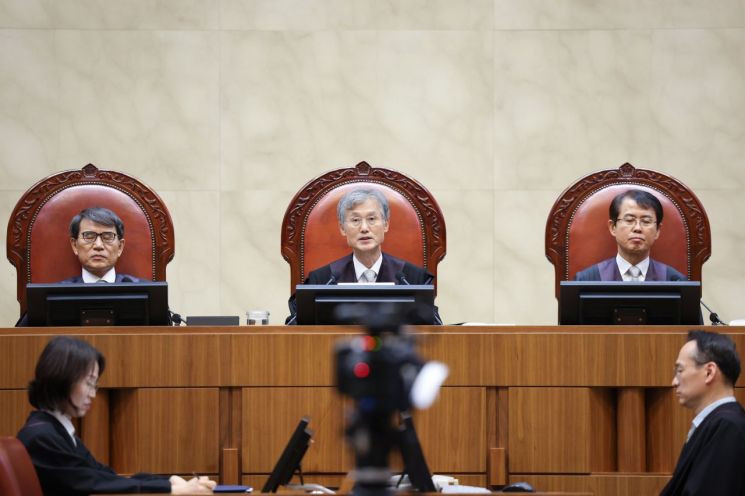
The Supreme Court Grand Bench has ruled that even if a debtor partially repays a debt after the statute of limitations has expired, this should not be immediately interpreted as an expression of intent to waive the benefit of the completed statute of limitations. This decision changes a precedent that had stood for 58 years.
On July 24, the Supreme Court Grand Bench (Presiding Justice Kwon Youngjun) overturned the appellate court's partial ruling in favor of the plaintiff in a distribution objection lawsuit filed by A against B, and remanded the case to the Incheon District Court.
A borrowed a total of 240 million won from B in four installments. After the statute of limitations had expired on the first and second loans, A repaid 18 million won to B. Subsequently, during an auction procedure involving A's real estate, a distribution table was drawn up in which B was allocated a total of approximately 461 million won, including the principal of 240 million won and interest of 221 million won. In response, A filed a distribution objection lawsuit against B, arguing that "the distributed amount exceeds the actual loan amount."
Previously, the first trial partially ruled in favor of A, ordering the distribution amount to B to be corrected from 461 million won to 422 million won. In the second trial, A argued that "the interest claims on the first and second loans had expired due to the statute of limitations." However, the appellate court did not accept A's argument, stating, "Since the plaintiff partially repaid the loans after the statute of limitations on the interest of the first and second loans had expired, it should be regarded as a waiver of the benefit of the completed statute of limitations." The appellate court then corrected the distribution amount to B to approximately 443 million won.
However, the Supreme Court ruled that the appellate court must reconsider its decision.
The Supreme Court stated, "It is generally difficult to say that a debtor was aware of the completion of the statute of limitations merely because the limitation period has passed," and added, "Whether the debtor was aware of the completion of the statute of limitations must be determined by comprehensively considering all relevant circumstances." The court continued, "It is unusual for a debtor, knowing the benefit of being released from the debt due to the completion of the statute of limitations, to voluntarily waive that benefit and assume the debt again," and added, "It is also difficult to say that the presumption of intent to waive the benefit of the statute of limitations is based on common experience."
The Supreme Court stated, "The February 1967 ruling (66Da2173), which presumed that a debtor who acknowledged a debt after the statute of limitations had expired was aware of the completion and had waived the benefit, is hereby revised to the extent that it conflicts with this decision."
Regarding this majority opinion, Justices Noh Taekae, Oh Seokjun, Eom Sangpil, Lee Sugyeon, and Ma Yongjoo presented a separate opinion, stating, "The issue does not lie with the presumption principle itself, but rather with the appellate court's misinterpretation and misapplication of the law; therefore, there is no need to change the precedent regarding the presumption principle."
© The Asia Business Daily(www.asiae.co.kr). All rights reserved.
![Clutching a Stolen Dior Bag, Saying "I Hate Being Poor but Real"... The Grotesque Con of a "Human Knockoff" [Slate]](https://cwcontent.asiae.co.kr/asiaresize/183/2026021902243444107_1771435474.jpg)
















