Strengthening Infrastructure for High-Difficulty and Rare Surgeries
New Inpatient Hospice Reimbursement Introduced for Western Medicine Departments in Korean Medicine Hospitals
Expanded Insurance Coverage for Assistive Devices Including Electric Wheelchairs for Severely Disabled Children
The reimbursement rates for high-difficulty head and neck surgeries, which have been relatively undervalued despite their complexity?such as intraoral tumor excision and tongue cancer surgery?will be increased by up to 80%. Additionally, the government will raise the intensive care unit hospitalization fees for acute psychiatric disorders, where early intervention is crucial.
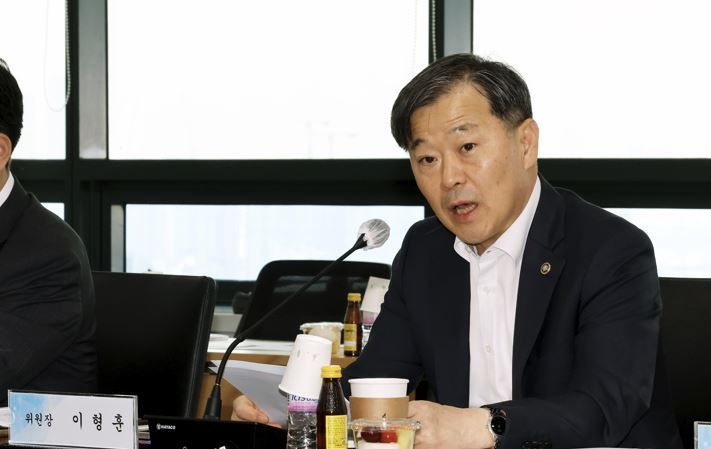 Lee Hyunghun, Second Vice Minister of Health and Welfare, is speaking at the "13th Health Insurance Policy Deliberation Committee in 2025" held on the 24th. Ministry of Health and Welfare
On July 24, the Ministry of Health and Welfare announced that it held the '13th Health Insurance Policy Review Committee Meeting for 2025' and approved measures including: strengthening compensation for high-difficulty head and neck surgeries, enhancing initial treatment compensation for patients with acute psychiatric disorders, and introducing new hospice reimbursement rates for Western medicine departments in Korean medicine hospitals.
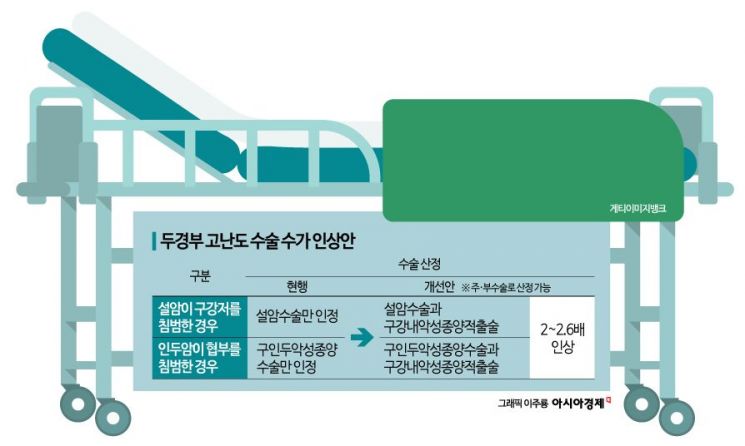
The government will first increase the relative value scores for 24 types of head and neck cancer surgeries?including intraoral tumor excision, laryngectomy, hypopharyngectomy, and tongue cancer surgery?raising reimbursement rates by 20% to 80%. For head and neck cancer surgeries that require additional procedures due to invasion of adjacent areas, the payment criteria will be improved to reflect the need for extra personnel and time. For example, when a tertiary general hospital performs a malignant oropharyngeal tumor surgery, the reimbursement rate will rise from the current 920,000 won to 1,660,000 won. In the case of a total tongue resection for tongue cancer, the current rate is about 2,650,000 won, but going forward, if intraoral malignant tumor excision is recognized as a primary and secondary surgery, the rate will increase to approximately 5,150,000 won.
Considering the varying degrees of difficulty and severity, such as airway obstruction, the rates for five types of head and neck surgeries?including incision and drainage of pharyngeal abscess (transcervical)?will also be increased by 15% to 55%. Additionally, for surgeries that reconstruct defects after head and neck cancer surgery, a new reimbursement rate will be established for 'free flap (skin graft) surgery using a perforator.'
A Ministry of Health and Welfare official stated, "We are continuously strengthening compensation for essential medical fields that have been undercompensated because the difficulty and characteristics of the surgeries were not properly reflected," and added, "By enhancing compensation for high-difficulty head and neck surgeries and reconstructive surgeries following these procedures, we will help maintain the infrastructure for these rare surgical fields."
Measures to strengthen compensation for initial treatment of acute psychiatric disorders were also discussed. This is in consideration of the high input of medical resources and the high complexity of treatment required for acute psychiatric care.
The government will introduce a new reimbursement rate for 'intensive care unit hospitalization for acute psychiatric disorders,' which can be claimed for up to 30 days, to support the proper operation of intensive care units installed within closed wards. In addition, compensation for some items under the current psychotherapy fees will be strengthened to encourage active use of medical resources and treatment interventions for patients in the early stages of illness. The current 'isolation protection fee' among psychiatric reimbursement items, which could be misunderstood as a fee for restraint or compulsion, will be renamed to 'psychiatric stabilization room management fee.'
In Western medicine departments within Korean medicine hospitals, a new inpatient hospice reimbursement rate has been established. The relative value score will be applied so that the amount is equal to the current fixed-rate inpatient hospice reimbursement for hospital-level institutions. Including newly participating Korean medicine hospitals, there are now a total of 103 inpatient hospice specialty institutions nationwide.
The Ministry of Health and Welfare stated, "With the introduction of this new reimbursement, we have established a foundation for newly designated inpatient hospice specialty institutions to provide stable hospice services," and added, "We will continue to ensure high-quality hospice services are available, taking into account the increasing demand for medical care among terminal patients and others."
At the committee meeting, measures to expand insurance coverage for assistive devices necessary to promote the growth, development, treatment, and health improvement of children with severe disabilities were also discussed. Following last year's inclusion of standing frames for children to maintain upright posture, this year, insurance coverage has been expanded to include torso-support walking aids, strollers for people with disabilities, and electric wheelchairs for children. As a result, when purchasing these devices?which range in price from 1,500,000 to 3,800,000 won?the out-of-pocket cost for patients will be reduced to a maximum of 10%.
Additionally, starting from July 1, the government launched a support program for 175 regional general hospitals equipped with comprehensive medical capabilities and essential functions such as emergency care. From next month, the government will further expand additional payments for emergency medical procedures. Through these measures, the government aims to strengthen the emergency surgical capabilities of regional hospitals, ensuring that local residents can receive necessary surgeries promptly within their communities, thereby enhancing essential medical capacity.
According to the Ministry of Health and Welfare, all 47 tertiary general hospitals participated in the structural reform support program for tertiary general hospitals, which began in October last year. The five key areas of reform?restoring capabilities focused on severe cases, strengthening clinical cooperation, operating with a specialist-centered system, and providing intensive residency training?are being implemented without delay. In March of this year alone, these tertiary general hospitals performed a total of 40,239 major surgeries, an increase of about 13,000 cases compared to before the reform (September 2024). Outpatient visits increased by 5%, and inpatient admissions increased by 13%, indicating an expansion of care focused on severe cases.
© The Asia Business Daily(www.asiae.co.kr). All rights reserved.













