KDCA: 52% Fatality Rate Among Those Aged 70 and Over
"Special Caution Needed for the Elderly and Children"
As climate change extends the summer season, water-related accidents, which were previously concentrated in July and August, are now frequently occurring in June and September as well. More than one in four patients brought to the emergency room after drowning die, and among the elderly, more than half lose their lives.
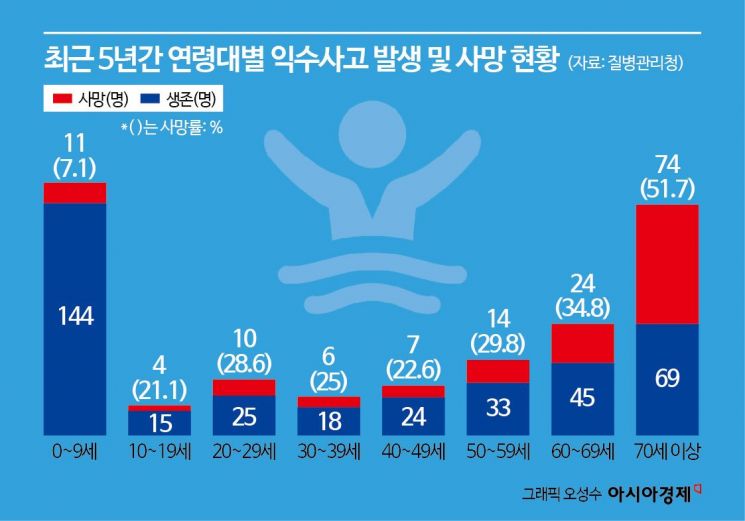
On July 24, the Korea Disease Control and Prevention Agency (KDCA) announced that an analysis of data from 23 hospitals participating in the National Emergency Department-based Injury In-depth Surveillance (EDIIS) revealed that, between 2020 and 2024, a total of 523 patients visited emergency rooms due to drowning accidents, and 150 of them, or 28.7%, died.
Among the 143 elderly patients aged 70 or older who were brought in due to drowning accidents, 51.7% (74 individuals) died, indicating that drowning accidents among those aged 70 and above are increasing as the population ages.
Of the patients admitted to emergency rooms for drowning accidents, 385 were male (73.6%), which is about 2.8 times more than the 138 female patients (26.4%). By age group, children aged 9 or younger accounted for the largest proportion at 29.6%, followed by those aged 70 or older at 27.3%, and those aged 60 to 69 at 13.2%.
Drowning accidents mainly occurred during the summer (36.9%), when water-related activities increase, and were most frequent on weekends, with 20.1% occurring on Saturdays and 18.5% on Sundays. The most common time of occurrence was between 12:00 and 18:00 (38.4%), followed by 18:00 to 24:00 (33.3%).
The pattern of drowning accidents is also changing due to climate change. From 2015 to 2019, drowning accidents in July and August accounted for 37.1% of the total, but between 2020 and 2024, this proportion decreased to 26.2%. Meanwhile, the proportion of drowning accidents in June and September increased from 14.1% to 18.0% during the same period.
Regarding the time of accidents, in the past, 45.0% occurred in the afternoon (12:00 to 18:00), while only 14.3% occurred in the morning (6:00 to 12:00). Recently, these figures have shifted to 38.4% and 20.1%, respectively, indicating an increase in morning drowning accidents. As the hot season lengthens, the period and time range requiring caution for drowning accidents has expanded (now June to September), and the KDCA emphasizes that careful attention and management are now necessary even in the morning.
The majority of drowning accidents occurred during leisure activities (45.9%) and daily life (35.0%). Most accidents took place outdoors, such as at the sea or rivers (46.1%), but a significant number also occurred at public facilities like bathhouses and water parks (30.2%), as well as at sports facilities such as swimming pools (8.8%).
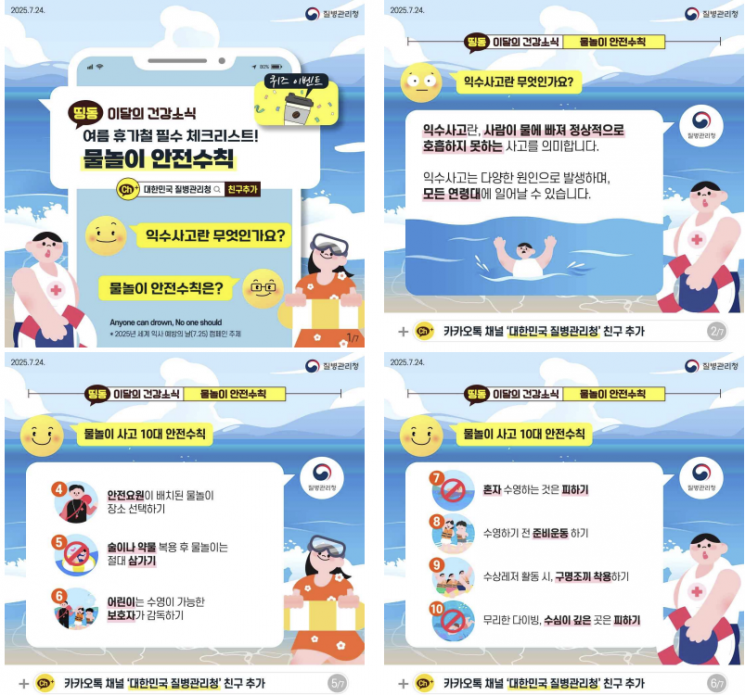
The KDCA, anticipating that this summer's heatwave will be prolonged, urged the public to exercise particular caution against such drowning accidents during the school vacation and holiday season. The agency has distributed leaflets and card news containing safety guidelines, emergency response methods, and checklists to prevent drowning accidents.
Lim Seungkwan, Commissioner of the KDCA, stated, "Drowning accidents are highly fatal, with 28.7% of patients admitted to the emergency room dying. Therefore, it is essential to always follow safety guidelines." He emphasized, "In particular, pay close attention to safety management to prevent drowning accidents among children and the elderly, and never engage in water activities after consuming alcohol or drugs."
© The Asia Business Daily(www.asiae.co.kr). All rights reserved.
![User Who Sold Erroneously Deposited Bitcoins to Repay Debt and Fund Entertainment... What Did the Supreme Court Decide in 2021? [Legal Issue Check]](https://cwcontent.asiae.co.kr/asiaresize/183/2026020910431234020_1770601391.png)
















