KERI Proposes New Industry for Recycling End-of-Life Batteries
"Strategy to Secure Both Growth Engines and Resource Security"
There has been a call to secure national and industrial competitiveness by internalizing the rare earth supply chain through the recycling of end-of-life electric vehicle (EV) batteries. EV batteries, which began commercial use in 2013, are expected to reach the end of their lifespan by 2030.
On July 24, the Korea Economic Research Institute (KERI) released this analysis through its "New Industry Proposal Series." According to KERI, the number of mobility vehicles worldwide with expired battery life is projected to increase from 170,000 units in 2023 to 4.11 million units in 2030, and 42.27 million units in 2040. Consequently, the global end-of-life battery market is expected to expand significantly from $10.8 billion in 2023 to approximately $208.9 billion in 2040, growing at an average annual rate of 17%.
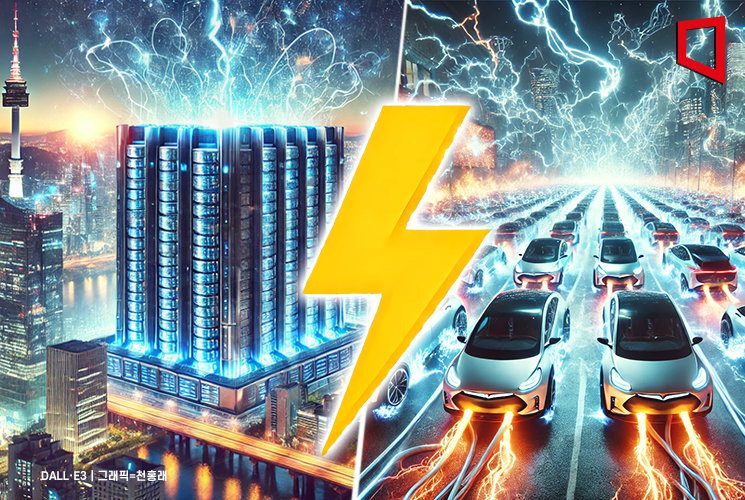
Among the minerals used in EV batteries, lithium, cobalt, nickel, and graphite are mainly produced and refined in a few countries such as Australia and China. These materials are subject to supply and demand uncertainties in the event of geopolitical risks, including the US-China power struggle. Therefore, policies for recycling end-of-life batteries are meaningful in terms of stabilizing supply chains.
Major countries are already actively pursuing end-of-life battery recycling policies. The United States is promoting battery recycling through measures such as the Inflation Reduction Act (IRA) tax incentives. In 2019, the US Department of Energy (DOE) set a long-term goal to collect 90% of discarded or end-of-life lithium-ion batteries and reintegrate key materials into the supply chain. The European Union (EU), through the Battery Regulation adopted in 2023, plans to mandate the use of recycled materials starting in 2031.
In contrast, South Korea's policies and budget related to end-of-life battery recycling are limited compared to major countries. The total budget for the "EV End-of-Life Battery Collection System Support Project," promoted by the Korea Environment Corporation since last year, is 1.5 billion won (up to 100 million won per year per company, covering up to 50% of equipment purchase costs), which is significantly lower than that of major countries such as the United States (4 trillion won) and Japan (1.8 trillion won).
KERI proposed three major policy tasks to strengthen competitiveness in the future end-of-life battery market: support for public procurement, the establishment of dedicated item classification (HS) codes, and the improvement of post-use battery management systems.
Lee Sangho, head of KERI's Economic and Industrial Division, stated, "Recycling end-of-life batteries leads to the establishment of a battery circular ecosystem, enabling the simultaneous achievement of securing new growth engines and strengthening resource security. The government should solidify the domestic ecosystem and secure a competitive edge in the restructuring of global supply chains through bold financial and institutional support."
© The Asia Business Daily(www.asiae.co.kr). All rights reserved.
![Clutching a Stolen Dior Bag, Saying "I Hate Being Poor but Real"... The Grotesque Con of a "Human Knockoff" [Slate]](https://cwcontent.asiae.co.kr/asiaresize/183/2026021902243444107_1771435474.jpg)










