Urgent Need for Structural Policy Improvements to Address Low Birth Rate
Strengthening Incentives Directly Linked to Childbirth
Designing Policies with Consistency and Sustainability
Two-Week Parental Leave and Higher Housing Points for Children...
Concrete Solutions for Low Birth Rate
While support systems for housing and work-life balance have achieved some results in addressing the low birth rate, there are concerns that the current policies have limitations and need to be improved to better reflect real-world needs. Suggestions have been made to strengthen incentives that are directly linked to childbirth, moving beyond simple support measures, such as introducing short-term parental leave on a weekly basis or differentiating housing application points based on the number of children.
On July 23, the National Assembly Budget Office presented the current status and improvement plans for low birth rate support policies in its reports on the "Evaluation of Work-Life Balance Support Policies" and the "Comprehensive Evaluation of Housing Support Projects."
According to the analysis, the Budget Office positively assessed both policies in terms of their approach and effectiveness. Since the implementation of work-life balance support measures, both men and women have increasingly taken parental leave, with the rate for men rising from 3.0% in 2019 to 7.4% in 2023. Expenditures on maternity protection benefits, such as parental leave pay, have also continued to increase. In terms of housing support, the proportion of newlywed couples with children who own homes (58.3%) is higher than that of childless couples (48.6%), and the average number of children per couple is 0.70, compared to 0.57 for couples without homes. These findings indicate that housing stability support policies can contribute to marriage and childbirth.
However, clear limitations remain. The actual utilization rate of work-life balance systems is still low, especially among employees of small and medium-sized enterprises (SMEs). In terms of housing support, performance in areas such as jeonse rental housing and public sale sharing-type housing has been poor.
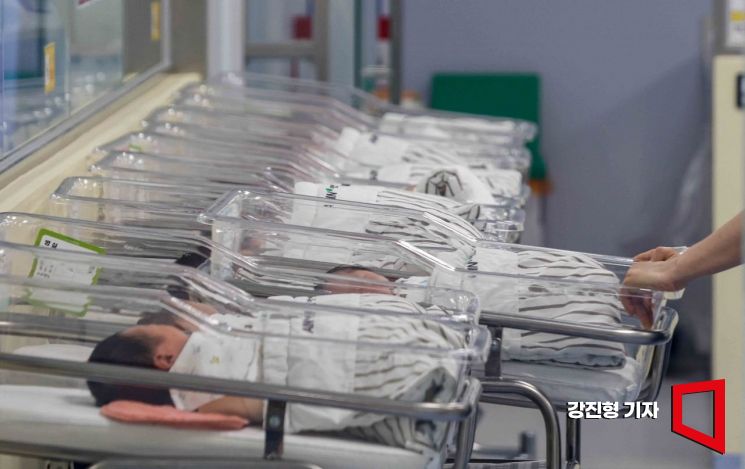 Newborns lie in beds in the neonatal intensive care unit at Ain Hospital in Michuhol District, Incheon. 2025.2.27. Photo by Kang Jinhyung
The Budget Office pointed out that improvements are needed due to limitations in practical effectiveness, consistency, sustainability, and fairness. In this regard, it proposed legislative measures to allow short-term parental leave, such as "two-week parental leave once a year." Currently, the law only allows parental leave benefits to be received if the leave is taken for at least 30 days. Previously, the Presidential Committee on Aging Society and Population Policy and related ministries had suggested flexible operation of the parental leave system, including the option of two-week parental leave once a year, to meet short-term childcare needs arising from temporary closures of daycare centers or school vacations.
Other suggestions included supporting the return to work for women who have experienced career interruptions, strengthening the management of reduced working hours during the childcare period by operating business management system support projects, and increasing incentives for employers to encourage the activation of SMEs. Additionally, measures were proposed to increase the utilization of parental leave and flexible work arrangements among non-regular workers, whose participation rates remain low.
Regarding housing support, proposals included applying differentiated points in the housing subscription system by assigning higher scores for direct descendants (children), as well as raising the loan-to-value (LTV) ratio according to the number of children (for example, 75% for one child, 80% for two children). Other suggestions involved making the debt service ratio (DSR) more flexible by calculating annual income based on expected post-return income or reflecting past average income to account for reduced income during childbirth and childcare. Overall, the aim is to operate the system more flexibly for specific groups (such as those with more children), so as to both manage the household debt ratio and contribute to solving the social challenge of low birth rates.
Through the two reports, the Budget Office stated, "Frequent policy changes related to the low birth rate undermine market predictability and discourage private sector participation, reducing policy effectiveness," adding, "We urge the creation of an environment where the private sector can participate with confidence through the design of consistent and sustainable systems." The office also emphasized the importance of identifying groups and areas not currently covered by the system, such as non-regular workers and SMEs, and making efforts to minimize these gaps.
© The Asia Business Daily(www.asiae.co.kr). All rights reserved.












