Similar Preferences for Domestic and Overseas Travel
Satisfaction Higher for "Overseas Travel"
"Policies Needed to Manage Overcharging"
A recent survey on travel preferences during the vacation season found that the preference for domestic and overseas travel was similar in terms of numbers. Younger respondents showed a stronger preference for overseas travel, while the main reason for dissatisfaction with domestic travel was cited as "high prices at tourist destinations." The analysis suggests a need for both regulation of "overcharging" and development of region-specific tourism content.
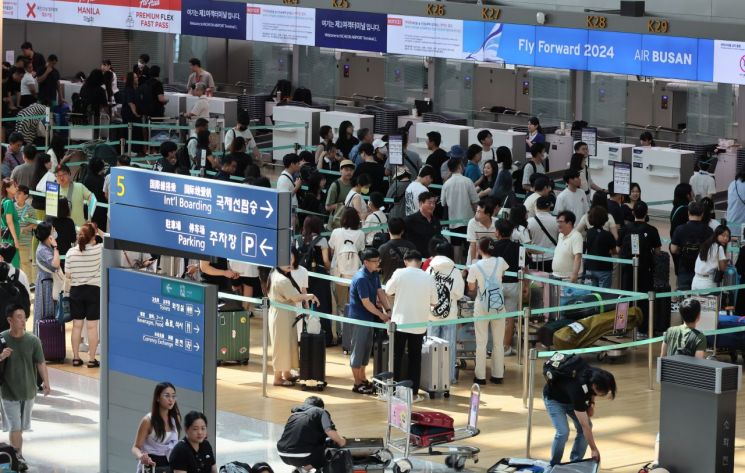
On July 22, the Korea Economic Association announced the results of a "Domestic and Overseas Travel Preference Survey" conducted by the polling agency Mono Research, which surveyed 1,000 men and women aged 18 and older nationwide. The proportion of respondents who preferred domestic travel was 39.0%, which was similar to the 38.4% who preferred overseas travel. However, there were clear differences by age group. In particular, among those in their 20s, the preference for overseas travel was 48.3%, nearly twice as high as the 28.6% who preferred domestic travel. In contrast, among those in their 50s, the preference for domestic travel was 42.7%, higher than the 34.9% who preferred overseas travel.

The reasons for these preferences also showed clear differences. For domestic travel, the main reasons were "cost and convenience," while for overseas travel, they were "experiences and sightseeing." Specifically, the reasons for preferring domestic travel were: ▲less burden in terms of time and cost (32.8%), ▲easy preparation and travel with little burden (30.1%), and ▲no language or cultural differences (9.4%).
In contrast, the reasons for preferring overseas travel over domestic travel included: ▲new and unique experiences (39.1%), ▲a variety of sightseeing attractions and tourist destinations (28.1%), and ▲higher satisfaction for the cost compared to domestic travel (14.8%).
In terms of satisfaction, domestic travel scored 8.3 out of 10, while overseas travel scored 8.7. The main reasons for lower satisfaction with domestic travel compared to overseas travel were: ▲high prices at tourist destinations (45.1%), ▲lack of distinctive regional tourism content (19.4%), and ▲concentration of tourist spots in certain areas such as Seoul, Jeju, and Busan (9.0%).
When comparing satisfaction by tourism element, domestic travel generally scored lower than overseas travel. In a comparison of competitiveness for 11 tourism elements such as natural scenery and historical and cultural resources, domestic travel only outperformed overseas travel in three areas: transportation accessibility, tourism convenience facilities, and food.
Regarding policies needed to revitalize domestic travel, the most common response was strengthening institutional management to prevent overcharging (35.6%). This was followed by the need for support in developing and promoting region-specific tourism content (18.6%), and expanding public transportation connections and travel infrastructure at tourist destinations (16.2%).
Lee Sangho, head of the Economic and Industrial Headquarters at the Korea Economic Association, stated, "Revitalizing domestic travel can help alleviate the difficulties of regional economies and sluggish domestic demand," and emphasized the need to enhance the appeal of domestic travel.
© The Asia Business Daily(www.asiae.co.kr). All rights reserved.