After Up to 800mm of Torrential Rain, a Heatwave Strikes
Sweltering Nights Continue Even After Dark
Since July 16, heavy rains over five days have left 28 people dead or missing. As search and rescue operations, including the search for those buried, continue on July 21, the number of casualties may change. Following this period of extreme rainfall, a heatwave with temperatures exceeding 35 degrees Celsius is expected to begin.
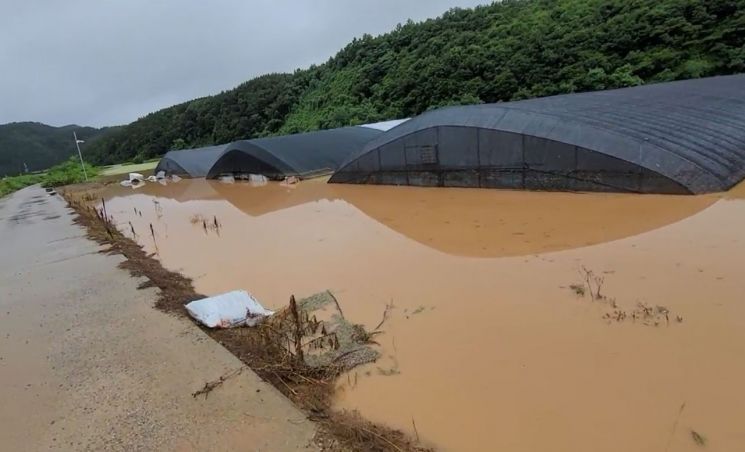
According to the Central Disaster and Safety Countermeasures Headquarters of the Ministry of the Interior and Safety, as of 6 p.m. the previous day, the heavy rains had resulted in 17 deaths and 11 missing persons. Sancheong in South Gyeongsang Province recorded the highest toll, with 10 deaths and 4 missing. In Gapyeong, Gyeonggi Province, 2 people died and 5 went missing due to the torrential rain. Seosan in South Chungcheong Province reported 2 deaths, while Buk-gu in Gwangju reported 1 death and 1 missing person. In addition, 1 person died in each of Osan, Gyeonggi Province and Dangjin, South Chungcheong Province, and 1 person went missing in Pocheon, Gyeonggi Province.
As a result of the heavy rain, 13,492 people from 9,782 households in 95 cities, counties, and districts across 15 provinces and metropolitan cities were urgently evacuated. Facility damage also increased: there were 1,999 cases of public facility damage, including 778 cases of road flooding and 403 cases of river facility collapse. There were also 2,238 cases of private facility damage, including 1,857 cases of building flooding.
This heavy rainfall dumped up to nearly 800mm of rain across the country. From July 16 to 5 p.m. the previous day, Sancheong received 793.5mm of rain, followed by 699.0mm in Hapcheon, South Gyeongsang Province, 578.3mm in Seosan, South Chungcheong Province, and 552.5mm in Damyang, South Jeolla Province. As the heavy rain subsided, the government downgraded the heavy rain crisis alert from "serious" to "caution" at 6 p.m. the previous day and lifted the Level 3 emergency response of the Central Disaster and Safety Countermeasures Headquarters.
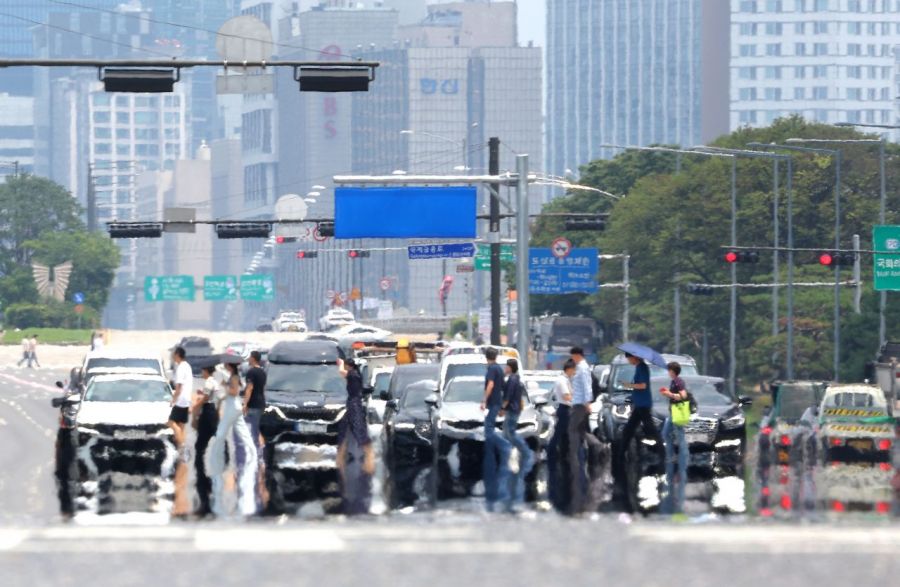
After the floods recede, intense heat is set to return.
According to the Korea Meteorological Administration, under the influence of the North Pacific high-pressure system, the apparent daytime temperature in most regions is expected to reach up to 33 degrees Celsius for the time being.
In areas under heatwave advisories, including southern Gyeonggi Province, the east coast of Gangwon Province, South Chungcheong Province, Honam, North Gyeongsang Province (Daegu), South Gyeongsang Province (Changwon and Gimhae), and parts of Jeju, the apparent temperature may exceed 35 degrees Celsius.
As temperatures are not expected to drop significantly at night, many areas are likely to experience tropical nights (when nighttime temperatures do not fall below 25 degrees Celsius).
On the morning of July 22, the lowest temperature will range from 22 to 27 degrees Celsius, and daytime highs will reach up to 34 degrees Celsius. On July 23, the temperature will rise to 35 degrees Celsius. The Korea Meteorological Administration advised, "There is a high risk of heat-related illnesses, so refrain from outdoor activities and outings, and be thorough in food management to prevent food poisoning."
© The Asia Business Daily(www.asiae.co.kr). All rights reserved.