Mayor Kang Suhyun Highlights Three Years of Achievements in the Eighth Elected Term
GTX-C Construction and Gyoe Line Resumption Drive Transportation Improvements
Designation as Special Education Zone Marks a Turning Point in Long-Term Policy
Pursuing Hoamsaji World Heritage Listing by 2029
Special Education Zone Designation... Population Surges by 60,000, Highest Growth Rate Nationwide
Yangju City in Gyeonggi Province has achieved remarkable results across all sectors, including transportation, education, industry, welfare, and culture, since the launch of the eighth term of the elected government. The city is rapidly emerging as the “central hub of connectivity in northern Gyeonggi.”
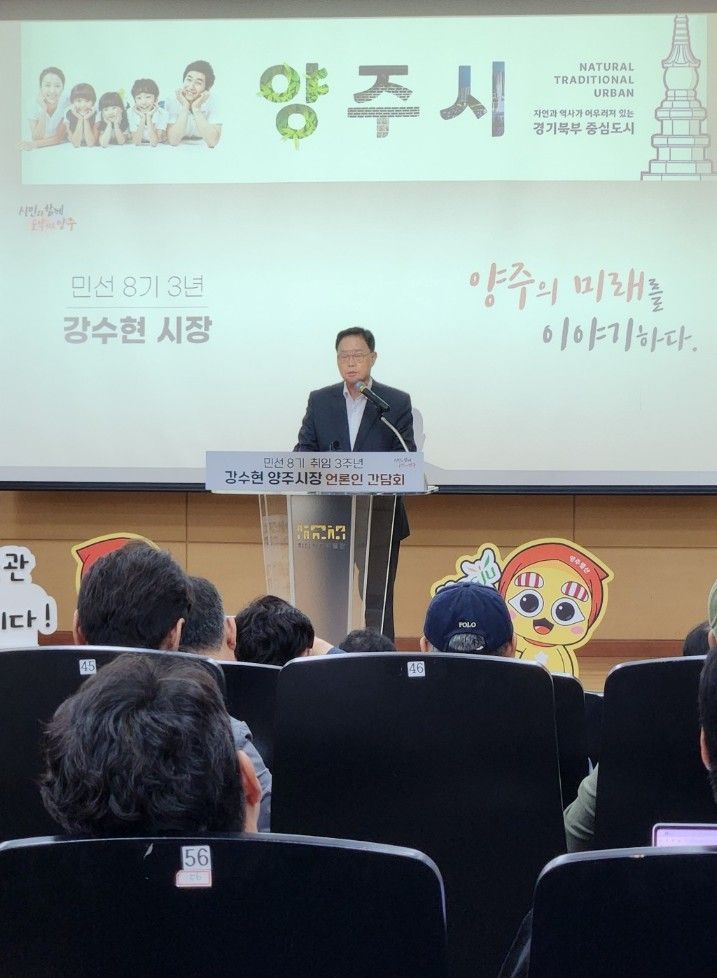 Mayor Kang Suhyun is holding a press conference on the 16th to explain the achievements of the first three years of the eighth term of the elected government and the future direction of city administration. Photo by Lee Jonggu
On the 16th, Mayor Kang Suhyun held a press conference at the Hoamsaji Museum and stated, “Practical improvements in the city’s structure, such as the expansion of the metropolitan rail network, the creation of industrial complexes, and the designation as a special education zone, are leading to better living conditions.” She added, “In the remaining one year, we will further enhance the quality of our policies by focusing on citizen-centered, experience-driven initiatives.”
The population of Yangju City surpassed 290,000 as of June 2025, up from about 230,000 at the start of the eighth elected term in July 2022. The city has also proven its status as a “livable city” and a “city ideal for raising children” by ranking first nationwide in population growth rate (2023), third in birth rate (2024), and third in net inflow of elementary school students.
Yangju City has prioritized “transportation innovation” as a core task of the eighth elected term and has focused on expanding the metropolitan transportation network.
The commencement of construction on the GTX-C line, the resumption of service on the Gyoe Line, and the opening of the Second Metropolitan Ring Expressway are establishing Yangju as a transportation hub in northern Gyeonggi.
The Dobongsan-Okjeong section of Subway Line 7 has accelerated progress through phased implementation, and the Okjeong-Pocheon metropolitan railway is also being actively pursued. The Seoul-Yangju Expressway has begun design work after the selection of a preferred bidder for the private investment project, raising expectations.
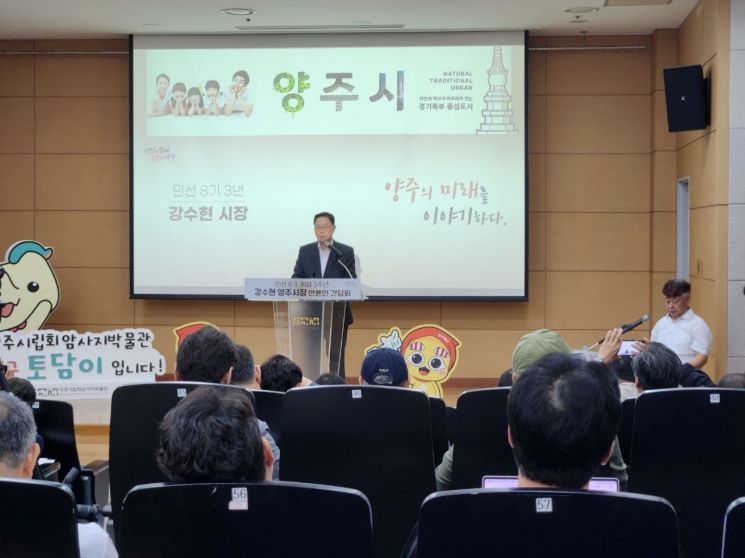 Mayor Kang Suhyun is holding a press conference on the 16th to explain the achievements of the first three years of the 8th elected term and the future direction of city administration. Photo by Lee Jonggu
Public transportation has also seen significant improvements.
New metropolitan bus routes 1304, 1306, and 8300 have been introduced, and the demand-responsive bus service “Ttok Bus” has been expanded from Okjeong and Hoecheon to the western area, laying the foundation for balanced development between the east and west of the city.
Yangju City is accelerating the expansion of its industrial base to transition from a “consumer city” to a “self-sustaining city.”
The groundbreaking of the Eunnam General Industrial Complex and the Gyeonggi Yangju Technovalley is considered a turning point in the expansion of the local industrial ecosystem.
There have also been significant achievements in securing industrial zones. In addition to the allocation of 540,000 square meters last year, an additional 380,000 square meters were secured this year, bringing the total to 920,000 square meters. This is expected to be a key asset for attracting businesses and creating jobs in the future.
The Yangju Station Area Development Project is systematically strengthening urban infrastructure through phased completion, and by integrating residential, business, and administrative functions, the city is accelerating the establishment of self-sustaining functions centered around Yangju Station.
In 2024, Yangju City was designated by the government as a “pilot district for educational development,” securing an education budget of approximately 10 billion won.
Through this, the city is creating an integrated educational ecosystem that encompasses children from preschool to high school.
By implementing joint experience programs for kindergartens and daycare centers, and establishing both urban and rural care hub centers, the city has established a comprehensive childcare and care system tailored to local characteristics. The “Yangju-style education system,” which includes career education, has further enhanced Yangju’s reputation as a “city ideal for raising children.”
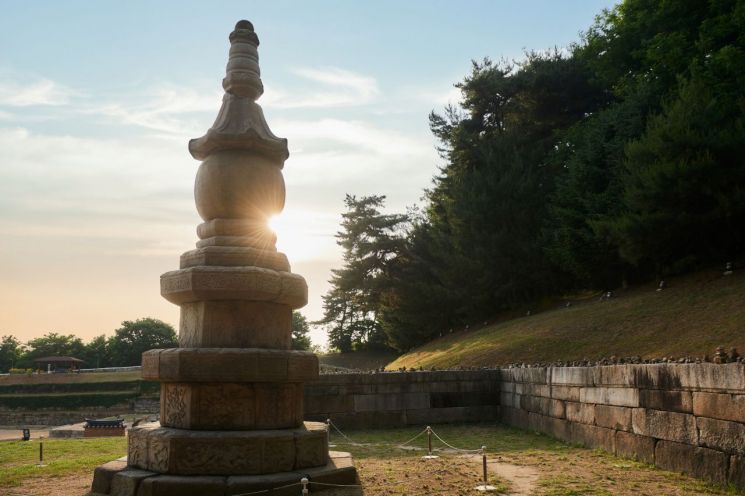
Comprehensive achievements have also been made in the field of welfare. The Yangju Mental Health Welfare Center, Yangju Hope Senior Welfare Center, and Gyeonggi Northern Disabled Welfare Support Center have all opened in succession, establishing a welfare system tailored to each stage of life.
In the cultural sector, Hoamsaji, the city’s representative heritage site, was included in the UNESCO World Heritage “Tentative List” for 2025, and a preliminary evaluation is underway with the goal of official inscription in 2029.
The Yangju Hoamsaji Royal Festival and the Cheonilhong Festival were selected as “2025 Gyeonggi Province Representative Tourism Festivals,” demonstrating the competitiveness of the city’s tourism content. In particular, the Cheonilhong Festival has established itself as a leading autumn flower festival, attracting more than 100,000 visitors each year.
Mayor Kang Suhyun emphasized, “The eighth elected term has focused not on superficial changes, but on tangible improvements that citizens can truly feel,” and added, “In the remaining one year, we will continue to pursue effective city administration based on the principle of ‘citizen-centered governance.’”
© The Asia Business Daily(www.asiae.co.kr). All rights reserved.

![Clutching a Stolen Dior Bag, Saying "I Hate Being Poor but Real"... The Grotesque Con of a "Human Knockoff" [Slate]](https://cwcontent.asiae.co.kr/asiaresize/183/2026021902243444107_1771435474.jpg)
















