Former Mayor and KOTI Confirmed Liable for 21.4 Billion Won in Damages
"Individual Researchers' Illegal Acts to Be Reviewed Separately," Case Remanded
Expected Impact on Residents' Lawsuit System Introduced in 2005
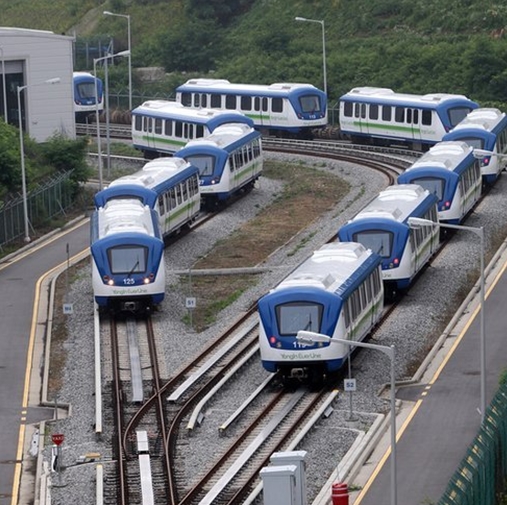
On July 16, the Supreme Court issued a final ruling in a damages lawsuit filed by residents against the former mayor and the Korea Transport Institute (KOTI) regarding the Yongin Light Rail Transit project, which had sparked controversy over large-scale deficits and the waste of taxpayer money. The Supreme Court recognized the liability of the former mayor and KOTI. However, the Supreme Court remanded the case regarding the individual liability of KOTI researchers, stating that the lower court must reconsider, on a case-by-case and concrete basis, whether the actions of individual researchers constituted illegal conduct that violated social norms.
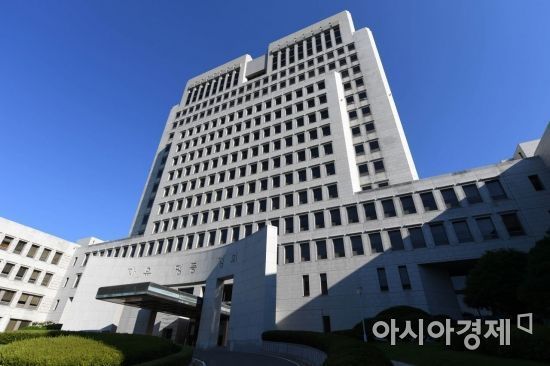
According to the legal community on July 16, the Supreme Court’s Second Division (Presiding Justice Eom Sangpil) partially remanded the case in the final appeal of the residents’ lawsuit filed by Yongin residents at 10:00 a.m. that day.
The Supreme Court stated, "For the actions of individual researchers, who were in the position of auxiliary performers in the demand forecasting service conducted by KOTI, to constitute an independent illegal act against Yongin City, it must be recognized that their conduct violated social norms." The court continued, "We find that the lower court erred by recognizing the individual liability of the researchers without specifically examining this issue," and therefore remanded the case.
The origins of this lawsuit go back 20 years. In 2004, Yongin City entered into a light rail contract based on KOTI’s demand forecast, stipulating that if operating revenue fell short of the standard, the contracting authority would cover the shortfall. However, after the light rail began operation in 2013, actual ridership fell far short of the forecast. Yongin City had to pay large sums to the operator and suffered from chronic financial difficulties each year.
In response, Yongin residents filed a residents’ lawsuit in October 2013 against former mayor Lee Jungmoon, his policy advisor, and others, seeking 1.0232 trillion won in damages, claiming that an unreasonable construction project based on faulty demand forecasts wasted residents’ tax money. Both the first and second trials dismissed the case on procedural grounds, stating that a residents’ lawsuit could only be filed after a residents’ audit request. However, the Supreme Court remanded the case, stating that it was sufficient if the lawsuit was related to an audit request and did not need to be identical.
In the remanded trial in February last year, the court ordered Yongin City to claim 21.4 billion won in damages from former mayor Lee Jungmoon, KOTI, and the responsible researchers. However, Yongin City did not accept this ruling and filed another appeal.
Meanwhile, this Supreme Court ruling is expected to influence the outcomes of ongoing residents’ lawsuits. According to the "2024 Administrative Safety Statistics Yearbook" published by the Ministry of the Interior and Safety, as of December 31, 2023, a total of 36 residents’ lawsuits had been filed. Currently, five lawsuits, including the Yongin Light Rail Transit case, are ongoing. Of the 31 concluded cases, all ended in defeat for the residents, withdrawal, or dismissal. The Yongin Light Rail Transit lawsuit is the first case since the introduction of this system in 2005 in which a residents’ lawsuit has targeted issues related to private investment projects implemented by a local government.
© The Asia Business Daily(www.asiae.co.kr). All rights reserved.

![Clutching a Stolen Dior Bag, Saying "I Hate Being Poor but Real"... The Grotesque Con of a "Human Knockoff" [Slate]](https://cwcontent.asiae.co.kr/asiaresize/183/2026021902243444107_1771435474.jpg)















