It has been revealed that, since the introduction of the "Visiting Gyeonggi-do Care Medical Center" in January last year, Gyeonggi-do has supported a total of 12,457 home visits for 2,447 elderly patients.
The Gyeonggi-do Visiting Care Medical Center is a care medical service project in which a medical team?consisting of doctors, nurses, and social workers?visits the homes of elderly people who have difficulty traveling to hospitals due to mobility issues and provides medical care.
Currently, the project is being carried out mainly at six Gyeonggi Provincial Medical Centers (Suwon Hospital, Anseong Hospital, Paju Hospital, Pocheon Hospital, Icheon Hospital, and Uijeongbu Hospital) and two private hospitals.
Gyeonggi-do explained that, this year, the Visiting Care Medical Center project of the Gyeonggi Provincial Medical Center was officially incorporated into the government’s medical fee system, making it eligible to receive official insurance reimbursements. The province added that, with the implementation of the Integrated Care Support Act in March next year, the project will be able to operate stably within an institutional framework.
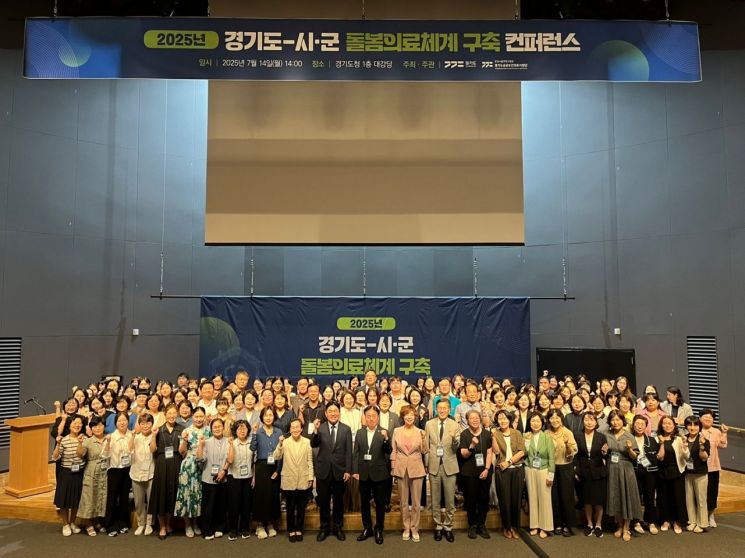 Participants attending the 'Gyeonggi-do and City-County Care Medical System Establishment Conference' held by Gyeonggi-do on the 14th are cheering. Photo by Gyeonggi-do
On the 14th, Gyeonggi-do held the "2025 Province-City-County Care Medical System Establishment Conference" at Dasan Hall in the Gyeonggi Provincial Government Complex in Gwanggyo, Suwon, and announced these details.
This conference was organized to strengthen cooperation between cities and counties and to establish a Gyeonggi-do-style care medical system in connection with the Integrated Care Support Act, which will take effect in March next year. More than 200 people attended, including representatives from public health centers in 31 cities and counties in the province, the Gyeonggi Provincial Medical Center, and other healthcare professionals.
At the event, Gyeonggi-do presented its "Care Medical Policy 2030 Vision," the current status of Japan’s long-term care medical system, and implications for Korea, as well as the direction for establishing the care medical system in the province.
In particular, Paju City drew attention by presenting a home medical service cooperation model in which the public and private sectors collaborate, centered on local home medical leader hospitals such as Gyeonggi Provincial Medical Center Paju Hospital and Yonsei Song Internal Medicine Clinic, which are participating in the home medical pilot project. This model provides comprehensive medical care services, including home visits for people with severe disabilities, early discharge patients, and residents of care facilities.
Yoo Youngcheol, Director of Health and Wellness at Gyeonggi-do, stated, "By 2030, the average elderly population in Gyeonggi-do will reach 21.8%, but there will be significant differences between cities and counties. Therefore, we must prepare customized care medical systems tailored to the demographic structure of each city and county in the future." He added, "Gyeonggi-do is planning the Care Medical Policy 2030 Vision in consideration of these demographic changes."
© The Asia Business Daily(www.asiae.co.kr). All rights reserved.
![Clutching a Stolen Dior Bag, Saying "I Hate Being Poor but Real"... The Grotesque Con of a "Human Knockoff" [Slate]](https://cwcontent.asiae.co.kr/asiaresize/183/2026021902243444107_1771435474.jpg)











