If You Plan to Travel Abroad, Check Your Measles Vaccination Status
Over 90% Infection Rate When Non-Immune Individuals Contact Measles Patients
KDCA: Seek Immediate Medical Attention if Fever or Rash Develops After Travel
Avoid Contact for High-Risk Groups Such as Infants, Pregnant Women, and Immunocompromised Persons
With the summer vacation and holiday season leading to a significant increase in overseas travel demand, health authorities have urged travelers to take extra precautions against measles infection. Travelers are advised to wear masks and pay special attention to personal hygiene, such as hand washing, especially in crowded places.
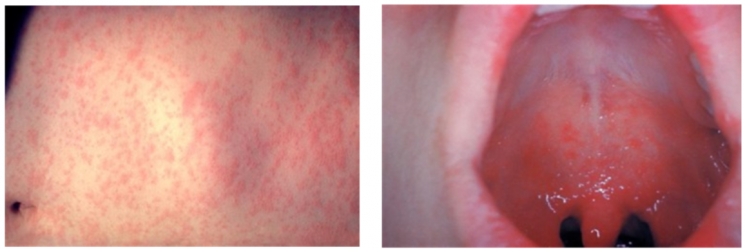 Measles rash (left) and Koplik spots in the oral cavity caused by measles. Photo by US Centers for Disease Control and Prevention
According to the Korea Disease Control and Prevention Agency (KDCA) on July 15, a total of 65 measles cases were reported in South Korea from the beginning of this year through July 5 (week 27), a 1.4-fold increase compared to the same period last year (47 cases).
Of these, 70.8% (46 cases) were imported cases, where individuals were infected abroad and diagnosed after entering the country. These individuals had visited Vietnam (42 cases), Uzbekistan, Thailand, Italy, and Mongolia (1 case each) before becoming infected. In addition, 19 cases were related to secondary transmission in households and medical institutions stemming from these imported cases. Among all measles cases this year, 76.9% (50 cases) were adults aged 19 or older, and 55.4% (36 cases) had either not received the measles vaccine or were unsure of their vaccination status.
According to the World Health Organization (WHO), the number of measles cases worldwide reached approximately 360,000 in 2024. Outbreaks have continued not only in Europe, the Middle East, and Africa, but also in Southeast Asia, a region frequently visited by South Koreans, increasing the risk of measles infection during overseas travel. As of this year, the number of measles cases per 1 million population in major countries in the Western Pacific region was as follows: Mongolia 377 cases (257.5), Cambodia 1,097 cases (147.9), Laos 288 cases (88.9), Malaysia 336 cases (23.5), the Philippines 1,050 cases (21.6), and Vietnam 151 cases (3.6).
The KDCA noted that while social interaction and international travel have increased since the COVID-19 pandemic, the global rise in measles cases is attributed to decreased vaccination rates during the pandemic. As of 2023, the second-dose measles vaccination rate in South Korea stood at 96%, but the global rate was only 74%. In particular, from 2024 to 2025, there has been a significant increase in measles cases in countries with low vaccination rates such as the Philippines, Cambodia, and Vietnam. Sporadic imported cases from travelers to these countries have also continued in South Korea, making it necessary to remain vigilant against infection during overseas travel.
If you develop suspected measles symptoms such as fever or rash within three weeks of returning from a measles-endemic country, it is important to minimize contact with others, wear a mask, visit a nearby medical facility, inform healthcare providers of your travel history, and receive medical care. If there are high-risk individuals in the household?such as infants who have not yet received their first measles vaccine, pregnant women, or immunocompromised persons?and suspected symptoms occur, contact should be minimized and immediate medical attention should be sought.
Measles is a highly contagious respiratory infection that can be transmitted through the air. The incubation period is 7 to 21 days (average 10 to 12 days). Main symptoms include fever, rash, cough, runny nose, and conjunctivitis. The virus spreads easily through contact with infected individuals or droplets produced by coughing or sneezing. More than 90% of people without immunity can become infected after contact with a measles patient, but the disease is fully preventable through vaccination. It is important to complete the two-dose measles (MMR) vaccination schedule at 12 to 15 months and 4 to 6 years of age, as recommended by the national immunization program.
Infants under 12 months, who have weaker immunity, are at higher risk of complications such as pneumonia, otitis media, and encephalitis if infected. Therefore, it is best to avoid visiting measles-endemic countries with infants in this age group. If travel is unavoidable, health authorities recommend that infants aged 6 to 11 months?who have not yet received their first dose?receive an accelerated measles vaccination before departure.
South Korea has been certified as a measles-eliminated country by the WHO since 2014 and manages measles as a quarantinable infectious disease. Measles patients must be isolated in hospital or at home during the infectious period. For citizens or those infected within South Korea, related medical expenses are covered by the government.
The KDCA emphasized, "Before traveling abroad, be sure to check your measles vaccination status. If you have not been vaccinated or are unsure of your vaccination history, complete the vaccination before departure. Infants aged 6 to 11 months, who have not yet received their first dose, should also receive the national measles vaccination before visiting measles-endemic countries."
© The Asia Business Daily(www.asiae.co.kr). All rights reserved.

















