Starting with the EU on the 14th, Special Envoys Dispatched to France, the UK, and India to Restore Bilateral Diplomacy
Envoys Sent to 14 Countries in Succession to Deliver President Lee's Policy Direction
Special Envoy Teams Formed Beyond Political Lines... Integration Efforts Continue; Yoon Yeojoon Confirmed for EU, Kim Chongin Considered for the US
Presidential Office Refutes Claims of 'OPCON Transfer Initiation'... "Not Even Considered as a Negotiation Card"
President Lee Jaemyung is tightening the reins on 'diplomatic normalization.' While summit meetings with the leaders of the United States and Japan have been postponed beyond their original schedule, the president has dispatched special envoys to 14 countries, officially launching efforts to restore bilateral diplomacy with key nations. This comes about a month after he appeared on the multilateral diplomatic stage at the G7 Summit.
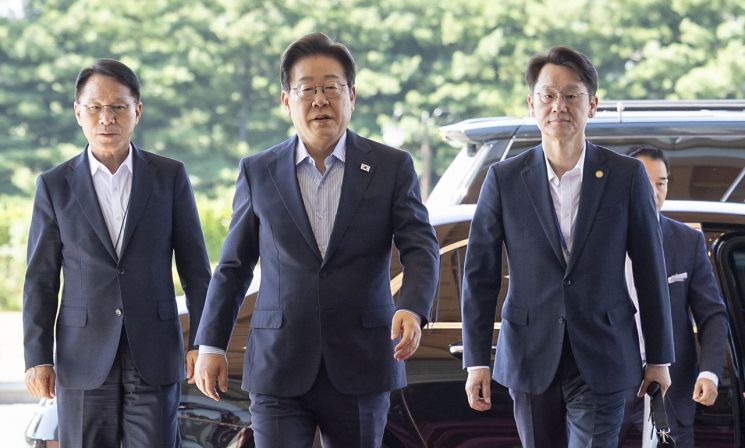
According to the presidential office on July 14, President Lee plans to sequentially dispatch special envoys to 14 countries, starting with the European Union (EU), followed by France, the United Kingdom, India, and others. The intention is to quickly fill the diplomatic vacuum and directly convey the president's governing philosophy and vision for cooperation. In particular, this is seen as a symbolic move to dispel concerns about the diplomatic capabilities of the new administration, which launched without a transition committee, and to declare to the international community the return of 'middle power diplomacy' capable of addressing global issues.
For the EU envoy mission (July 14-17), former Environment Minister Yoon Yeojoon will serve as head, accompanied by lawmakers Jun Hyunhee and Son Myungsoo of the Democratic Party, meeting with senior officials of the European Council and Parliament, mainly in Brussels. The France envoy mission (July 15-18) will be led by former Justice Minister Kang Geumsil, joined by lawmakers Han Byungdo and Chun Junho. The UK envoy mission (July 16-19) will be headed by lawmaker Choo Mi-ae, with lawmakers Choi Minhee and Park Sunwon included. The India envoy mission (July 16-19) will be led by former Prime Minister Kim Boo-kyum, accompanied by Supreme Council member Song Soonho and lawmaker Lee Gaeho.
The envoys will introduce key national policy areas such as artificial intelligence (AI), semiconductors, defense industry, climate change, and digital cooperation, and propose strengthening partnerships through presidential letters. The EU envoy mission will discuss ways to strengthen the 'Korea-EU Strategic Partnership' established in 2010, and convey Korea's intention to expand practical cooperation with the EU in areas such as digital technology, climate change, and advanced science and technology. With France, which will mark the 140th anniversary of diplomatic ties next year, the message will be to further strengthen the '21st Century Comprehensive Partnership' through enhanced cooperation in trade, investment, strategic industries such as AI, space, and defense, and cultural and people-to-people exchanges.
In addition, the UK envoy mission will express the intention to further strengthen the 'Global Strategic Partnership' between Korea and the UK in various fields, including defense, defense industry, economic cooperation, and global challenges such as climate change. The India envoy mission will exchange views on expanding the 'Special Strategic Partnership,' which marks its 10th anniversary this year, into a comprehensive cooperative relationship covering supply chains, defense and national security, core technologies, and cultural and people-to-people exchanges.
President Lee forms envoy teams beyond political lines... Continues path of integration
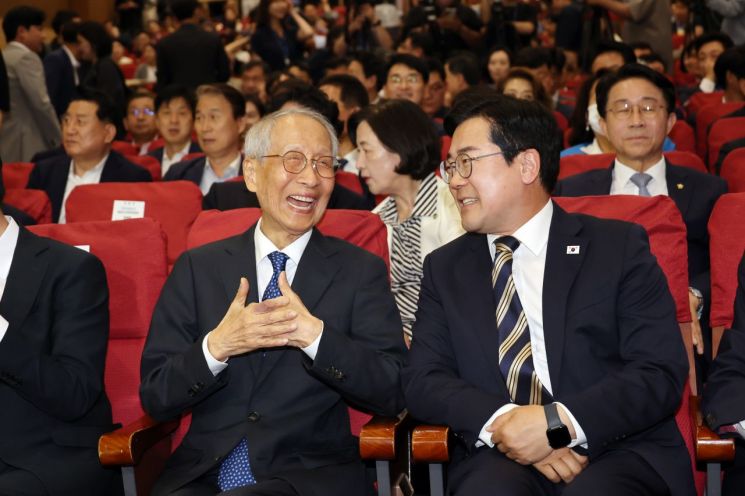
The presidential office emphasized that the dispatch of these special envoys is an opportunity to announce the normalization of Korean diplomacy and to share the Lee Jaemyung administration's governing philosophy and diplomatic vision. In particular, the president's 'message diplomacy' through special envoys at the start of the new administration is significant, as it goes beyond simple greetings or ceremonial visits to deliver the president's message to each country via the envoys.
It is especially notable that the heads of each envoy team?former ministers Yoon and Kang, former Prime Minister Kim, and lawmaker Choo?were chosen from across the political spectrum, sending a clear message that diplomacy will be approached from the perspective of national interest and practical capability, rather than as an extension of political alignments. The selection of former Minister Yoon is particularly symbolic. He is a conservative elder who served as chief presidential secretary for public affairs and as a minister under the Kim Youngsam and Lee Myungbak administrations, and during the last presidential election, he contributed to Lee Jaemyung's centrist expansion strategy as the chief standing committee chair of Lee's campaign.
Although not yet officially announced, former People Power Party emergency committee chair Kim Chongin is being considered as the special envoy to the United States. During the presidential campaign on May 8, President Lee met with Kim for lunch to seek advice on state affairs. Former Prime Minister Chung Sye-kyun is being considered as special envoy to Japan, and former National Assembly Speaker Park Byeongseok as envoy to China. Former National Assembly Speaker Kim Jinpyo may serve as envoy to Australia, and senior Democratic Party lawmaker Park Jiwon is a possible envoy to Poland.
Draws clear line on 'OPCON transfer talks'... "Not a negotiation card in trade or security issues"
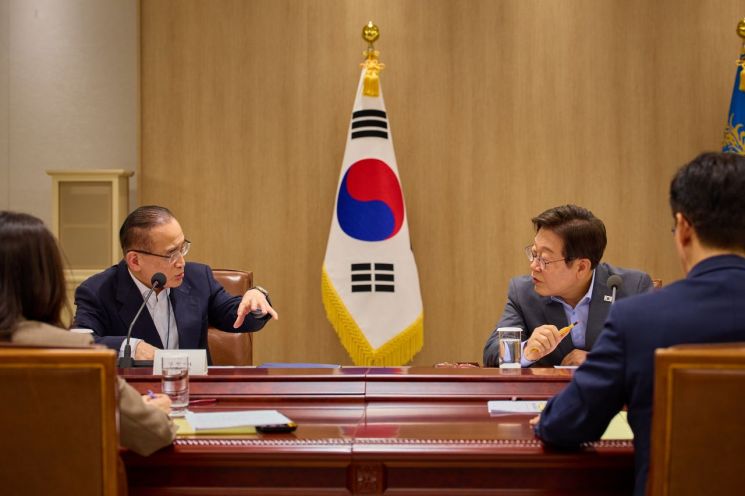
Presidential National Security Adviser Wi Seongrak dismissed claims that the transfer of wartime operational control (OPCON) could be used as a bargaining chip in current Korea-US trade and security discussions, stating that it is a long-term issue and has never been raised in the ongoing negotiations. This is seen as a direct response to media reports about OPCON transfer following Wi's trip to the United States.
Wi stated, "(Discussion of OPCON transfer) is not taking place at all between Korea and the US," and added, "It is not being discussed through any other channels either." He further emphasized, "It is not an agenda item currently under discussion, nor is it a card to be used in trade or security negotiations. It is simply a long-term issue that this administration intends to pursue." OPCON refers to the authority to command and control military operations on the Korean Peninsula in the event of war.
He also said the likelihood of the OPCON transfer issue being raised at future Korea-US security or trade negotiation tables is low. Wi stated, "It is not a bargaining chip in tariff or security consultations between Korea and the US." In a briefing at the Yongsan presidential office immediately after returning to Korea on July 9, Wi also said that, as it is a pledge of the new administration, OPCON transfer will be pursued, but added, "I do not know whether the issue will be brought up in negotiations, but we have not reached that point yet and are currently conducting discussions."
Meanwhile, the presidential office also corrected reports that OPCON transfer is being discussed through a separate working-level channel. Wi stated, "Korea and the US have never initiated consultations on OPCON transfer," and added, "There has been no directive from the presidential office. Given that there are currently no relevant ministers in place, it does not make sense to say that negotiations have started."
© The Asia Business Daily(www.asiae.co.kr). All rights reserved.














