KERI Releases "Policy Tasks for Activating the PPA System" Report
By 2042, Four Major Industries to Face 21.5 TWh Shortfall
Carbon-Free Power Limited by Renewable Energy Constraints
"Include Nuclear Power in PPA Procurement Sources"
Even by 2042, the target year set by companies participating in the RE100 (100% renewable energy use) campaign to achieve carbon neutrality, it is projected that the four major energy-intensive industries?steel, petrochemicals, semiconductors, and data centers?will face a shortage of 21.4 TWh of carbon-free electricity. This amount is equivalent to approximately 46.7% of Seoul’s total electricity consumption in the previous year (45.8 TWh).
As a result, there is growing support for the argument that the power purchase agreement (PPA) system should be activated as soon as possible, and that the current carbon-free power supply network?which is currently limited to renewable energy?should be expanded to include nuclear power in order to address the issue of excess electricity demand.
The Korea Economic Research Institute (KERI) announced these findings on the 14th in its report, "Policy Tasks for Activating the PPA System."
In the report, KERI stated that the proportion of carbon-free electricity that can currently meet the power demand of the four major industries (the carbon-free power coverage rate) is only 53.4% this year. This is the result of limiting the carbon-free electricity available to domestic companies to renewable energy sources only.
According to the 11th Basic Plan for Long-term Electricity Supply and Demand, renewable energy generation is expected to increase by an average of 8.7% per year through 2038, outpacing the average annual growth rate of electricity consumption in the four major industries (5.2%). This has led to optimistic projections that the supply and demand for renewable energy will improve.
However, despite these positive outlooks, the report analyzed that the carbon-free power coverage rate for the four major industries in 2038 will only reach 81.6%. The report concluded that the amount of carbon-free power needed in the industrial sector cannot be met by renewable energy alone. If demand for carbon-free power expands to all industries, the coverage rate could decrease even further.
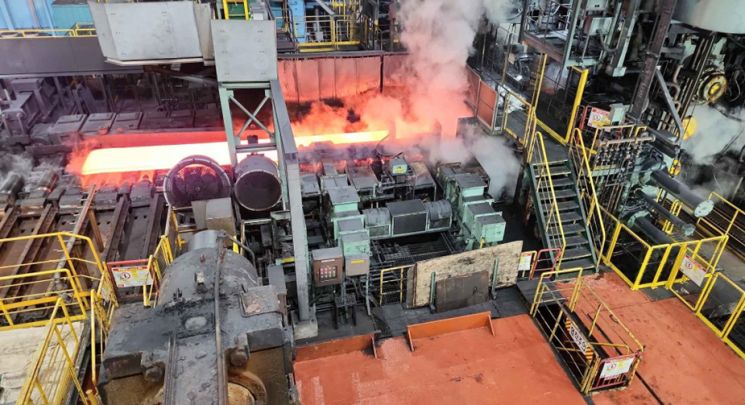
Demand for carbon-free electricity has been rising recently, especially in the four major energy-intensive industries: steel, petrochemicals, semiconductors, and data centers.
Steel and petrochemical industries, which are suffering from oversupply from China, are shifting from generic products with high Chinese market share to high value-added, low-carbon products. In advanced sectors such as semiconductors and artificial intelligence (AI) data centers, the drive to reduce carbon emissions is also gaining momentum. Global leading companies such as Apple, Microsoft (MS), and ASML have set goals to achieve net zero (zero carbon emissions) within the next 10 to 15 years. As a result, suppliers worldwide, including those in South Korea, are facing strong demands to use carbon-free electricity and reduce carbon emissions.
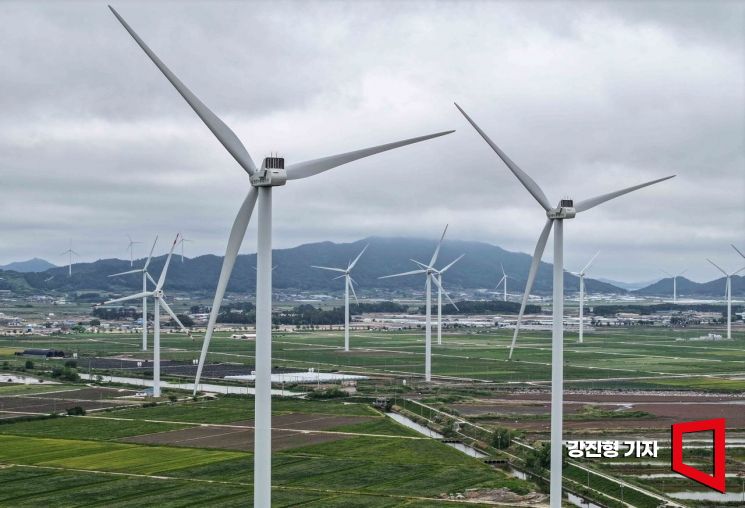
The report emphasized that "activating the PPA system" should be the top priority to resolve the excess demand for carbon-free electricity. A PPA is a power supply method in which companies and power generators enter into contracts. Currently, the carbon-free power sources that can be procured through PPAs are limited to renewable energy, but KERI also suggested that it is necessary to include existing nuclear power plants in operation. The analysis is that this could make a decisive contribution to resolving excess demand for carbon-free electricity.
KERI analyzed that if the utilization rate of nuclear power plants, which averaged 79.4% over the past five years, is raised by 10 percentage points and existing nuclear power plants are included in PPAs, the excess demand for carbon-free electricity in the four major industries could be resolved by 2042. Under the current system, which allows carbon-free electricity to be sourced only from renewables, the coverage rate for carbon-free electricity in 2042 would be only 93.0%. However, if existing nuclear power plants are included among procurable carbon-free power sources and their utilization rate is increased, the coverage rate would rise by 8.8 percentage points to 101.8%. The United States and France have already included existing nuclear power plants in PPAs. This would allow companies to autonomously select their power sources based on business decisions, which is expected to help alleviate excess demand for carbon-free electricity.
KERI further argued that, to promote PPA activation, ancillary costs such as grid usage fees and the electricity industry infrastructure fund?currently paid when purchasing renewable energy?should be temporarily exempted or reduced. KERI believes that if the PPA system is activated, the supply of carbon-free power sources will increase, ultimately helping to resolve excess demand for carbon-free electricity.
In fact, overseas countries are also implementing support policies to promote the spread of PPAs. Since 2020, Japan’s Ministry of Economy, Trade and Industry has been providing subsidies for corporate PPA costs. The government also supports one-third of the investment costs for power generation facilities participating in PPAs. In Taiwan, since 2023, 80% of grid usage fees for PPAs have been reduced. The discount rate for grid usage fees is reduced by 20 percentage points each year, with the discount expiring in 2027.
KERI also insisted that the disclosure cycle for the electricity emission factor, which is currently announced irregularly, should be set to at least once a year. The electricity emission factor refers to the amount of greenhouse gas emissions generated per unit of electricity consumed. Companies calculate their greenhouse gas emissions by multiplying the country-specific electricity emission factor by their electricity consumption, and use this data to comply with climate regulations such as the Emissions Trading Scheme, climate disclosures, and the European Union (EU) Carbon Border Adjustment Mechanism (CBAM). In South Korea, the irregular announcement of the national electricity emission factor increases the burden on companies. As the supply of carbon-free electricity increases, the emission factor decreases. However, delays in announcing the emission factor can result in companies overestimating their greenhouse gas emissions.
Lee Sangho, head of the Economic and Industrial Division at KERI, emphasized, "Domestic key industries are facing a double challenge of management crises and increasing demands for carbon-free electricity use," adding, "It is urgent to establish an institutional environment that enables Korean companies to efficiently procure carbon-free electricity."
© The Asia Business Daily(www.asiae.co.kr). All rights reserved.













