UNESCO World Heritage Committee Recognizes the Value of
Bangudae and Cheonjeon-ri Petroglyphs in Ulju as National Treasures
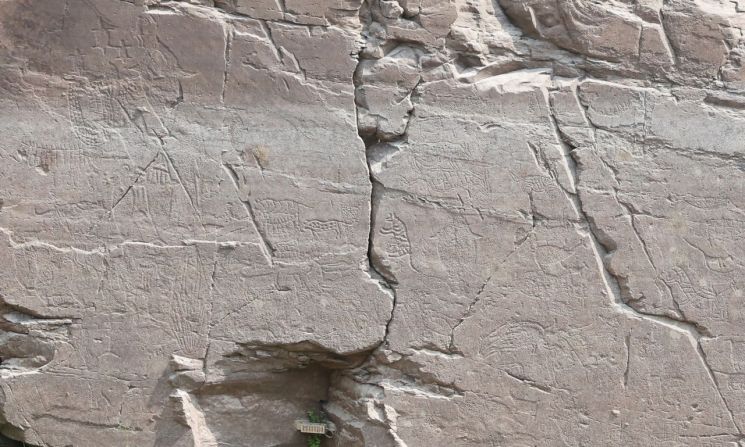
The petroglyphs along the Bangucheon Stream in Ulsan, which provide insight into prehistoric life, have been inscribed on the UNESCO World Heritage List.
On July 12 (local time), at the 47th session held at the UNESCO headquarters in Paris, France, the UNESCO World Heritage Committee made the final decision to inscribe two Korean petroglyph sites on the World Heritage List.
The official name is "Petroglyphs along the Bangucheon Stream."
Petroglyphs refer to images carved or painted on rock surfaces or cave walls, that is, rock art.
The petroglyphs along the Bangucheon Stream are regarded as masterpieces of prehistoric culture on the Korean Peninsula, and the heritage consists of the National Treasure "Bangudae Petroglyphs in Daegok-ri, Ulju" and the "Cheonjeon-ri Inscriptions and Petroglyphs in Ulju."
With this inscription, Korea now possesses a total of 17 World Heritage sites, starting with Seokguram Grotto and Bulguksa Temple, Haeinsa Janggyeong Panjeon, and Jongmyo Shrine, which were first inscribed in 1995, and now including the Bangucheon Petroglyphs.
World Heritage refers to heritage recognized as having Outstanding Universal Value (OUV) that must be protected for all humanity, according to the World Heritage Convention of 1972.
© The Asia Business Daily(www.asiae.co.kr). All rights reserved.

















