Indian Government Releases Preliminary Report on the 12th
Experts Also Baffled... Aircraft Defect Unlikely
Further Investigation Needed... Final Report to Be Prepared Within a Year
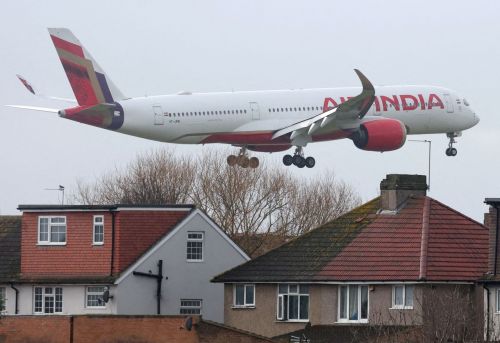
An investigation has found that the Air India Boeing 787 Dreamliner passenger jet, which crashed 32 seconds after takeoff one month ago, killing 260 people, went down because the engine fuel switches were turned off shortly after takeoff, causing the engines to nearly shut down.
On July 12 (local time), Reuters, AFP, and Bloomberg reported that the Aircraft Accident Investigation Bureau (AAIB) of India released a preliminary investigation report containing these findings in New Delhi, India.
According to the report, about three minutes after the passenger jet took off from Ahmedabad Airport in Gujarat, western India, on the 12th of last month, two fuel supply switches for engines 1 and 2 were moved from the 'on' position to the 'off' position. As a result, fuel supply to both engines was cut off, engine power decreased, and the plane began to rapidly lose altitude.
One pilot noticed this and asked the other pilot, "Why did you cut off the fuel?" The other pilot replied, "I did not do that." This conversation was captured on the cockpit voice recorder. It is not known which of the two was the captain and which was the first officer.
The pilots turned the two fuel switches back on about 10 seconds after they had been turned off, reigniting both engines. However, only engine 1 began to recover, while engine 2 failed to regain sufficient power. Ultimately, one pilot sent out a "Mayday" emergency distress signal, and just seconds later, the aircraft crashed. The time between the fuel switches being turned off and the "Mayday" signal being sent was only about 33 seconds.
Experts have also found this difficult to understand. Turning off the fuel switches causes the engines to shut down almost immediately, so this is only done in emergencies such as an engine fire. John Nance, a U.S. aviation safety expert, told Reuters, "No pilot in their right mind would ever turn off these switches during flight," especially not during the critical phase of takeoff and initial climb.
An aerospace engineer and former fighter pilot told Bloomberg that it was "really strange" that it took the pilots about 10 seconds to turn the fuel switches back on. "I would not wait 10 seconds to turn them back on. I would do it immediately," he said. The investigation has not yet determined why the fuel switches were turned off or who operated them.
The captain of the crashed jet was a veteran with about 15,000 flight hours and was also an Air India instructor, while the first officer had 3,400 hours of flight experience. Investigators said they have not found any evidence so far that would require action against Boeing or the engine manufacturer, GE Aerospace. The AAIB plans to issue a final report within a year after further investigation.
© The Asia Business Daily(www.asiae.co.kr). All rights reserved.

![Clutching a Stolen Dior Bag, Saying "I Hate Being Poor but Real"... The Grotesque Con of a "Human Knockoff" [Slate]](https://cwcontent.asiae.co.kr/asiaresize/183/2026021902243444107_1771435474.jpg)















