Smelting Industry Reviewing Response Strategies
Wire and Secondary Battery Sectors Also on High Alert
"Monitoring the Situation Even Without Direct Exports"
U.S.-Based Manufacturers Also "Conducting Thorough Reviews"
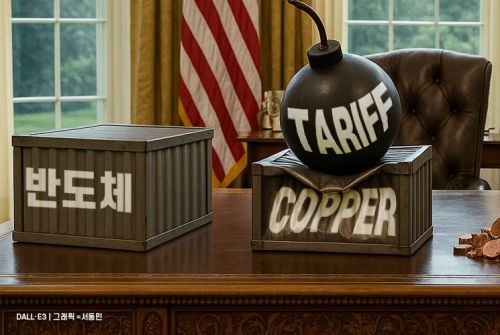
Tension is mounting across related industries after U.S. President Donald Trump announced plans to impose a 50% tariff on copper. Copper is a key raw material widely used in major industries, including copper foil for secondary batteries, power cables, and transformer coils. As concerns grow that companies ranging from secondary battery material suppliers to power equipment and wire manufacturers could be affected, the industry has begun analyzing the potential impact on supply chains.
According to industry sources on July 9, LS MnM, the largest copper smelting company in Korea, is closely monitoring the situation because some of its customers process its products and export them to the United States. Although the company does not export directly to the U.S., it is reviewing response strategies, given that future tariffs could affect exports of intermediate goods. A company representative said, "We are keeping a close watch on our customers' exports to the U.S."
The industries paying the closest attention to the copper tariff are power equipment manufacturers. Domestic companies in this sector are experiencing an unprecedented boom, to the point where ultra-high voltage transformers are selling as fast as they can be produced. However, copper tariffs could have a negative impact on their exports. Depending on the type, each transformer contains between 5 and 10 tons of copper. If tariffs continue to drive up product prices, demand for transformers could decline, and companies without a production base in the U.S. could lose price competitiveness. A power industry official said, "The impact could extend from copper to other auxiliary materials as well," and added, "In the medium to long term, there is also the possibility that the situation could become unfavorable."
Even companies with local production bases in the United States are on edge. Hyosung Heavy Industries produces most of its main products at its local plant in Memphis. The company explained that it is monitoring relevant developments, as prolonged protectionist policies could affect the entire supply chain. A company official stated, "We are keeping an eye on supply chain risks."
Wire manufacturers are also closely monitoring the effects of the copper tariff. However, in the short term, they say that the 'Escalation Clause'?which allows raw material price fluctuations to be reflected in contract amounts?enables them to pass on some of the cost burden to customers. An official from the wire industry explained, "When signing export and import contracts, we include a clause that automatically reflects changes in raw material prices in the contract amount, so the impact of copper price fluctuations is limited."
Secondary battery companies are also keeping a close watch on the situation, as copper foil?a core material?is used in secondary batteries. Korea is the world's second-largest producer of copper foil after China. Major companies, including SK Nexilis, are deeply involved in the U.S. electric vehicle battery supply chain. A company representative said, "There has been no particular movement from our customers so far, and we do not expect the impact on competitiveness to be significant."
Battery companies with production bases in the U.S., such as LG Energy Solution and Samsung SDI, are also closely monitoring the impact of the tariffs. However, the prevailing view is that the impact remains limited for now. According to LG Energy Solution, "The volume manufactured in Korea and exported to the U.S. is extremely small, and our U.S. plant sources raw materials such as copper foil from various countries, so even if tariffs are imposed on Korean copper, the direct impact will not be significant." The company added, "We will continue efforts to reduce costs by securing a stable supply chain."
Samsung SDI is also reportedly monitoring the Trump administration's tariff policy and internally reviewing various response measures. Since finished battery products are already subject to tariffs, the impact of increased tariffs on the copper raw materials contained within is said to be limited. In addition, because copper foil accounts for a relatively small portion of total battery costs, the impact on profitability is also considered limited.
© The Asia Business Daily(www.asiae.co.kr). All rights reserved.













