Number of Affected Children Rises Sharply After Comprehensive Investigation
Chinese Authorities Detain Eight, Including Kindergarten Principal
The number of children affected by lead poisoning at a kindergarten in Gansu Province, northwest China, has risen to over 200, and authorities have revealed that the kindergarten added non-edible art paint to food dough. On July 8, China Central Television (CCTV) reported that as of 10 p.m. on July 7, a total of 223 children at Hesfeixin Kindergarten in Tianshui City, Gansu Province, had tested abnormally high for blood lead levels. The number of affected children increased significantly after more than 20 children who had recently exhibited symptoms such as vomiting, dizziness, abdominal pain, hair loss, hypersensitivity, white hair, and tooth discoloration were first diagnosed with lead poisoning at the hospital, followed by a comprehensive investigation of 251 students. Eighteen students were found to have normal blood lead levels.
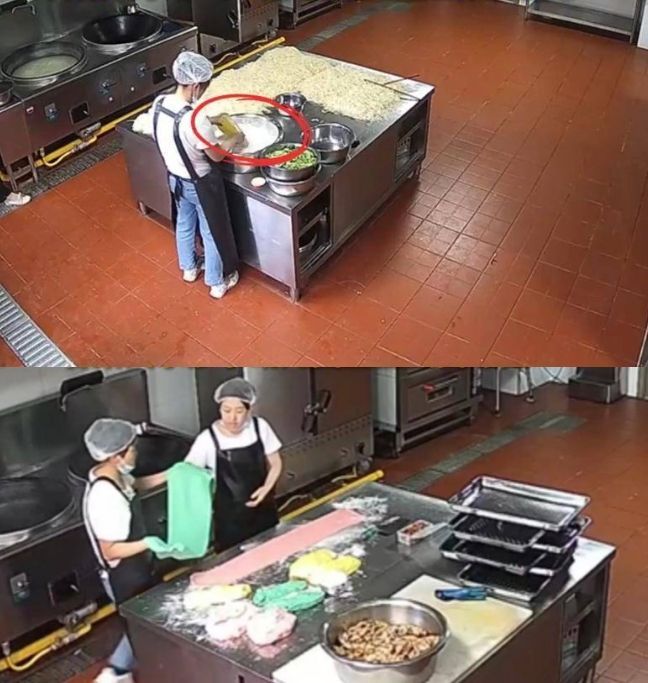 According to the joint investigation team in Tianshui City, it was found that they added art paint to the three-colored jujube rice cake and corn sausage roll. Pengpai News
The joint investigation team in Tianshui City discovered that the kindergarten principal and kitchen staff conspired to purchase art paint online, dilute it in water, and use it in school meals. Testing of over 200 samples of food and tap water confirmed that the problematic menu items were three-colored jujube rice cake and corn sausage roll. These foods were visually striking, with excessively vivid and bright colors. The lead content in the two foods was found to be 1,052 mg/kg and 1,340 mg/kg, respectively, far exceeding the Chinese national food safety standard for contaminants, which is 0.5 mg/kg. Authorities found art paint hidden in the kindergarten and stated that the packaging clearly indicated it was not for consumption.
Eight individuals, including the principal, are under criminal detention
Previously, blood lead levels in many children who were first tested at Xi'an Central Hospital were found to be between 200 and 500 micrograms per liter (μg/L). According to Chinese authorities, the normal blood lead level for children is 100 μg/L or lower. The U.S. Centers for Disease Control and Prevention (CDC) considers lead poisoning to occur at levels above 50 μg/L. One parent told local Chinese media, "My six-year-old daughter, who attends this kindergarten, developed white hair and black spots on her teeth, so we took her to the hospital," adding, "The test results showed a blood lead level of 284.9 μg/L, confirming lead poisoning." Teachers claimed to protesting parents that they were also victims. However, authorities stated that although teachers experienced symptoms such as headaches and nausea, their conditions were not severe.
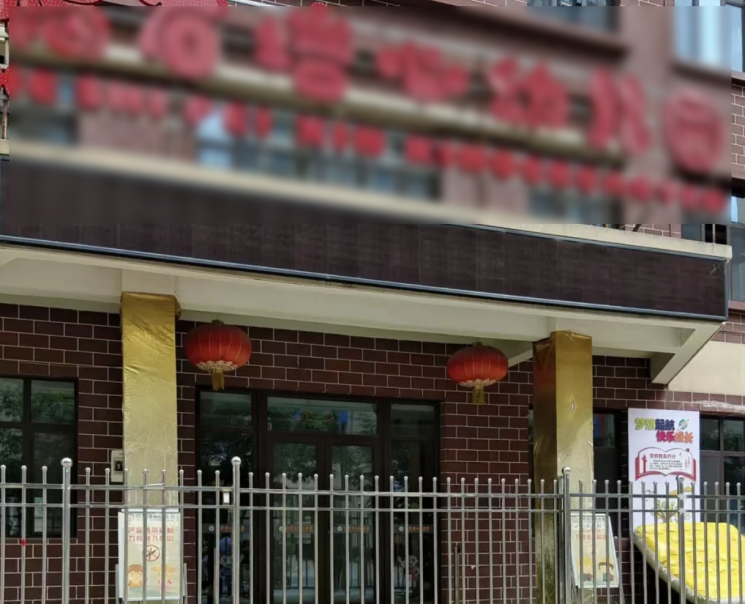 A kindergarten in Gansu Province, northwest China, where a mass lead food poisoning incident occurred. Baidu
Currently, there are three main models for campus meal provision in China. The first is for schools to outsource meal services to specialized catering companies. Another model is for schools to operate their own cafeterias and procure raw materials through centralized bidding. The third is centralized meal delivery. A researcher at the China National Institute of Education Sciences told local media that the cause of the problem in this kindergarten's meals was the lack of transparency and oversight in the meal provision process, which allowed for profit-driven transactions between school officials and external suppliers. This kindergarten is privately run, and parents reportedly pay more than 10,000 yuan (about 1.91 million won) per year in tuition, 3,500 yuan (about 670,000 won) in childcare fees, and 360 yuan (about 68,000 won) per month in meal fees, making it relatively expensive even by local standards.
Chinese authorities are now providing medical support for the affected children. The Gansu Provincial Health Commission has dispatched six experts to the kindergarten, and three experts from the Chinese Center for Disease Control and Prevention are also providing emergency guidance. China National Radio reported, "Public security authorities have detained eight people, including the principal and kitchen staff, on suspicion of producing toxic and harmful food." It added, "The Central Commission for Discipline Inspection, China's top anti-corruption body, has already launched an investigation and plans to hold those responsible strictly accountable and impose severe punishment in accordance with regulations on dereliction of duty and abuse of power."
Meanwhile, symptoms of lead poisoning are difficult to detect but can have irreversible and serious effects on children. According to the World Health Organization (WHO), lead is particularly harmful to children. Once lead enters the body, it is stored in organs such as bones and teeth, and can cause permanent damage to brain development in children. In severe cases, it can cause serious harm to the brain and central nervous system.
© The Asia Business Daily(www.asiae.co.kr). All rights reserved.


















