Genetic Mutation Testing Time Reduced from Two Weeks to One Minute
Genetic Mutation Prediction Accuracy Reaches 78 Percent
Applied to New Drug Development, Enables Identification of Targeted Therapies
Development of Multimodal Medical Platform with US Research Team
LG AI Research Institute has unveiled its next-generation precision medical artificial intelligence (AI) model, Exaone Pass 2.0. This new technology is expected to shorten the time required for genetic testing compared to existing technologies, enabling medical professionals to analyze cancer tissues more quickly and identify targeted therapies more efficiently.
Exaone Pass 2.0, introduced by LG AI Research Institute on July 9, is an AI model that precisely analyzes genetic mutations and subtle changes in cells and tissues from pathology images. It can be utilized for early diagnosis and prognosis prediction of various diseases, including cancer, as well as for new drug development and personalized treatment. An LG representative explained, "We have improved the quality of training data compared to the previously released 1.0 and 1.5 models."
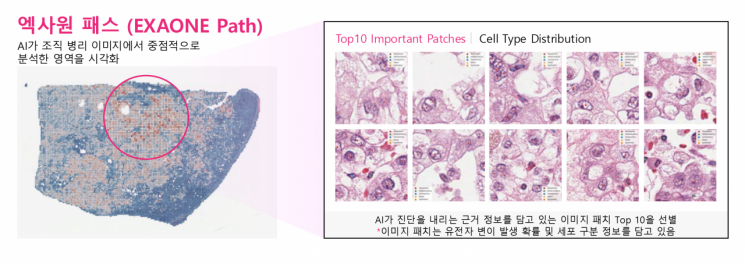
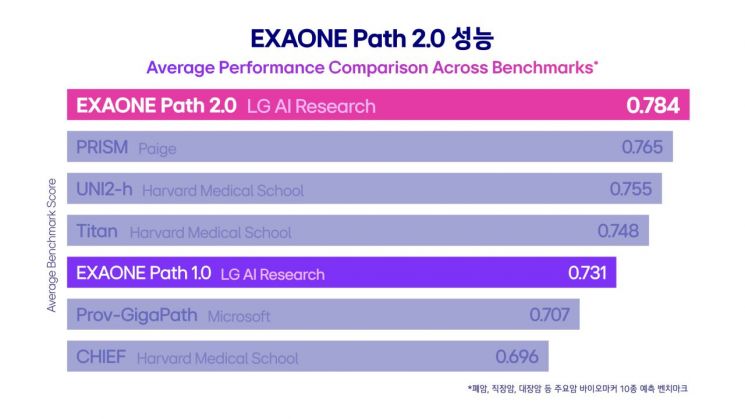
This model, in particular, applies 'multi-omics' technology, which enables learning from both high-resolution pathology images and genetic information. Pathology images are high-resolution digital whole slide images captured during the pathology diagnosis process, where a patient's tissue samples are observed under a microscope. Previously, these images had to be analyzed by cutting them into thousands of pieces, but now, the model can analyze the entire image at once, allowing the AI to accurately identify areas that may have been missed before. With this technology, the accuracy of predicting genetic mutations has been significantly improved, achieving a world-class level of 78.4%.
Park Yongmin, leader of the AI Business Team at LG AI Research Institute, stated, "By using Exaone Pass 2.0, the time required for genetic testing, which previously took more than two weeks, can be reduced to less than one minute, helping to secure the golden time for cancer patient treatment." He added, "When doctors and pharmaceutical companies utilize Exaone Pass 2.0, they can quickly analyze pathology images of cancer patient tissue samples, rapidly identify which genes have mutations, and determine the appropriate targeted therapies."
On this day, LG AI Research Institute also introduced specialized models tailored for specific diseases such as lung cancer and colorectal cancer. These specialized models are expected to help reduce unnecessary tests and enable early identification of patient groups that require treatment. Furthermore, they are anticipated to be used in future clinical trials to monitor patients' treatment responses in real time and to contribute to the discovery of new biomarkers.
LG AI Research Institute has also partnered with Professor Hwang Taehyun's research team at Vanderbilt University Medical Center in the United States to develop a multimodal medical AI platform. This refers to an AI system that analyzes various types of medical data simultaneously. The two institutions plan to move beyond the traditional approach of developing technology in the lab and then seeking clinical applications, instead developing AI technologies by solving real-world problems encountered in clinical settings.
To this end, they plan to utilize tissue samples, pathology images, and treatment data from cancer patients participating in clinical trials to identify the root causes of diseases and to discover new biomarkers and targets for early disease diagnosis.
Professor Hwang emphasized, "Our goal is not simply to develop a new AI model, but to create an AI platform that can actually help medical professionals diagnose and treat patients in real clinical settings." He added, "The AI platform we are developing will not just be a diagnostic tool, but a game changer that will revolutionize the entire process of new drug development."
The two sides plan to expand the scope of this project beyond cancer to include transplant rejection, immunology, and diabetes. LG AI Research Institute is scheduled to introduce Exaone Pass 2.0 at the 'LG AI Talk Concert 2025' on July 22.
© The Asia Business Daily(www.asiae.co.kr). All rights reserved.
!["The Woman Who Threw Herself into the Water Clutching a Stolen Dior Bag"...A Grotesque Success Story That Shakes the Korean Psyche [Slate]](https://cwcontent.asiae.co.kr/asiaresize/183/2026021902243444107_1771435474.jpg)

















