Nikkei Reports on Potential Impact of U.S. Reciprocal Tariffs on Japanese Exports
Aircraft Parts, Construction Machinery, and Auto Industries Expected to Suffer Significant Losses
If the Donald Trump administration in the United States imposes a 25% reciprocal tariff on Japanese imports as previously announced on August 1, industries with high dependence on exports to the U.S., such as aircraft parts and construction machinery, are expected to be hit hard.
The Nihon Keizai Shimbun (Nikkei) reported on July 8 that items with a high export ratio to the U.S. include aircraft parts, construction and mining machinery, metalworking machinery, automobiles, and automotive parts, highlighting concerns about the impact of the tariffs.
Most aircraft parts are exported to the United States. For example, in 2012, 76.5% of Japan's 307.9 billion yen worth of aircraft parts exports went to the U.S. In the case of IHI, the company manufactures components for commercial aircraft engines produced by General Electric (GE) and Pratt & Whitney (P&W).
In the construction and mining machinery sector, more than half (50%) of exports are destined for the U.S. For Komatsu, a leading construction machinery company, 30% of total sales are generated in North America. Komatsu plans to pass on the tariff burden through pricing strategies, while also restructuring its parts procurement system.
Metalworking machinery, automobiles, and auto parts, which have a 30-50% export ratio to the U.S., face an even greater burden as they are subject to item-specific tariffs, leaving little room for negotiation. Currently, the tariff on automobiles is 25%, while tariffs on steel and aluminum reach 50%.
Previously, U.S. President Donald Trump announced on this day that a new 25% reciprocal tariff would be imposed on Japan starting August 1. The reciprocal tariff applied to Japan has been increased by 1 percentage point, from the previous 24% to 25%. The White House also clarified that the reciprocal tariffs specified in letters sent to each country are separate from item-specific tariffs. This suggests that while the Trump administration has left room for negotiation on reciprocal tariffs, it intends to use item-specific tariffs on automobiles and steel as a "sanction card."
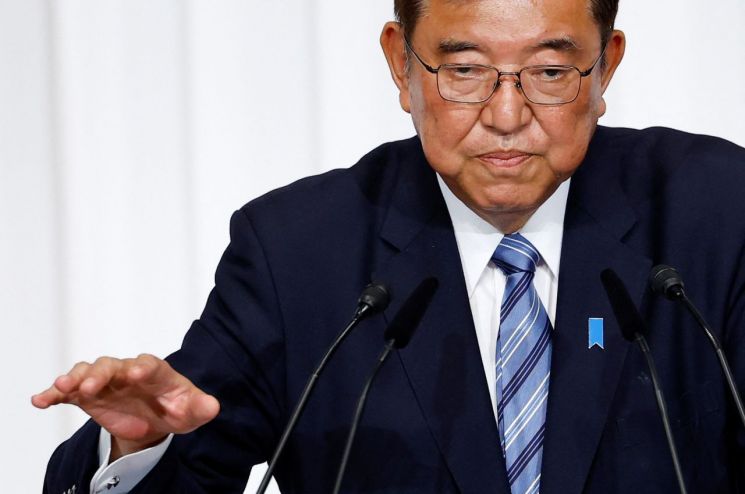
The Ishiba cabinet expressed regret over the increased tariffs but stated its policy to continue negotiations in a direction that would be "beneficial to both countries." According to Mizuho Research & Technologies, if North American exports decline due to the 10% reciprocal and item-specific tariffs, Japan's real GDP is expected to fall by 0.2%. If the reciprocal tariff is raised to 25%, the GDP decline is expected to widen to 0.4%.
Yoshinobu Tsutsui, chairman of the Japan Business Federation (Keidanren),criticized in a press conference the previous day, saying, "(The reciprocal tariff increase) will have a very serious impact," and added, "It could negatively affect both the predictability and profitability of Japanese companies' investment strategies."
© The Asia Business Daily(www.asiae.co.kr). All rights reserved.
![User Who Sold Erroneously Deposited Bitcoins to Repay Debt and Fund Entertainment... What Did the Supreme Court Decide in 2021? [Legal Issue Check]](https://cwcontent.asiae.co.kr/asiaresize/183/2026020910431234020_1770601391.png)















