Goheung Militia Sets a New Milestone in Local Anti-Japanese History
Goheung County in Jeollanam-do (Governor Gong Youngmin) announced on July 8 that the 'Goheung Mangyeongam Anti-Japanese Uprising Site' has been preliminarily designated as a cultural heritage of Jeollanam-do.
This preliminary designation is part of a project by Jeollanam-do to mark the 80th anniversary of Liberation. The project aims to establish a sustainable preservation and utilization system for anti-Japanese independence heritage sites that embody the nation's spirit.
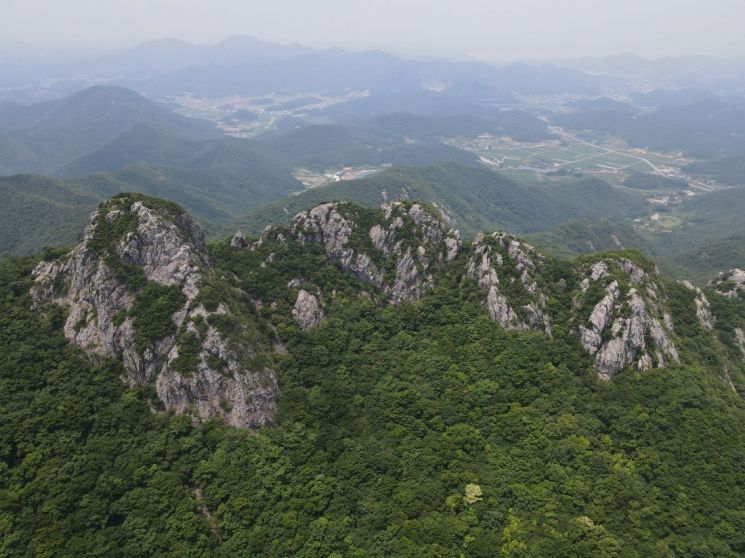 'Goheung Mangyeongam Anti-Japanese Uprising Site' has been announced as a cultural heritage of Jeollanam-do. Provided by Goheung County
The 'Goheung Mangyeongam Anti-Japanese Uprising Site' is the site of a mountain hermitage of Neunggasa Temple, located near the famous Palyeongsan Mountain's Heundeulbawi Rock in Goheung. It is highly valued for its historical significance, as detailed records of battles fought here during the latter part of the anti-Japanese militia resistance in Jeollanam-do in 1909 have been preserved in historical documents.
This hermitage site clearly demonstrates the geographical features and defensive advantages of its location. The annual joint memorial service for the fallen anti-Japanese militia, led by Neunggasa Temple at Mangyeongam, plays an important role in preserving the spirit of the independence movement and in educating the local community about its history.
After the signing of the Eulsa Treaty in 1905, anti-Japanese militias rose up across the country. In Goheung, militias organized armed resistance centered around Palyeongsan Mountain. At that time, militia leader Shin Seonggu formed a unit of about 120 fighters and continued anti-Japanese activities, with the group stationed at Mangyeongam.
On July 7, 1909, at 6 p.m., a Japanese punitive force, having discovered their location, launched a surprise attack, resulting in fierce fighting. The battle lasted for 26 hours, continuing until 8 p.m. on July 8. Sixteen militia members were killed in the fighting, and the Mangyeongam area has since remained a historic site that testifies to the intense struggle of Goheung's anti-Japanese militia.
Following a 30-day public notice period to gather opinions from various sectors, the Goheung Mangyeongam Anti-Japanese Uprising Site is expected to be officially designated as a cultural heritage after deliberation by the Jeollanam-do Cultural Heritage Committee.
An official from the county stated, "It is true that our region has shown relatively little interest in anti-Japanese militias as part of our modern heritage. Going forward, we will systematically discover and document the history of anti-Japanese militias and the independence movement through various means, including domestic and international research, collection of oral histories, and collaboration with experts."
© The Asia Business Daily(www.asiae.co.kr). All rights reserved.
!["The Woman Who Threw Herself into the Water Clutching a Stolen Dior Bag"...A Grotesque Success Story That Shakes the Korean Psyche [Slate]](https://cwcontent.asiae.co.kr/asiaresize/183/2026021902243444107_1771435474.jpg)
















