Sluggish Construction Sector and Worsening External Conditions
Consumer Sentiment Rebounding... Potential for Domestic Demand Improvement
High Level of Trade Uncertainty Persists
On July 8, the Korea Development Institute (KDI) stated in its "July Economic Trends" report that "the economy remains at a low level similar to the previous month." This assessment follows last month's diagnosis that "overall economic conditions are weak," indicating that a similar trend has continued.
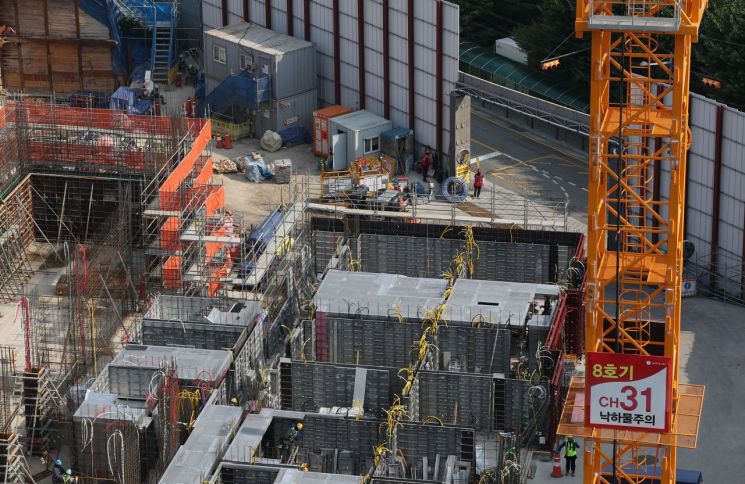
In this report, KDI explained, "Our economy continues to suffer from sluggishness in the construction sector, while external conditions have also deteriorated." Last month, KDI noted, "With the construction industry remaining weak and exports slowing down due to increased U.S. tariffs, the overall economy is stuck in a weak state." As there has been no change in economic conditions compared to the previous month, KDI has issued a similarly negative assessment this month. Jung Kyuchul, Director of Economic Forecasting at KDI, said, "We described the situation as weak last month, and similar conditions are persisting," adding, "The lack of progress in tariff negotiations remains an issue, and there are still many uncertainties regarding exports."
He continued, "However, consumer sentiment has risen significantly, which is a slightly different point from last month," but also noted, "Even though sentiment has improved, retail sales and other indicators remain sluggish." KDI assessed, "Although consumer sentiment is recovering, suggesting the possibility of improved domestic demand, trade-related uncertainties remain high as the end of the mutual tariff suspension approaches." On July 7 (local time), U.S. President Trump signed an executive order extending the imposition date for the 25% mutual tariff rate on trading partners, including Korea, from July 9 to August 1, while maintaining the tariff rate.
Indeed, the Consumer Sentiment Index in June (108.7) rose sharply from the previous month (101.8). KDI explained, "As the high-interest rate environment eases and the second supplementary budget is implemented, these factors are expected to positively affect future consumption recovery." Consumption continued to show weak trends. Due to the reduction in individual consumption tax in May, passenger car sales in May maintained a 13.4% increase, but retail sales excluding passenger cars remained sluggish, particularly for household goods (-10.8%), cosmetics (-8.5%), and home appliances (-6.1%). Service consumption also remained at a low growth rate, especially in accommodation and restaurant businesses.
KDI also diagnosed that export growth remains weak. This is because, while global trade uncertainty remains high, sectors other than ICT are underperforming. In June, exports of ships (a highly volatile category) surged by 67.4%, and ICT items, led by semiconductors, maintained a strong growth rate of 8.6%. However, exports of items other than ships and ICT remained sluggish. Average daily exports, excluding ICT and ships, continued to decline: -3.9% in April, -3.7% in May, and -2.1% in June. In particular, exports to the United States were weak for items such as automobiles, which faced significant tariff increases. As a result, the growth in manufacturing production has also slowed.
While the slump in construction investment has been prolonged, leading indicators continue to show signs of improvement. Construction completion in May (-20.8%) continued to decline sharply from the previous month (-21.2%). However, KDI noted, "Some leading indicators continue to improve, suggesting that the downturn in construction investment may gradually ease over time." KDI highlighted the recovery in construction balance and building permits, expecting these improvements to be gradually reflected in construction investment with a time lag.
© The Asia Business Daily(www.asiae.co.kr). All rights reserved.












