Room Left for Reciprocal Tariff Negotiations
Determined to Use Item-Specific Tariffs as a Sanction Card
Automobile Tariffs Pose the Greatest Burden for Korea
Starting next month, even if reciprocal tariffs are imposed at different rates for each country, they will not be applied on top of the existing item-specific tariffs for products such as automobiles, steel, and aluminum.
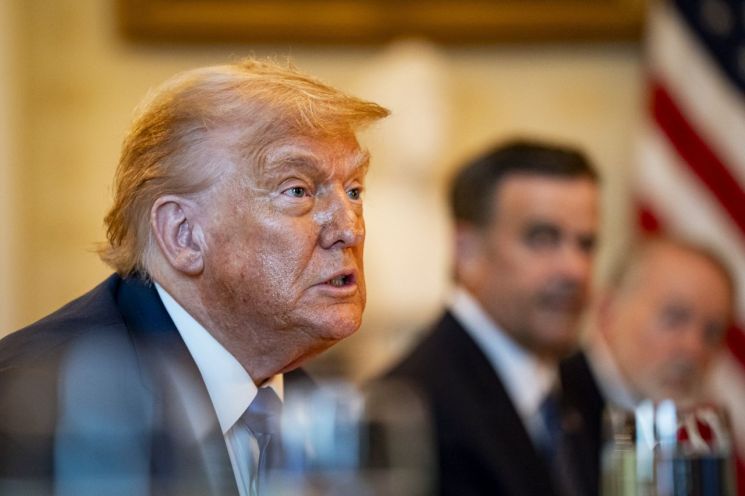
The Financial Times (FT) of the UK reported on the 7th (local time) that a White House official confirmed that, even if reciprocal tariffs set at different rates by country are imposed next month, they will not be applied in addition to the existing item-specific tariffs already in place for products such as automobiles, steel, and aluminum. For example, even if a 25% reciprocal tariff is imposed on Korea, the existing 25% tariff on Korean automobiles will remain unchanged and will not be raised to 50%.
On the same day, U.S. President Donald Trump also reaffirmed this in a post on his social networking service, Truth Social, stating, "Reciprocal tariffs are imposed separately from item-specific tariffs." This measure is interpreted as reflecting an intention to leave room for negotiation with reciprocal tariffs, while using item-specific tariffs on products such as automobiles and steel as a "sanction card."
Previously, President Trump imposed tariffs on steel and aluminum in March on the grounds of national security. On April 3, he announced a 25% tariff on foreign automobiles. Subsequently, starting May 3, tariffs on automobile parts took effect, and from June 4, tariffs on steel and aluminum were raised from the previous 25% to 50%.
Currently, Korea faces high tariffs of 25% to 50% on major exports to the U.S., including automobiles and parts, as well as steel and aluminum. There is also a possibility that item-specific tariffs could be additionally imposed on products such as semiconductors and bio-related goods. In addition, a 25% tariff on all products except these items is expected, making a significant blow to exports unavoidable.
The U.S. diplomatic journal The Diplomat analyzed, "If a new agreement or extension of negotiations is not reached, Korea will face successive new tariffs imposed by the U.S., which will have a significant impact on the Korean economy."
The Diplomat pointed out that automobile tariffs are the greatest burden for Korea, reporting that in 2024, automobiles and parts accounted for about one-third of Korea's exports to the U.S. The same applies to steel. Allianz Research, a global insurance economic research institute, estimated that the loss in Korean steel exports to the U.S. due to tariffs would reach approximately $600 million.
The possibility that item-specific tariffs such as those on automobiles could be further increased is also a concern. Last month, President Trump said, "I may raise that (automobile) tariff soon," and added, "The higher the tariff, the more likely (foreign automakers) are to build factories in the United States." This is interpreted as showing his intention to use tariff hikes as a means to induce investment in the U.S.
© The Asia Business Daily(www.asiae.co.kr). All rights reserved.

















