Japan's Revised Proposal Passes with 7 Votes in Favor, 3 Against, Remainder Abstain
 Yonhap News
The South Korean government's attempt to have UNESCO scrutinize whether Japan fulfilled its follow-up commitments regarding Hashima Island, a site of forced labor during the Japanese colonial era, after its designation as a World Heritage site, has failed.
On July 7 (local time), at the 47th session of the UNESCO World Heritage Committee held in Paris, France, a vote was held on whether to formally include the "Assessment of the Implementation Status of the Meiji Industrial Heritage" as an agenda item.
Previously, the South Korean government proposed that the committee revisit the issue at this meeting, arguing that Japan had not properly implemented the "explanation of forced mobilization of Koreans" that it had promised when the site was designated as a World Heritage site.
However, Japan submitted a revised proposal to remove the agenda item, claiming that it should be resolved through bilateral consultations rather than by the committee. South Korea objected and requested a vote. In the secret ballot, Japan's revised proposal was adopted with 7 votes in favor and 3 against. The remaining committee member states reportedly cast abstention-type votes.
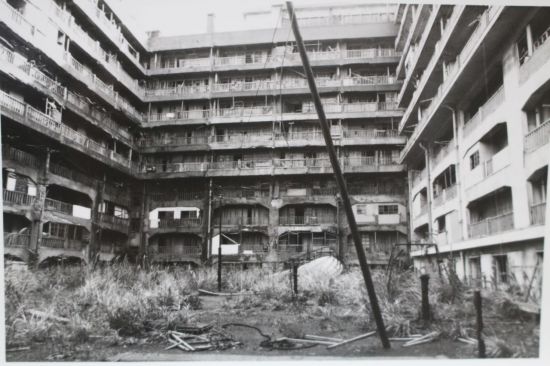
Hashima Island is one of the facilities that Japan registered as part of the "Meiji Industrial Revolution Heritage" in 2015. At the time, Japan promised to explain the facts of forced mobilization, but the information center that was later opened only highlighted the achievements of Japanese industrialization without mentioning the forced labor of Koreans, sparking controversy over historical distortion.
The South Korean government made every diplomatic effort to put the issue back on the agenda at this meeting, but Japan maintained its position that repeated discussions within the committee should end, and ultimately the disagreement led to a vote. Some analysts attribute the outcome to Japan's diplomatic influence, as it has exercised significant sway over UNESCO by contributing nearly three times as much in membership fees as South Korea.
The South Korean government has stated that it will continue to raise the issue of Japan's insufficient fulfillment of its commitments through other opportunities, but it is now considered unlikely that the matter will be addressed at the UNESCO level. Observers also warn that, as Japan's rigid stance on historical issues is once again highlighted by this incident, it could become a burden on South Korea-Japan relations, which had recently shown signs of improvement.
© The Asia Business Daily(www.asiae.co.kr). All rights reserved.
![Clutching a Stolen Dior Bag, Saying "I Hate Being Poor but Real"... The Grotesque Con of a "Human Knockoff" [Slate]](https://cwcontent.asiae.co.kr/asiaresize/183/2026021902243444107_1771435474.jpg)










