Trump to Send Tariff Letters to at Least 12 Countries Starting July 7
Will South Korea, the Eighth Largest U.S. Trade Deficit Country, Be Included?
Besant: "Tariffs to Be Imposed August 1"... White House Aides Suggest Possible Extension
South Korea Dispatches Top Trade and Security Officials for Last-Minute Negotiations
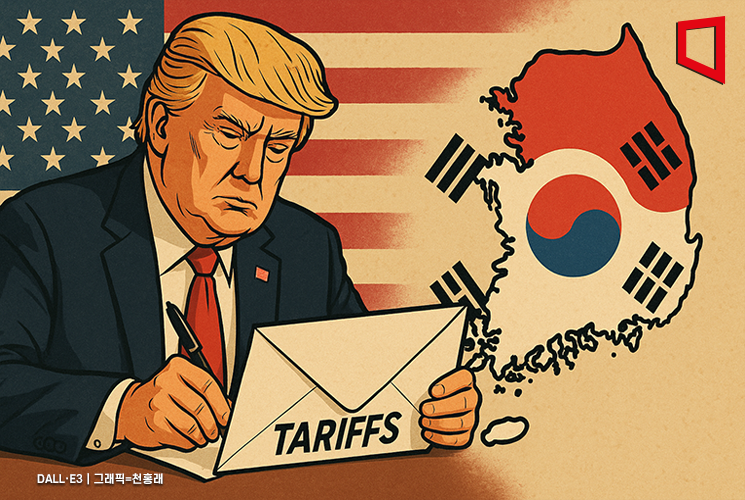
On July 7 (local time), one day before the expiration of the reciprocal tariff suspension, U.S. President Donald Trump is set to send letters specifying country-by-country tariff rates to at least 12 major trading partners. As speculation grows that South Korea, a major source of the U.S. trade deficit, may be included on this list, the South Korean government has dispatched its top trade and diplomatic security officials to the United States for last-minute negotiations. However, as the Trump administration repeatedly hints at the possibility of implementing new tariffs on August 1 and extending the suspension, there are projections that each government may secure approximately three additional weeks for negotiations.
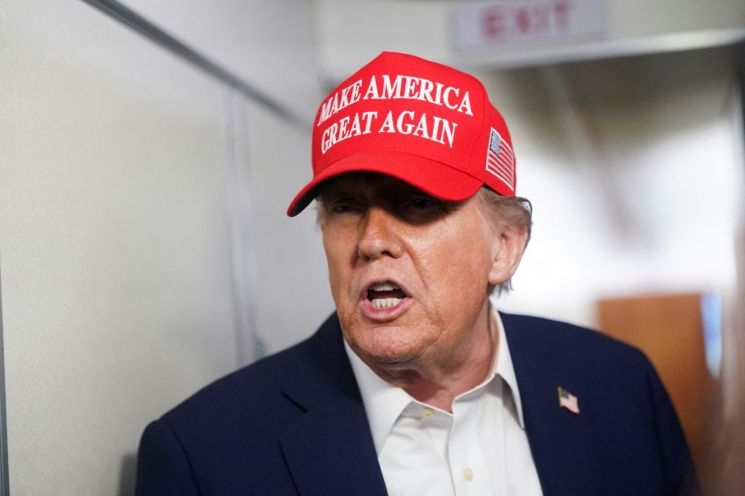
Trump to Send Tariff Letters to 12 or 15 Countries... Focus on Whether South Korea Is Included
With President Trump announcing plans to send tariff letters on July 7, attention is focused on whether South Korea will be included among the major countries. The situation remains fluid, but since the targets of reciprocal tariffs are countries with which the U.S. has trade deficits, and South Korea ranks as the eighth largest deficit country, analysts believe there is a high likelihood South Korea will be included.
Before boarding Air Force One in New Jersey to return to the White House in Washington D.C. on July 6, President Trump told reporters at the airport, "The letters will go out on Monday (the 7th), and it could be 12 countries, maybe 15 countries." The mention of "15 countries" is an increase from the previously stated 12 countries to which the letters would be sent.
He added, "It could be about 15 countries, the letters will go out on Monday, and some will be sent on Tuesday (the 8th) and Wednesday (the 9th)." When asked whether tariff rates could change on July 9 or August 1, he replied, "I think we will wrap up (negotiations) with most countries by July 9. Either a letter or a deal."
This is a follow-up measure after the expiration of the reciprocal tariff suspension. On April 2, the U.S. announced country-specific reciprocal tariffs, imposing an additional tariff on top of the basic 10% rate, differentiated by country, and applied a 90-day grace period. During this period, the U.S. held negotiations with each country aiming for trade agreements, and the suspension is set to expire at 12:01 a.m. on July 9.
If South Korea receives the letter, the level at which its tariff rate will be set is a key concern. In 2024, the U.S. recorded a $66 billion trade deficit with South Korea, making it the eighth largest deficit after Japan. South Korea was initially notified of a 25% tariff. President Trump stated that tariff rates in these letters would "vary from 10-20% up to 60-70%," making it difficult to predict the final rates. Although a new high-level Korea-U.S. negotiation took place after the inauguration of the Lee Jaemyung administration early last month, South Korea is seen as progressing more slowly than other countries due to the aftermath of the martial law and impeachment crisis. If the tariff rate is set at 25% or lower, it would be fortunate, but there remains the possibility that the U.S. could opt for higher tariffs to increase negotiation pressure. In Japan's case, ongoing clashes between Japan's demand to lower auto tariffs and the U.S. demand to open its rice market have led President Trump to warn that he could raise Japan's tariff rate from the current 24% to as high as 35%.
"Tariffs to Be Imposed August 1" ? Trump Administration Continues to Hint at Extension of Suspension
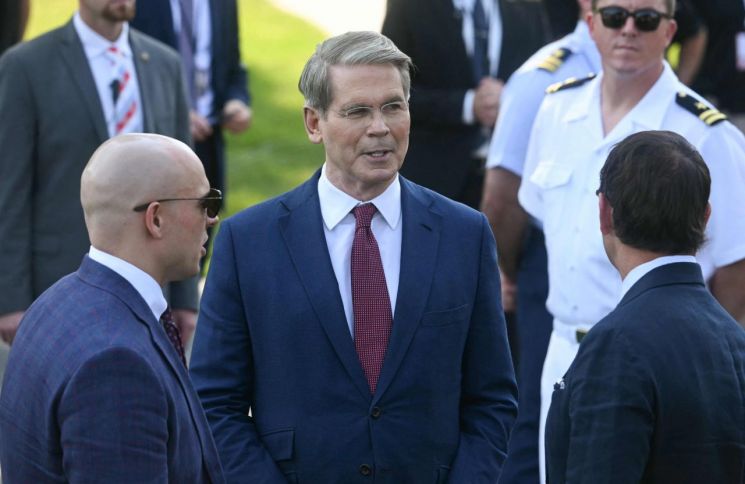
As the expiration of the reciprocal tariff suspension approaches, President Trump is maximizing pressure on trading partners by mentioning the "tariff letters," while his aides are leaving room for negotiation by repeatedly suggesting an extension of the negotiation deadline. President Trump has hinted that the new tariffs could take effect on August 1 instead of the original suspension end date, raising the possibility of a three-week extension of the suspension.
U.S. Treasury Secretary Scott Besant said in a CNN interview that "President Trump will send a letter stating that if negotiations do not progress, tariffs will revert to the April 2 levels on August 1," adding, "Whether you speed up negotiations or return to previous tariff rates is up to you (the trading partners)." Previously, on July 4, President Trump had stated, "Money will start coming into the United States from August 1," and Secretary Besant reaffirmed the possibility of delaying the tariff implementation date. U.S. Secretary of Commerce Howard Lutnick explained, "Tariffs will take effect from August 1," and "the President is currently setting both the tariff rates and the negotiations."
White House staff also made similar remarks in media interviews that day. Kevin Hassett, Chairman of the White House National Economic Council (NEC), said, "There are issues that are almost (at agreement), so we may be able to go past the deadline." Steven Mirren, Chairman of the White House Council of Economic Advisers (CEA), also stated, "Countries that negotiate in good faith and are willing to make concessions for an agreement may be able to adjust the schedule."
The Trump administration's willingness to extend the tariff suspension appears to stem from the significant domestic burden that would result from immediate tariff implementation. Over the past three months, the only countries with which the U.S. has concluded trade agreements are the United Kingdom and Vietnam, and among them, the UK is actually a trade surplus country, not a major target deficit country. Notably, Japan, which was expected to reach a quick agreement, is taking a tough stance ahead of the House of Councillors election on the 20th. On July 6, Japanese Prime Minister Shigeru Ishiba emphasized, "We will not compromise easily," and "Although we are allies, we must say what needs to be said." If tariffs are imposed, there are concerns that market instability, such as the sharp rise in government bond yields seen after the reciprocal tariff announcement in early April, could recur and drive up prices, adding to the burden.
South Korea in Last-Minute Negotiations... Key Issues
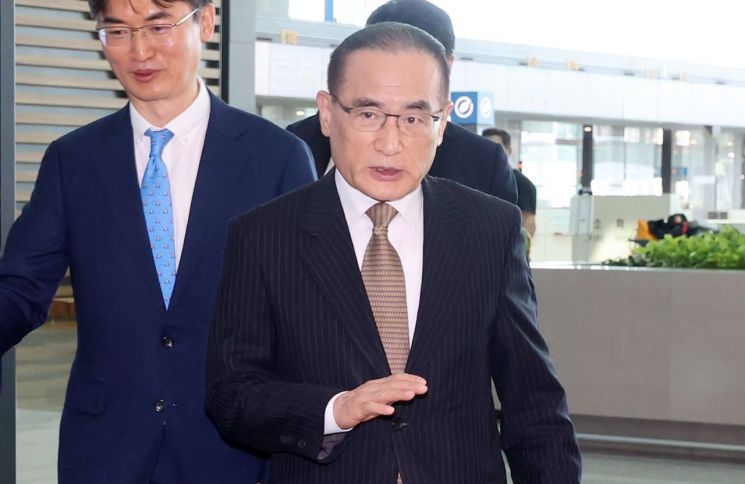
With the expiration of the U.S. reciprocal tariff suspension imminent, the South Korean government has dispatched key officials from its trade and diplomatic security teams to the United States for an all-out last-minute effort. On July 5, Yeo Han-koo, head of trade negotiations at the Ministry of Trade, Industry and Energy, arrived in Washington, D.C., followed by Wi Sung-rak, Director of National Security at the Presidential Office, on July 6. Upon arrival, Yeo immediately held working-level tariff negotiations with Jamison Greer, U.S. Trade Representative (USTR). Wi plans to hold comprehensive discussions with Marco Rubio, U.S. Secretary of State and White House National Security Advisor, covering sensitive security issues such as increasing defense spending and readjusting the role of U.S. Forces Korea. As President Trump previously mentioned his desire for "one-stop shopping," the strategy is to bundle trade and security issues of interest to the U.S. into a package for the negotiation table to achieve substantive progress.
The key issues in Korea-U.S. negotiations are the relaxation of non-tariff barriers in the automotive and agricultural sectors, as demanded by the U.S. In addition, South Korea's ongoing legislative efforts regarding the online platform law, which would subject large U.S. IT companies to regulation, have drawn U.S. opposition and become a sticking point in negotiations. The South Korean government is strongly demanding exemptions or reductions for key export items such as automobiles, steel, and aluminum, while also proposing strengthened cooperation in sectors including shipbuilding, semiconductors, automobiles, and bio industries.
© The Asia Business Daily(www.asiae.co.kr). All rights reserved.

![Clutching a Stolen Dior Bag, Saying "I Hate Being Poor but Real"... The Grotesque Con of a "Human Knockoff" [Slate]](https://cwcontent.asiae.co.kr/asiaresize/183/2026021902243444107_1771435474.jpg)

















