"The agreement is surprising... Vietnam's dependence on US exports is high"
A broad agreement reached... but many issues remain unresolved
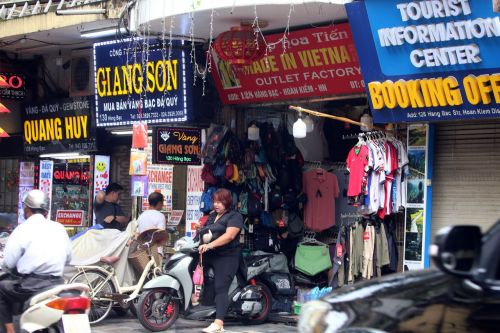 A woman is parking a motorcycle in front of a store in Hanoi, Vietnam, with the phrase "Made in Vietnam" written on it on the 2nd (local time). Photo by EPA Yonhap News
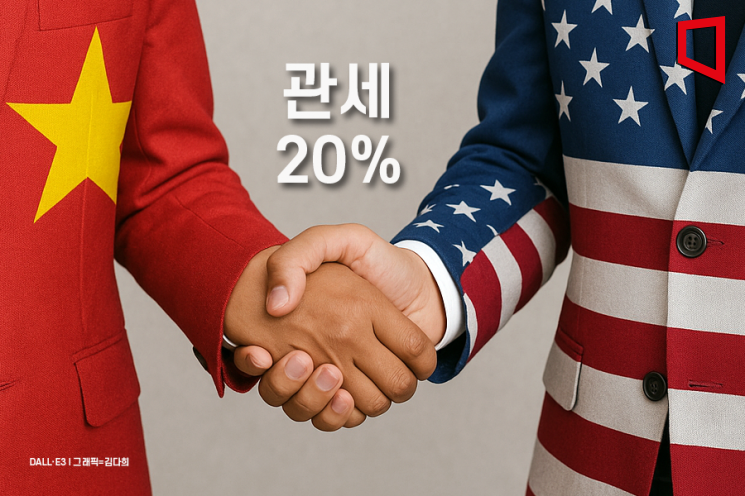
On July 2 (local time), Vietnam reached a dramatic trade agreement with the United States, but concerns have been raised that the 20% tariff rate on Vietnamese products is favorable only to the United States and could negatively impact the Vietnamese economy. In addition, there are predictions that Vietnam could face retaliation from China after agreeing to impose an even higher 40% tariff on transshipped goods, also known as 'origin laundering.'
"The agreement is surprising...Vietnam's dependence on US exports is high"
Wendy Cutler, Vice President of the Asia Society Policy Institute (ASPI) and former Deputy US Trade Representative, told the Washington Post (WP) that it was surprising that the two countries agreed to such a relatively high tariff rate on Vietnamese products. Cutler noted, "Given Vietnam's dependence on exports to the US market, the US held most of the cards," and suggested that the outcome of these negotiations could provide momentum for the US in negotiations with other countries.
Earlier, US President Donald Trump announced on the social media platform Truth Social that an agreement had been reached to impose a 20% tariff on Vietnamese goods imported into the United States, while no tariffs would be imposed on US goods exported to Vietnam. This is less than half the 46% rate imposed in April. The United States also decided to impose a 40% tariff on transshipped goods exported to the US via Vietnam from third countries.
Mary Lovely, Senior Fellow at the Peterson Institute for International Economics (PIIE), a US think tank, commented on the deal, telling the Associated Press that "it is forcing a small country to accept it," and questioned whether President Trump could force such a one-sided agreement on major trading partners like the European Union or Japan.
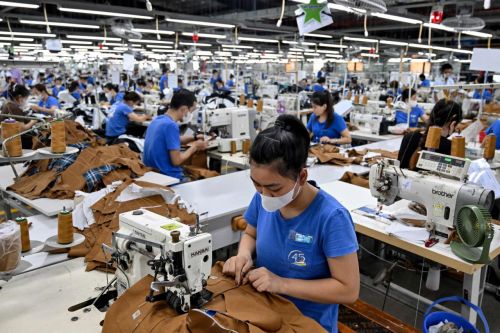
The New York Times (NYT) reported that foreign companies operating in Vietnam have also reacted negatively. Phan Thi Thanh Xuan, Vice President of the Vietnam Handbag and Footwear Manufacturers Association, said, "The tariff rate is still quite high compared to our expectations," and added, "The details regarding rules of origin for different tariff rates are unclear."
Lana Saidi, an economist at Bloomberg Economics, also noted that the tariff rate imposed on Vietnam is twice the basic tariff rate of 10%, and assessed that there is a significant risk it could negatively affect the Vietnamese economy. She predicted that Vietnam's exports to the US could decrease by 25% in the medium term and that more than 2% of Vietnam's gross domestic product (GDP) could be at risk. She also evaluated that this agreement is unlikely to serve as guidance to alleviate concerns of other major trading partners such as South Korea, Japan, and the EU regarding their own trade negotiations with the United States.
A broad agreement reached...but many issues remain unresolved
The two countries have reached a broad agreement, but many issues remain unresolved. This is because there are still many gaps, such as the detailed regulations regarding transshipped goods subject to the 40% tariff. The NYT noted that since the transshipment regulations could apply to Vietnamese products containing Chinese components, rules could be introduced to adjust the tariff rate according to the proportion of Chinese parts.
There are also concerns that China may retaliate against Vietnam for participating in negotiations targeting the export of transshipped goods by Chinese companies. Previously, China made it clear that it would respond to any deal that sacrifices its own interests. Saidi, the economist, commented that Vietnam's decision to agree to a 40% tariff on transshipped goods "could fall into this category," and added that retaliation from China could have a significant impact on the Vietnamese economy.
Alicia Garcia Herrero, Chief Economist at Natixis Asset Management, told Bloomberg News that "the dilemma for Asia (including Vietnam, Cambodia, and Taiwan) in the trade war is that while final demand depends on the United States, a significant portion of the value added in local production depends on China."
© The Asia Business Daily(www.asiae.co.kr). All rights reserved.



















