Stablecoins: Existing Plans Must Be Readjusted to Meet New Demands
Issuing a Won-Based Stablecoin Could Actually Lead to a Loss of Monetary Sovereignty
Market Bubble Concerns from Stablecoin Push: "Hard to Judge"
Lee Changyong, Governor of the Bank of Korea, has assessed that the government's supplementary budget execution will boost this year's economic growth rate by approximately 0.2 percentage points. He also pointed out that household debt, which stands at around 90% of the country's GDP, is currently the most significant concern in monetary policy.
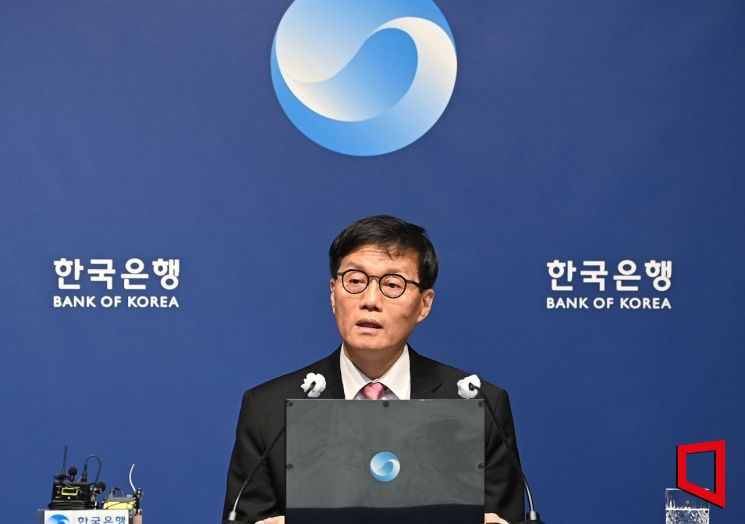
In an interview with CNBC on July 2, Governor Lee stated, "This year's economic growth forecast for Korea is 0.8%, which is much lower than the potential growth rate of around 2%, so temporary fiscal stimulus is necessary." He added, "The government's supplementary budget is expected to raise this year's growth rate by about 0.2 percentage points." However, he cautioned that a large-scale fiscal package could raise concerns about fiscal soundness in the medium to long term. He explained, "Currently, Korea's national debt-to-GDP ratio is 49%, which is below 50%. There are no immediate fiscal soundness issues, but in the long run, due to slowing growth and aging demographics, it could become a problem."
Korea's household debt, which is among the highest in the world, is one of the main concerns for the Bank of Korea when determining its base interest rate. Governor Lee explained, "Korea's household debt is about 90% of GDP, the highest level globally. The rise in real estate prices in the Seoul metropolitan area and the high household debt ratio are both reasons why the speed and timing of monetary policy decisions must be made with great caution." While the current low growth trend justifies maintaining a rate-cutting stance, he emphasized that the precise timing and magnitude of any rate cuts will be determined by closely monitoring monthly data, especially regarding financial stability risks stemming from household debt.
Regarding the introduction of a won-based stablecoin, he stressed the need for discussions with the new government and for regulatory and institutional frameworks to be established. As he highlighted at the ECB Central Banking Forum (Sintra Forum) the previous night, he warned that allowing non-bank institutions to issue stablecoins could accelerate capital outflows and weaken the effectiveness of central bank monetary policy.
Governor Lee noted, "The Bank of Korea is currently piloting a central bank digital currency (wholesale CBDC) and a deposit token-based system for banks, but fintech companies believe the current approach does not support innovation. Given the new demands and requirements, we clearly need to readjust our existing plans." However, he expressed concern that "if unregulated won-based stablecoins are allowed, it would make conversions to dollar-denominated stablecoins easier, which could weaken the central bank's ability to manage capital flows."
He explained that his greatest concern is that the influx of private money could make it more difficult to control the money supply. In addition to monetary policy, there are complex issues such as capital flow management and banking functions that go beyond the central bank's authority.
Governor Lee stated, "Proponents of stablecoins argue that if a won-based stablecoin is not issued, the Korean market will be more influenced by dollar stablecoins, leading to a loss of monetary sovereignty. They believe a won-based stablecoin could replace dollar stablecoins. However, to be honest, the opposite could happen." He emphasized that the existence of a won-based stablecoin could actually make it easier to convert to dollars, potentially increasing the use of dollar stablecoins. He pointed out, "These issues need to be examined more thoroughly."
When asked about concerns that Korea's drive to discuss stablecoins has created a market bubble, he replied, "It's hard to judge." Governor Lee said, "In general, I am concerned, but the Korean stock market has fallen significantly over the past six months due to political issues, so the recent optimism may simply reflect expectations for new technologies such as stablecoins and artificial intelligence (AI)."
© The Asia Business Daily(www.asiae.co.kr). All rights reserved.












