Four Korean Games, Including Lineage M, Receive Publishing Licenses...
Nine Korean Games Approved in China This Year
Industry: "China Is a Key Market"...
Targeting Through Localization
As the Chinese government lowers barriers for foreign games seeking to enter its domestic market, more Korean games are making their way into China. Given that the Chinese market is considered a key market for Korean game companies, industry efforts to expand into China are expected to continue.
According to the gaming industry on July 2, the National Press and Publication Administration of China issued publishing licenses (known as panhao) for four Korean games on June 23: Lineage M (NCSoft), Crossfire (Smilegate), Black Clover (Big Game Studio), and R2Beat (Valofe). These games received their licenses under the names "Tiantang: Xuetong" (天堂: 血統), "Crossfire: Rainbow" (穿越火線: 虹), "Black Clover Mobile," and "R2Beat: Sonic Awakening" (音速覺醒), respectively. Among them, Crossfire is a game developed by Tencent in China, utilizing the intellectual property (IP) of Smilegate.
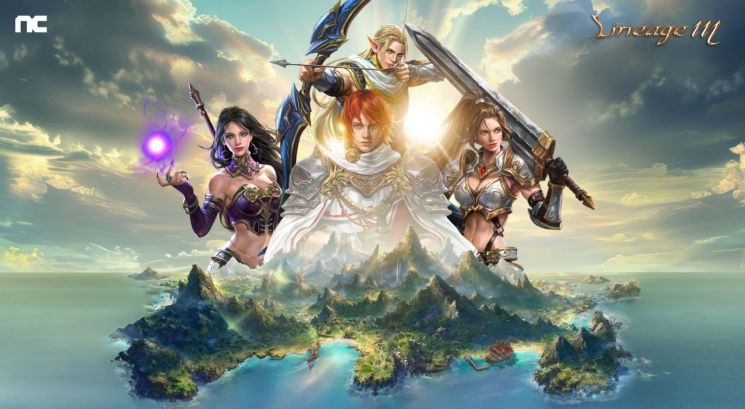
With this, the number of Korean games that have received publishing licenses from Chinese authorities this year has increased to nine. Previously, in January, Chinese authorities granted licenses to titles such as Gravity's "Ragnarok: Origin" and CookApps' "Fortress Saga." In March and May, one and two Korean games, respectively, received publishing licenses.
In order to offer a game in the Chinese market, it is necessary to obtain a publishing license from the Chinese government. This is because the Chinese government controls the release of both domestic and foreign games through the licensing system. Games developed by Chinese companies are issued domestic licenses, while games from foreign companies receive foreign licenses. Even so, foreign game companies cannot enter the Chinese market independently. As a result, Korean game companies have been collaborating with local firms by establishing joint ventures or entrusting publishing to local companies in order to enter China.
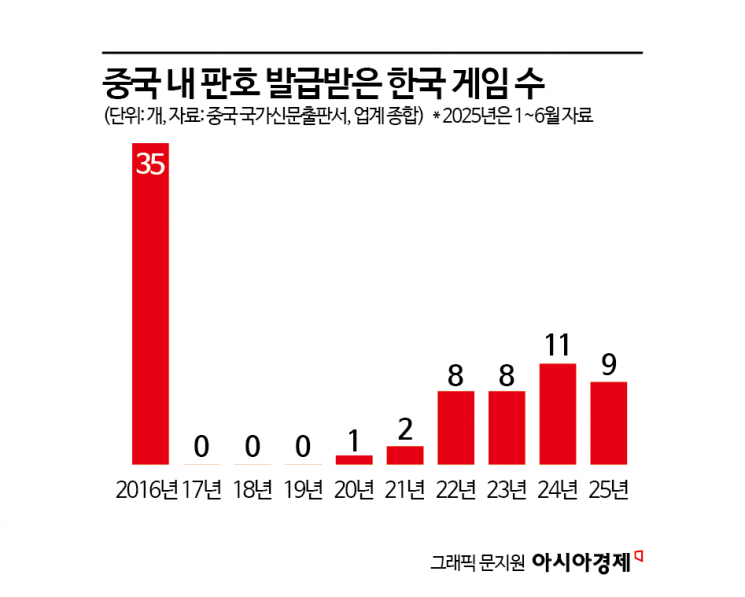
Korean game companies faced significant difficulties in entering China for a period of time. Following the deployment of the THAAD (Terminal High Altitude Area Defense) system, anti-Korean sentiment spread in China, and for a time, no foreign licenses were issued for Korean games. In 2016, prior to the THAAD incident, 35 Korean games received licenses, but from 2017, when the incident occurred, for three years, not a single Korean game was granted a license.
After the aftermath of the THAAD incident subsided, the industry was affected by the Chinese government's regulatory stance on games. In August 2021, Chinese state media published an editorial likening games to "spiritual opium," while authorities implemented measures limiting minors' game time to three hours per week (one hour per day from Friday to Sunday). During this period, only three Korean games received licenses in China (one in 2020 and two in 2021). Since 2022, as Chinese authorities gradually increased the issuance of licenses, the number of Korean games entering China rose to eleven last year.
Korean game companies that have obtained publishing licenses plan to target the Chinese market through localization. NCSoft announced that immediately after receiving the license for Lineage M, it would provide optimized services tailored to the Chinese market, including content planning, service operations, and communication strategies. Previously, NCSoft had received a license for Lineage 2M last year.
Given the large population and rapid growth of the gaming industry in China, Korean companies are expected to continue their efforts to enter the market. A representative from the Korean gaming industry stated, "Considering geographical proximity, cultural similarities, and gamer preferences, the Chinese market is regarded as one of the most important markets for Korean game companies," adding, "Efforts by Korean game companies to obtain Chinese publishing licenses have continued in the past and will continue in the future."
© The Asia Business Daily(www.asiae.co.kr). All rights reserved.