NHN Payco analyzes mobile meal voucher data for the first half of the year
"Perceived cost of living" rises... up 58% from 6,000 won eight years ago
Average lunch cost in 12 major business districts, including Gangnam and Yeouido, is 11,583 won
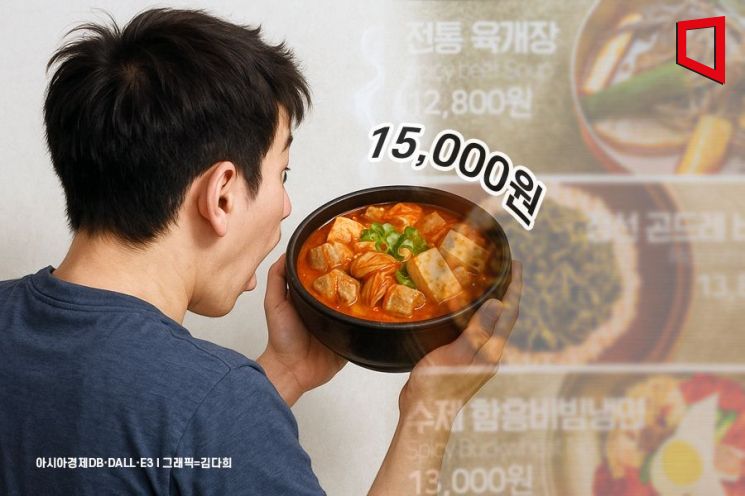
A recent survey found that the average cost of a lunch meal in Samseong-dong, Seoul is 15,000 won.
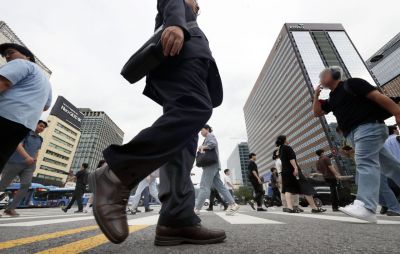 On the 19th, after the five-day Chuseok holiday ended and the routine of commuting to work resumed, citizens hurried on their way to work at the Gwanghwamun intersection in Jongno-gu, Seoul. Photo by Jo Yongjun jun21@
NHN Payco announced on July 1 that it had analyzed approximately 9 million transactions from its mobile meal voucher service. The results included a regional analysis covering 12 major business districts in the Seoul metropolitan area.
As of the first half of the year, the average lunch expense using Payco meal vouchers was 9,500 won. This represents an increase of about 58% over the past eight years, compared to 6,000 won in 2017 when NHN Payco launched its B2B mobile meal voucher service.
Among the 12 business districts in the metropolitan area, Samseong-dong recorded the highest average lunch cost at 15,000 won. This is attributed to the area's concentration of premium dining brands and the headquarters of major domestic and international corporations.
Samseong-dong was followed by Gangnam (14,000 won), Yeouido and Seocho (13,000 won), Magok and Pangyo (12,000 won), Songpa and Jongno (11,000 won), Gasan and Guro (10,000 won), and Gangdong and Dongdaemun (9,000 won).
The average lunch expense across the 12 major business districts was 11,583 won, about 2,000 won higher than the overall average of 9,500 won.
In Gangnam, Songpa, Jongno, Gasan, and Guro, the average lunch cost increased by 1,000 won compared to the previous year.
The most frequently used merchants for meal vouchers included Yogiyo (food delivery app), CU, GS25, and 7-Eleven (convenience stores), Paris Baguette and Tous Les Jours (bakeries), and Starbucks, Twosome Place, and Artisee (cafes).
The use of food delivery apps increased due to more flexible working environments. The preference for ready-to-eat meals also led to more frequent use of convenience stores, bakeries, and cafes.
An NHN Payco representative stated, "The meal voucher payment data shows that office workers' dietary habits and welfare needs are becoming increasingly diversified," adding, "We will continue to refine our customized services for each company based on accumulated data and insights, and enhance satisfaction for both companies and employees with flexible welfare solutions."
Since its launch in 2017, the number of users of the NHN Payco meal voucher service has increased for eight consecutive years. As of last year, the total transaction volume for the meal voucher service rose by 26% compared to the previous year, while the overall corporate welfare solution transaction volume increased by 30%. In the first half of this year, more than 2,300 companies and over 360,000 employees have adopted and are using Payco's welfare services.
© The Asia Business Daily(www.asiae.co.kr). All rights reserved.
![Clutching a Stolen Dior Bag, Saying "I Hate Being Poor but Real"... The Grotesque Con of a "Human Knockoff" [Slate]](https://cwcontent.asiae.co.kr/asiaresize/183/2026021902243444107_1771435474.jpg)

















