23.5% of Adolescents Consume High-Caffeine Beverages Three Times a Week
Energy Drinks, Jellies, and Candies Also Contain Large Amounts of Caffeine
The rate of adolescents consuming high-caffeine beverages three or more times per week has been increasing every year, raising serious concerns about their physical and mental health. While even adults report side effects such as heart palpitations, cold sweats, and headaches from excessive caffeine intake, there is growing concern as young students in their growth phase consume coffee and energy drinks without hesitation. On July 1, Yonhap News highlighted the rapidly increasing frequency of high-caffeine beverage consumption among adolescents, shedding light on their consumption patterns and associated risks.
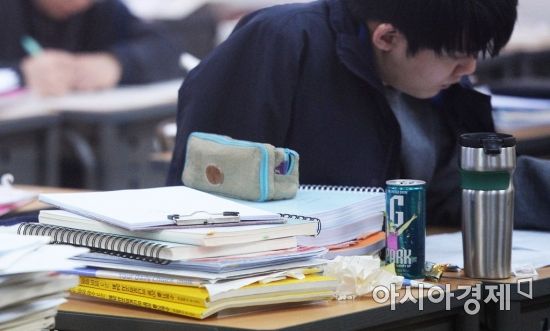 A student drinking a high-caffeine energy drink. Photo by Asia Economy DB
High-caffeine beverages include coffee, coffee drinks, energy drinks, and similar products. According to the Korea Disease Control and Prevention Agency, a nationwide survey conducted last year on 54,653 students from middle school grade 1 to high school grade 3 found that 23.5% of respondents reported drinking high-caffeine beverages three or more times per week. This figure has jumped significantly from 3.3% in 2015, 8% in 2017, and 12.2% in 2019.
Even considering that, prior to 2022, surveys only tracked energy drink consumption and excluded coffee and coffee drinks, the increase in high-caffeine intake among adolescents has been steep. An official from the Korea Disease Control and Prevention Agency explained, "Since coffee contains a large amount of caffeine and children are drinking more coffee, the actual caffeine intake may have been underestimated, which is why we expanded the scope of the survey."
"One to two cups of coffee a day is a must during exam periods"...Dozens of cafes in areas dense with private academies
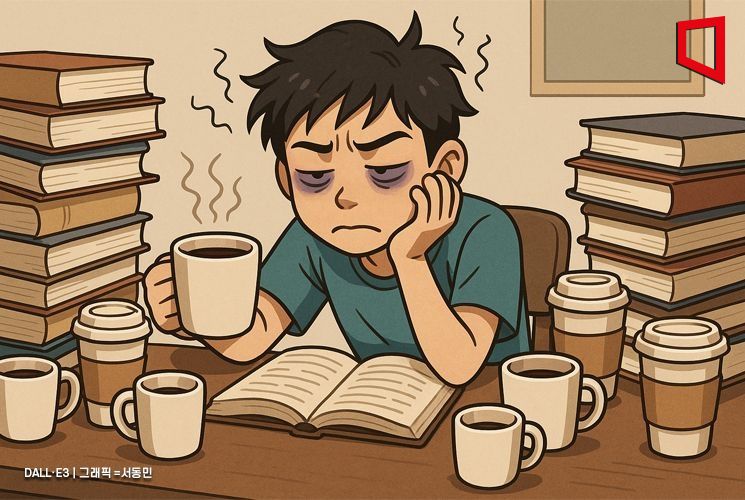
In addition to its temporary stimulating effects, caffeine can cause side effects such as increased heart rate and elevated blood pressure, and it interferes with the absorption of essential nutrients like iron and calcium. This is especially concerning for adolescents in their growth phase, as calcium absorption is crucial for the development of bones and muscles. Uncontrolled consumption of high-caffeine beverages can therefore hinder growth. A study by the University at Buffalo in the United States found that all 96 participants, aged 8 to 17, experienced increases in heart rate and blood pressure after consuming high-caffeine beverages.
Although students are aware of the risks associated with caffeine, many say they cannot quit. Warnings from adults that "caffeine interferes with calcium absorption and stunts growth" are ineffective. The lowered barrier to caffeine among adolescents is largely due to the increased accessibility from the expansion of affordable product lines and the growing number of cafes. In fact, in one alley densely populated with private academies in Mokdong, there are about 20 cafes. The types of cafes range from budget to mid- and high-end brands, and most coffee and energy drinks sold at nearby convenience stores and cafes are priced between 1,000 and 4,000 won.
 High-caffeine beverages refer to coffee, coffee drinks, energy drinks, and others. According to the Korea Disease Control and Prevention Agency, a survey conducted last year on 54,653 students from middle school grade 1 to high school grade 3 nationwide found that 23.5% of respondents reported drinking high-caffeine beverages three or more times a week. Photo by Jo Yongjun
Additionally, coffee milk, which is widely consumed by adolescents, should not be underestimated. A 500ml bottle of coffee milk commonly found in convenience stores contains 240mg of caffeine. Recently, various processed foods containing caffeine from "guarana," a tropical fruit, have also entered the market as alternatives to coffee. Guarana is a fruit native to the Amazon rainforest regions of Brazil and Paraguay, and its seeds contain caffeine. High-caffeine jellies, candies, and chewing gum containing guarana are marketed with labels such as "for exam takers," "keeps you awake," and "improves concentration." The caffeine content in these jelly products ranges from 75mg to 100mg per piece. In reality, even a single large cup of coffee from a budget cafe can exceed the recommended daily caffeine intake for adolescents. One large coffee (946ml) from a coffee brand contains 290.8mg of caffeine, which is far above the recommended daily limit for adolescents (150mg for a 60kg adolescent).
"Excessive caffeine may negatively affect brain health beyond addiction"
Caffeine stimulates the brain and suppresses drowsiness. As a result, consuming caffeine-containing coffee or energy drinks late in the evening can make it difficult to fall asleep and reduce sleep quality. Repeated excessive caffeine intake can lead to chronic sleep deprivation and insomnia. The problem is that lack of sleep disrupts the body's homeostasis and causes various side effects. In particular, sleep deprivation during adolescence can hinder height growth. Furthermore, domestic and international studies show that sleep deprivation in adolescence impairs learning ability and increases the risk of obesity. Caffeine itself also interferes with height growth. This is because excessive caffeine intake disrupts the absorption of iron and calcium, leading to growth retardation. In addition, caffeine can induce negative emotions such as anxiety and nervousness, making emotional regulation difficult, and it is highly addictive.
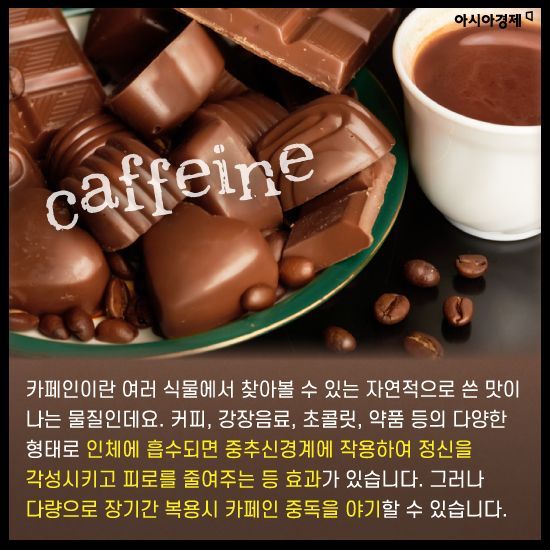
The problems caused by excessive caffeine intake among adolescents are clear. This is why adolescents need to be especially cautious about caffeine consumption. The recommended daily caffeine intake for adolescents is 150mg. This amount can easily be exceeded by drinking just two cups of coffee beverages or two cans of caffeinated drinks, so careful attention is required. Yoo Byungwook, a professor of family medicine at Soonchunhyang University Seoul Hospital, said in an interview with Yonhap News on this day, "Unlike the adult brain, the adolescent brain has underdeveloped receptors in various neurotransmitter circuits. If adolescents consume high doses of caffeine continuously, the caffeine-related neural circuits in the brain may become overactivated, which could negatively affect brain health beyond just causing caffeine addiction."
© The Asia Business Daily(www.asiae.co.kr). All rights reserved.
![Clutching a Stolen Dior Bag, Saying "I Hate Being Poor but Real"... The Grotesque Con of a "Human Knockoff" [Slate]](https://cwcontent.asiae.co.kr/asiaresize/183/2026021902243444107_1771435474.jpg)













