A City Yet to Reach 400,000 Residents After 13 Years
Theoretical Measures Alone Fall Short in Solving Commercial Vacancy
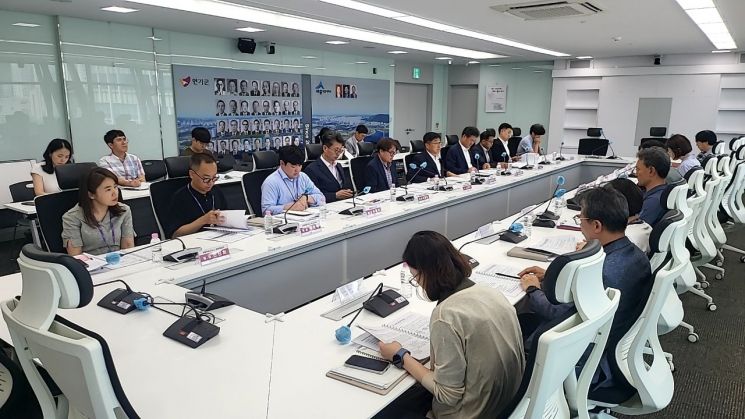 Officials from Sejong City, the Administrative City Construction Agency, and LH Sejong Special Headquarters at a joint strategy meeting to address vacant commercial spaces. / Photo by Small Business Division, Economic and Industrial Bureau
It has been a long time since small businesses in Sejong City have been closing down one after another, and commercial spaces built before the city was fully completed have remained vacant. Although it has been 13 years since the city was established, its population has yet to reach 400,000, and on weekends, many residents leave the city to visit large shopping malls elsewhere. As a result, local consumption and economic activity continue to struggle to gain momentum.
While administrative agencies are holding strategy meetings and taking action, these efforts have not been enough to influence consumer sentiment among citizens. Some criticize that these meetings are merely for show, as no concrete solutions have been produced.
On June 30, Sejong City announced that it had held the second joint strategy meeting this year to address vacant commercial spaces. Since November of last year, the city, the Administrative City Construction Agency, and Korea Land and Housing Corporation (LH) have been working together to develop a comprehensive plan to revitalize commercial areas in the new city center.
During the meeting, participants reviewed achievements from the first half of the year and discussed future directions. The main topics included: performance by each agency according to the comprehensive revitalization plan, progress on key projects, difficulties and possible improvements, and strategies for collaboration to achieve results in the second half of the year.
Previously, the city has been trying to identify and implement projects that reflect various suggestions from the field, such as holding communication sessions for each large vacant commercial district, in addition to promoting the comprehensive revitalization plan. However, these efforts have yet to yield significant results.
As the situation shows little sign of improvement, public institutions have decided to support the registration process for merchant associations in shopping districts that wish to organize, including providing consulting services. In the second half of the year, they also plan to announce changes to district unit plans in order to ease restrictions on permitted uses for commercial spaces and to expand small-scale tourism accommodations.
Lee Seungwon, Deputy Mayor for Economic Affairs, stated, "We will continue to systematically address the problem of vacant commercial spaces through ongoing joint response efforts and will keep implementing practical measures to revitalize the local commercial sector."
© The Asia Business Daily(www.asiae.co.kr). All rights reserved.

















