2024-2025 Sustainability Management Report
Waste Recycling Rate Surpasses Target
Carbon Emissions from Major Products Reduced by 19.4%
LG Electronics is approaching its greenhouse gas emissions target of 878,000 tons, which it aims to achieve by 2030. Additionally, last year, the company exceeded its waste recycling rate goal of 95%.
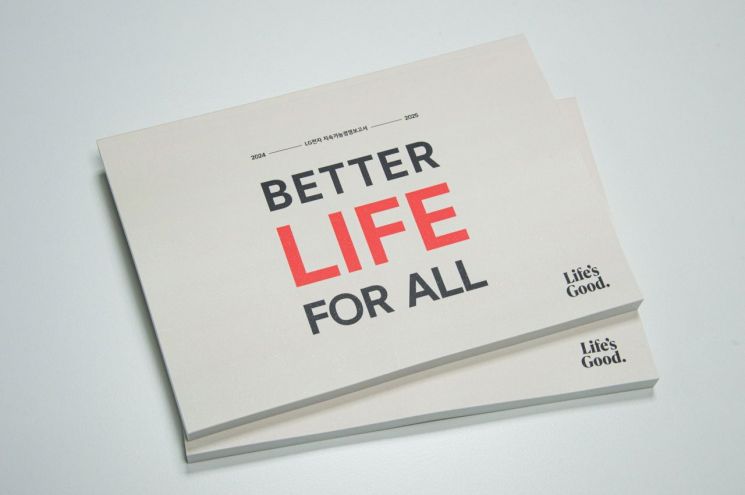
On June 30, LG Electronics published its '2024-2025 Sustainability Management Report.' The company reported that its total direct and indirect greenhouse gas emissions from domestic and overseas business sites last year amounted to 910,000 tons (calculated as carbon dioxide equivalent), which is close to the 2030 target of 878,000 tons. Previously, LG Electronics set a goal to reduce its greenhouse gas emissions by 54.6% by 2030 compared to 2017. To achieve this, the company has been introducing high-efficiency energy facilities in its production processes and expanding its use of renewable electricity.
LG Electronics has also made significant progress in reducing greenhouse gas emissions during the product usage phase by expanding high-efficiency technologies such as AI (artificial intelligence) and core tech. Last year, the carbon emissions generated during the usage phase of LG Electronics' seven major products decreased by 19.4% compared to 2020. Previously, LG Electronics became the first in the domestic home appliance industry to receive verification from the Science Based Targets initiative (SBTi) and set a goal to reduce greenhouse gas emissions during the usage phase of its seven major products by 20% by 2030 compared to 2020.
The company's efforts toward resource circulation are also accelerating. Last year, the waste recycling rate at LG Electronics' domestic and overseas business sites reached 97.4%, surpassing the 2030 target of 95%. The amount of waste electronic products collected in 91 regions across 56 countries last year totaled 532,630 tons, bringing the cumulative amount collected since 2006 to over 5 million tons. The amount of recycled plastic used last year also increased by 36% compared to the previous year.
LG Electronics is also continuously enhancing the accessibility of its products and services. The 'LG Comfort Kit,' which helps users operate home appliances easily regardless of gender, age, or disability, has expanded to 14 types. Notable examples include the 'Voice Menu Reading' and 'Simultaneous Hearing Aid and Speaker Listening' features on OLED TVs, as well as new kiosks equipped with adjustable height and tactile keypads. In terms of services, the company is conducting various activities such as care for people with disabilities, sign language consultations, senior-exclusive consultations, and in-store safety, IT, and cultural classes.
LG Electronics stated that it prioritizes compliance and ethical management, practicing responsible management centered on a board of directors with expertise, independence, and transparency. In particular, the company is continuously expanding the role of its ESG (Environmental, Social, and Governance) Committee under the board of directors. LG Electronics is also providing various forms of support for mutual growth in its supply chain. In accordance with international RBA (Responsible Business Alliance) standards, the company supports third-party ESG certification audits to proactively address ESG risks among its partners in areas such as labor, safety and health, environmental ethics, and more.
Thanks to these efforts, LG Electronics has been ranked in the 'Top 1%' for two consecutive years in the S&P Global Corporate Sustainability Assessment (CSA), and has received an A rating for five consecutive years from the global ESG rating agency MSCI. The company has also been included in the Dow Jones 'Best-in-class World Index' for 13 consecutive years.
Since 2006, LG Electronics has published a sustainability management report every year. The LG Electronics Sustainability Management Report is available for anyone to view on the company website.
© The Asia Business Daily(www.asiae.co.kr). All rights reserved.
![Clutching a Stolen Dior Bag, Saying "I Hate Being Poor but Real"... The Grotesque Con of a "Human Knockoff" [Slate]](https://cwcontent.asiae.co.kr/asiaresize/183/2026021902243444107_1771435474.jpg)
















