Divergent Views on Damage to Iran's Nuclear Facilities from U.S. Airstrikes
U.S. Media: Major Facilities Not Completely Destroyed
Trump Denounces "Fake News" and Criticism of Achievements
The Washington Post (WP) reported on June 29 (local time) that intercepted calls between Iranian officials revealed assessments that the U.S. airstrikes were less destructive than expected.
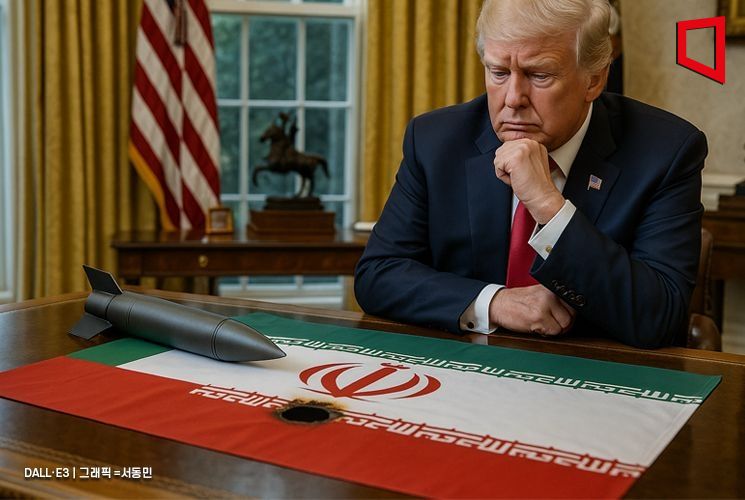
WP, citing four individuals who were briefed on related classified information within the U.S. government, reported that the United States had intercepted conversations among senior Iranian officials that included such assessments.
In these private conversations, Iranian officials speculated about why the U.S. attack on June 22 was not as extensive or destructive as they had anticipated.
WP added that this suggests the situation is more complex than President Donald Trump's announcement that "Iran's nuclear program has been completely destroyed."
The Trump administration did not deny the existence of the intercepted calls between Iranian officials, but pushed back by questioning the Iranians' ability to accurately assess the situation.
White House spokesperson Karoline Leavitt stated, "It is absurd to claim that anonymous Iranian officials know what happened hundreds of feet beneath the debris," and emphasized that their nuclear weapons program is finished.
There are differing opinions on the extent of damage to Iran's nuclear facilities resulting from the U.S. airstrikes. President Trump has highlighted the "destruction of Iran's nuclear facilities" as a major achievement of U.S. intervention, but questions have been raised about this claim.
U.S. media outlets such as WP, CNN, and The New York Times (NYT) reported, citing an initial assessment from the Defense Intelligence Agency (DIA), that while Iran's nuclear facilities suffered significant damage from the U.S. strikes, it appears that the main facilities were not completely destroyed.
In response, President Trump posted on his social media platform Truth Social, calling these reports "fake news" and expressing outrage that "fake news CNN and the failing NYT are joining forces to undermine one of the most successful military operations in history."
Meanwhile, Rafael Grossi, Director General of the International Atomic Energy Agency (IAEA), said in a June 29 interview with CBS News that "some (of Iran's nuclear facilities) remain intact," and added, "In my view, Iran may still have several centrifuge cascade facilities capable of producing enriched uranium within a few months, or even less." This directly contradicts President Trump's claim, as well as U.S. and Israeli assertions, that Iran's nuclear facilities have been completely destroyed.
Director General Grossi responded to questions about whether Iran had moved some or all of the approximately 400 kg of highly enriched uranium it had previously produced before the airstrikes by saying, "We do not know where this material is."
While there are suggestions that Iran may have relocated some highly enriched uranium in advance of the U.S. strikes, President Trump dismissed the possibility on Truth Social that Iran had moved uranium necessary for nuclear weapons production. He argued, "That would be very difficult and dangerous. It's extremely heavy. Moreover, we did not give them much warning (about the strikes on Iran's nuclear facilities)," insisting that they moved nothing.
© The Asia Business Daily(www.asiae.co.kr). All rights reserved.
!["The Woman Who Threw Herself into the Water Clutching a Stolen Dior Bag"...A Grotesque Success Story That Shakes the Korean Psyche [Slate]](https://cwcontent.asiae.co.kr/asiaresize/183/2026021902243444107_1771435474.jpg)
















