US Congress Releases 10-Year Estimate Based on Senate Bill
$500 Billion Higher Than May House Bill
Musk: "Future Industries Seriously Undermined"
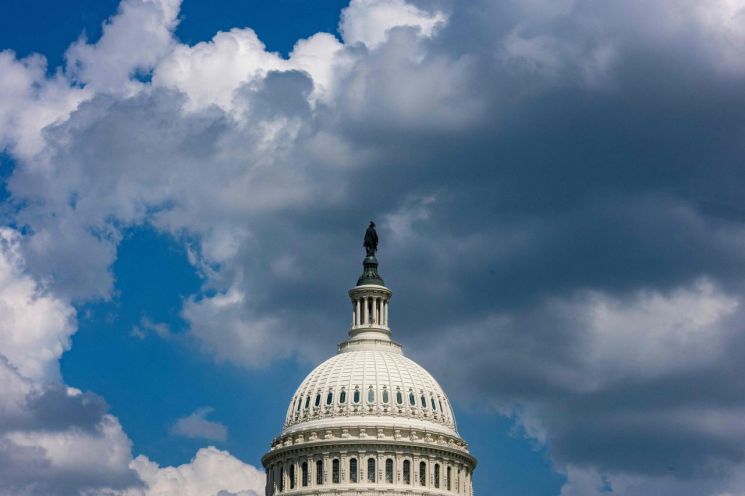
Former US President Donald Trump's "One, Big, Beautiful Bill" passed its "first hurdle" in the US Senate on June 28 (local time), and the US Congress has estimated that this will result in a fiscal deficit of $3.3 trillion (about 4,503 trillion won) over the next ten years.
US political media outlet Axios reported on June 29 (local time) that the Congressional Budget Office (CBO) estimated the Senate version would cause a fiscal deficit of $3.3 trillion over the next decade.
Axios pointed out that the CBO's estimate for the Senate version is about $500 billion higher than the version passed by the House last month ($2.8 trillion, or 3,806 trillion won). The estimated deficit has continued to increase: first $2.4 trillion, then $2.8 trillion, and now $3.3 trillion.
The CBO also warned that the Senate bill could cause more Americans to lose health insurance, as it includes further cuts to Medicaid and additional reductions to the budget related to "Obamacare" (ACA). While the House version estimated 10.8 million people would be affected, the Senate version estimates 11.8 million people.
This is because some provisions were changed in the Senate bill. According to ABC News, the Senate version adds a "work requirement" for Medicaid eligibility and imposes additional "provider taxes" on some hospitals and healthcare providers, increasing the likelihood that these costs will be passed on to patients.
The industry has criticized the bill for including cuts to subsidies for clean energy industries such as battery supply, solar, and wind energy.
Elon Musk, CEO of Tesla and formerly President Trump's "first buddy," criticized the Senate passage immediately after the news broke, posting on the social network X (formerly Twitter) that it was "completely insane and destructive," adding, "This will destroy millions of jobs and cause enormous strategic damage to the United States." He also pointed out, "This bill hands out subsidies to past industries while seriously undermining future industries."
The bill, which President Trump is pushing to pass before July 4, was approved in a procedural vote held before the full Senate vote on June 28, with 51 votes in favor and 49 against. Republican Senators Thom Tillis (North Carolina) and Rand Paul (Kentucky) voted against it and faced harsh criticism from President Trump. Senator Tillis has officially announced that he will not seek re-election.
© The Asia Business Daily(www.asiae.co.kr). All rights reserved.












