Democrats Demand Reading of 940-Page Bill
Unclear If Bill Will Pass Before Trump’s Deadline
Trump Targets Republican Dissenters
Silent on Musk’s “Political Suicide” Criticism
The so-called 'One Big Beautiful Bill (OBBB)', which reflects key policy agendas of U.S. President Donald Trump such as tax cuts and a crackdown on illegal immigration, has barely cleared its first hurdle ahead of a vote in the federal Senate.
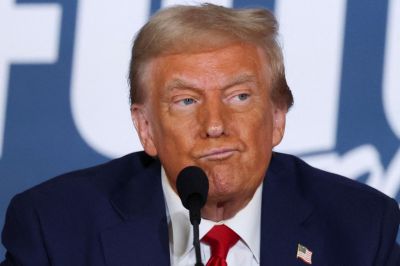
The Senate, where the Republican Party holds a majority with 53 out of 100 seats, held a procedural vote on the 'One Big Beautiful Bill' at the Capitol in Washington, D.C. on Saturday, the 28th (local time). The result was 51 votes in favor and 49 against. As a result, the possibility that this highly contentious bill will pass through the U.S. Congress has significantly increased.
In the vote, all 47 Democratic senators (including independents who caucus with the Democrats) opposed the bill, while two Republican senators, Thomas Tillis (North Carolina) and Rand Paul (Kentucky), also voted against it.
Vice President JD Vance, who also serves as President of the Senate, waited at the Capitol in anticipation of possibly having to cast a tie-breaking vote. However, Senate Republican leader John Thune persuaded dissenting members, and the bill ultimately passed with a majority in favor.
The procedural vote is the first step in the legislative process, determining whether the introduced bill will proceed to further debate and voting.
Because it took time for Republican leaders to secure enough votes within their own ranks, the vote lasted more than three hours. It was unusual for the Senate to hold a vote late on a Saturday night, especially when there was no urgent reason such as passing a budget to prevent a federal government shutdown.
The 'One Big Beautiful Bill' currently pending in the Senate is a comprehensive bill aimed at implementing President Trump's key campaign promises from last year's election, such as tax cuts. It includes extending various tax reductions that were enacted during Trump's first term in 2017 but are set to expire at the end of this year, such as lowering personal income tax rates, reducing the top corporate tax rate, and expanding the standard deduction and child tax credit.
The bill also includes other measures promised by President Trump during the election, such as exempting tip income and overtime pay from taxes, and providing a $1,000 (1,362,100 KRW) savings account for newborns. It also contains provisions reflecting Trump's policy priorities, such as eliminating clean energy tax credits, ending tax credits for electric vehicle purchases as of September 30, and increasing funding for border control and illegal immigration enforcement.
Additionally, the bill includes cuts to Medicaid spending, a public medical assistance program for low-income and vulnerable populations, and raises the federal debt ceiling by $5 trillion (compared to $4 trillion in the version passed by the House last month).
The bill passed the House of Representatives last month, but several provisions were amended in the Senate, and further amendments are expected during upcoming debates. Therefore, even if the bill passes the Senate, it will need to be approved again by the House.
President Trump is pressuring Republican lawmakers to pass the bill by July 4, Independence Day, so that he can sign it. However, the outlook for the remaining process remains uncertain.
The Democratic opposition is entirely against the bill, particularly because it seeks to offset trillions of dollars in lost tax revenue from large-scale tax cuts by reducing social welfare benefits, including Medicaid. Some dissent also exists within the Republican Party.
In particular, the minority Democrats demanded a full reading of the 940-page bill?a process known as a "reading by section"?to prevent Republicans from pushing the bill through by sheer numbers. After the reading, there is also the possibility of a "Vote-a-Rama," a so-called "voting marathon" in which unlimited amendments can be proposed and voted on before the final vote.
As a result, major foreign media outlets such as the New York Times predicted that the final Senate vote would not take place until at least the 30th, and considering subsequent procedures in the House, it is unclear whether the bill can be passed within the deadline set by President Trump.
Elon Musk, CEO of Tesla, who was once considered one of President Trump's closest allies during his second term, posted on X (formerly Twitter) that the bill "will destroy millions of jobs in America and cause enormous strategic harm to our country," calling it "completely insane and destructive."
Musk also shared the results of a poll showing that 58% of respondents agreed with his criticism of the bill, emphasizing, "According to the poll, this bill is political suicide for the Republican Party." Musk has previously voiced criticism of the bill and later engaged in a heated argument with President Trump.
President Trump did not respond directly to Musk's criticism, but instead targeted the Republican senators who voted against the bill in this vote. On Truth Social, Trump took aim at Senator Tillis, writing, "The people of North Carolina will not allow their senator to grandstand just to make a name for himself."
© The Asia Business Daily(www.asiae.co.kr). All rights reserved.