Potential Entry into a New Resource Circulation Business
On June 29, Korea Zinc announced that it has signed a research service contract with 'BOTTLE' (Bio-Optimized Technologies to keep Thermoplastics out of Landfills and the Environment), a consortium under the U.S. Department of Energy (DOE), for the development of waste plastic recycling technology.

Currently, Korea Zinc collects electronic waste both domestically and internationally, converts it into raw materials to recover valuable metals such as gold, silver, and copper, and then produces final products at its Onsan smelter. During this process, a large amount of plastic waste is generated from the electronic waste.
At present, this plastic waste is sold both domestically and abroad. However, if the research collaboration with BOTTLE succeeds in developing new technology, Korea Zinc expects to enter a new resource circulation business utilizing waste plastics.
BOTTLE, which is responsible for this research service, is regarded as the top research platform for the plastics circular economy led by the U.S. Department of Energy. Numerous national research institutes and universities, including the National Renewable Energy Laboratory (NREL), participate in BOTTLE, and global companies such as Amazon, Patagonia, P&G, and Lululemon are also partners in the consortium.
The research service contract between Korea Zinc and BOTTLE has a total duration of two years. During the first year, the project will focus on identifying the characteristics of waste plastics generated in Korea Zinc's current business processes and conducting research on recycling technology development. In the second year, the research will concentrate on process design and optimization based on the developed technology. If the final research results confirm business feasibility, Korea Zinc plans to begin design studies for commercializing a plant.
Depending on the research outcomes, there is also the potential for collaboration with many of the global companies that are BOTTLE partners. Furthermore, by expanding into a new resource circulation business that recycles waste plastics generated from electronic waste, Korea Zinc aims to strengthen its position within the electronic waste resource circulation value chain.
In particular, since waste plastics were included as a regulated item under the Basel Convention in 2021, there has been a global demand for the development of waste plastic treatment and recycling technologies.
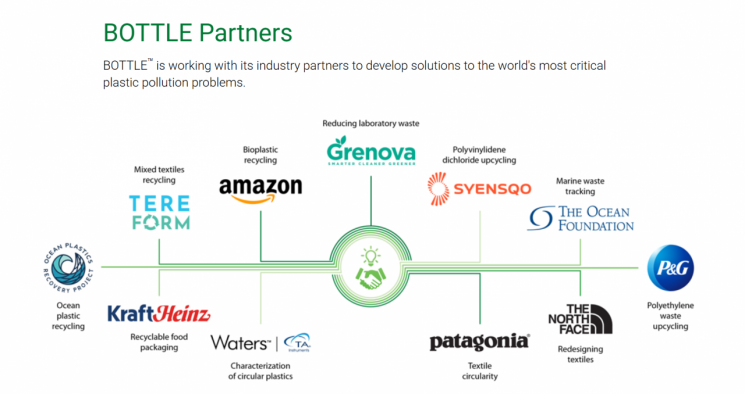 Korea Zinc's collaboration details with key business partners of the U.S. Department of Energy consortium 'BOTTLE,' with which it has signed a research service contract for 'waste plastic recycling technology development.' Korea Zinc
This research with BOTTLE is also expected to benefit Korea Zinc's other resource circulation technology development projects. Currently, Korea Zinc is working with Jeonbuk National University to develop biochemical recycling technology for recovering valuable metals such as gold, silver, and copper from printed circuit boards (PCBs).
Korea Zinc is also considering ways to recycle plastics contained in used lead-acid batteries. The company, which currently processes used lead-acid batteries classified as hazardous waste to produce lead products, plans to go further by developing technology to recycle plastics from these batteries, thereby contributing to carbon neutrality and advancing the circular economy.
© The Asia Business Daily(www.asiae.co.kr). All rights reserved.













