US Supreme Court Decision: Citizenship Restrictions Valid in 28 States
"Individual Lawsuits Possible Even if Policy Is Enforced in Some States"
The US Supreme Court has ruled that the lower court's decision to temporarily suspend the enforcement of President Donald Trump's birthright citizenship ban cannot be applied to states that did not participate in the lawsuit, thereby allowing the policy to take effect in those remaining states. Legal Korean residents in the US who have immigrated recently and have not yet obtained permanent residency are facing a confusing situation.
On the 27th (local time) in Texas, Park (38), who is preparing for immigration and staying in the US on a work visa, told Yonhap News, "My wife is due to give birth in a few months, but now, because of Trump's policy, they say our child won't be able to receive birthright citizenship. If our child has to live without citizenship, there will be many difficulties, so I'm wondering if I should at least consult a lawyer to figure out what to do."
Kim (36), who works in Los Angeles (LA), is married to a husband with permanent residency and is contemplating pregnancy and childbirth. She also told Yonhap News, "I haven't been able to read today's news in detail, but as policies like this keep coming out that restrict birthright citizenship and make life harder for immigrants, my anxiety and worries are growing. Even though California is not subject to the court's decision for now, I can't know what will happen in the future, so I'm worried about when and how I should give birth. I'm already older, so I can't just wait for the Trump administration to end, and all I can do is hope that things will improve."
The US Supreme Court has ruled that the lower court's decision to temporarily suspend the enforcement of the birthright citizenship ban cannot be applied to states that did not participate in the lawsuit, thereby allowing the policy to take effect in those remaining states. As a result, in 28 states, including Texas, which were not part of the lawsuit, President Trump's birthright citizenship ban can be implemented.
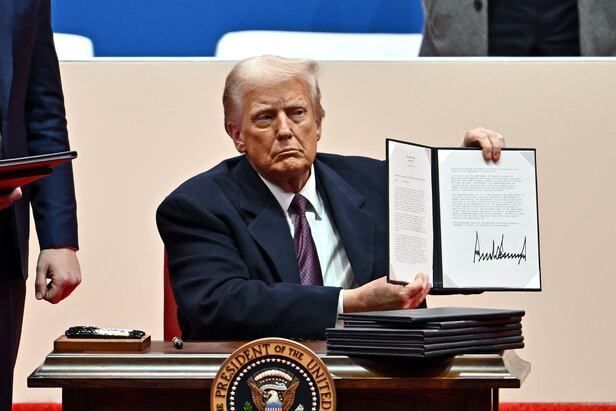
On January 20, President Trump signed an executive order immediately after taking office to restrict birthright citizenship for children born to parents who are either illegally residing in the US or do not have permanent residency. The order stipulates that if the mother is either illegally present or has only a temporary legal status, and the father is neither a US citizen nor a permanent resident, their child will not be granted citizenship.
However, confusion continues within the Korean community, where the number of undocumented immigrants is not high. Many legal residents who have come to the US in pursuit of the "American Dream" and have not yet obtained permanent residency after immigrating are feeling frustrated at the thought that they cannot even guarantee their children a basic legal status.
However, the local legal community is raising questions about the feasibility of the birthright citizenship restriction policy. They point out that birthright citizenship is stipulated in the US Constitution, so there is no legal basis for restricting it by presidential executive order alone. The 14th Amendment to the US Constitution states, "All persons born or naturalized in the United States, and subject to the jurisdiction thereof, are citizens of the United States and of the state wherein they reside." While the Trump administration argues that immigrants residing in the US without authorization are not under the jurisdiction of the US government because they lack legal status, legal experts believe there is insufficient precedent or legal basis to support such a claim. In fact, the Supreme Court, in its ruling, did not address the constitutionality of banning birthright citizenship itself.
Choi Kyungkyu, an immigration law attorney practicing in the US, told Yonhap News, "Even if the policy is implemented in some states, individuals affected can file separate lawsuits, and as these lawsuits proceed, there is a high likelihood that the policy will revert to its original state. President Trump is probably aware that there are legal issues with this policy, but since there are many voters in the US with anti-immigrant sentiment, it appears to be a political gesture aimed at appealing to such sentiments."
© The Asia Business Daily(www.asiae.co.kr). All rights reserved.



















