Delivery Deadline Limited to 45 Days
Concerns Raised Over Tight Schedule
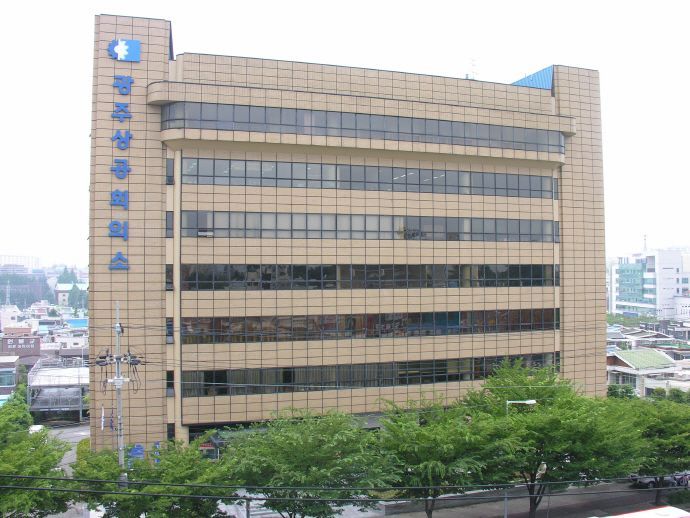
The Gwangju Chamber of Commerce and Industry recently announced on the 28th that it has proposed improvements to the Public Procurement Service to enhance the effectiveness of the Multiple Award Schedule (MAS) system, stating that some operational regulations of the MAS system do not sufficiently reflect the actual conditions of procurement sites and the realities faced by businesses.
The MAS system is a method in which the Public Procurement Service signs unit price contracts with multiple companies, allowing purchasing organizations to directly select and purchase registered items from the Nara Marketplace integrated shopping mall. This system is a key mechanism supporting small and medium-sized enterprises (SMEs) in entering the public procurement market. As of May this year, a total of 12,762 companies had signed contracts for 913,119 items, with the previous year's supply performance reaching approximately 18.6 trillion won.
The Gwangju Chamber pointed out that although the MAS system serves as a foundation for SME growth, some of its operational regulations do not adequately reflect the characteristics of procurement goods and administrative realities.
For example, in the case of high-priced items such as portable toilets, where the cost per contract can range from tens of millions to hundreds of millions of won, there are complex procedures involved, including on-site measurements, design, approval, production, and installation. Despite this, the delivery deadline is limited to 45 days, leading to feedback from the field that the delivery period is excessively tight.
While it is possible to extend the deadline through consultation with the purchasing organization, the requirement to submit various supporting documents and undergo internal administrative procedures increases the administrative burden on companies, highlighting the need to make delivery deadlines more realistic.
Additionally, the Gwangju Chamber pointed out that the 2nd stage competition threshold for the MAS system has remained at 100 million won since the system was introduced in 2005, with no adjustments for nearly 20 years. The 2nd stage competition is a process in which suppliers are selected based on a comprehensive evaluation of technology and price, and it applies to orders of 100 million won or more. However, since this threshold has not been adjusted to reflect inflation and changes in the procurement environment, it has led to excessive price competition rather than competition based on technology.
In response, the Gwangju Chamber suggested the need to raise the 2nd stage competition threshold for competitive products among SMEs from 100 million won to 200 million won. It also expressed the opinion that the current regulation, which restricts orders by considering repeated orders for the same item within 30 days by a purchasing organization as an attempt to avoid 2nd stage competition, should be improved.
In reality, there are many cases where different departments within the same organization place orders for different business purposes, but the order amounts are aggregated at the organizational level, resulting in restrictions. This has caused various inefficiencies, including supply schedule disruptions, administrative delays, and confusion in production planning.
The Gwangju Chamber stated, "Exceptions should be allowed when the business purpose or ordering department is clearly distinguished, and the aggregation of threshold amounts should be applied based on business purpose or department, not at the organizational level." "This proposal to improve the system is intended to reduce the burden on supplying companies and enhance procurement efficiency for purchasing organizations."
© The Asia Business Daily(www.asiae.co.kr). All rights reserved.
![Clutching a Stolen Dior Bag, Saying "I Hate Being Poor but Real"... The Grotesque Con of a "Human Knockoff" [Slate]](https://cwcontent.asiae.co.kr/asiaresize/183/2026021902243444107_1771435474.jpg)











