IAEA: "Unable to Verify Whereabouts of 400kg of Enriched Nuclear Material"
Trump Administration Confident in Iran's Loss of Nuclear Capability
There is fierce controversy within the United States over the actual impact of the large-scale airstrike on Iran's nuclear facilities ordered by President Trump on the 21st. President Trump claimed to have "completely annihilated" Iran's nuclear capabilities, but an initial assessment report from the US Defense Intelligence Agency (DIA) offered a contrasting view, stating that the destruction of the nuclear facilities was limited and only delayed Iran's nuclear development by several months to a few years.
On the 21st (local time), the US military conducted a large-scale airstrike targeting Iran's three major nuclear facilities?Fordow, Natanz, and Isfahan?deploying seven B-2 stealth bombers. A total of 125 aircraft participated in the operation, and the GBU-57 Massive Ordnance Penetrator (MOP), a super-heavy bunker-buster bomb weighing 13.6 tons, was used in combat for the first time.
Immediately after the operation, President Trump announced at the White House, "Iran's uranium enrichment facilities have been completely and totally destroyed," adding, "The goal was to eliminate the nuclear threat, and the airstrike was an astonishing military success." In addition to the B-2 stealth bombers, each costing over 2 trillion won, elite US military assets such as carrier strike groups and nuclear submarine squadrons were fully mobilized for this operation.
In particular, the Fordow facility is an underground uranium enrichment site built deep in the mountainous area near Qom, Iran, with the capacity to house 2,976 centrifuges, and has played a central role in Iran's nuclear development. The US military announced that it had concentrated its attack on this facility using bunker-buster bombs capable of penetrating up to 60 meters underground.
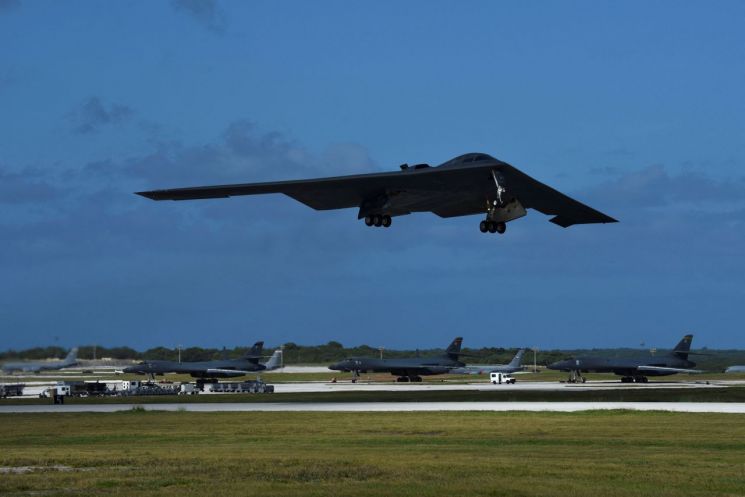
However, controversy began when an initial assessment report by the DIA was leaked to the media. This report stated that while the airstrike sealed the entrances to Iran's nuclear facilities and caused significant damage, it failed to completely destroy Iran's enriched nuclear material, only delaying Iran's nuclear development by several months. According to the report, Iran had moved some enriched uranium out of the facilities before the US airstrikes, and most of the centrifuges remained intact. In particular, for the Fordow facility, which was the most important target, the entrance collapsed and infrastructure was damaged, but the core underground facility was assessed to have remained undestroyed.
The assessment, first reported by CNN, was based on bomb damage evaluations by US Central Command and was confirmed by seven related officials. The report noted, "A complete battle damage assessment will take several days to weeks," and added that "this report is a preliminary assessment not yet coordinated among intelligence agencies."
The Trump administration immediately issued a strong rebuttal to the report. White House spokesperson Karoline Leavitt criticized, "This assessment is completely wrong and is an attempt to disparage President Trump and undermine the credibility of the brave pilots who carried out a perfectly executed mission." The Central Intelligence Agency (CIA) also presented an assessment that contradicted the DIA report. CIA Director John Ratcliffe stated, "According to reliable information, Iran's nuclear program has been severely damaged by the recent targeted strikes," and added, "There is new information from historically reliable and accurate sources that several key Iranian nuclear facilities have been destroyed."
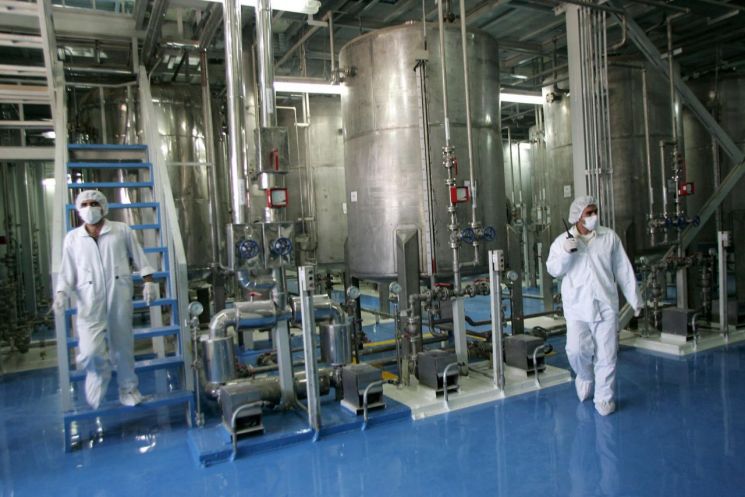
However, the whereabouts of Iran's 60% highly enriched uranium, reportedly amounting to about 400 kg, remain unknown. The International Atomic Energy Agency (IAEA) also stated that it has no information on where Iran moved the enriched uranium. After the US bombing, the level of radioactive leakage in the area was reportedly not as severe as expected.
As a result, the IAEA is urging the United States to resume nuclear negotiations with Iran and to ensure that Iran remains within the framework of the Nuclear Non-Proliferation Treaty (NPT), so that the location of the enriched uranium can be disclosed. In contrast, the Trump administration, which is placing great significance on the success of the operation, argues that there is no longer any need for nuclear negotiations with Iran, asserting as a fact that Iran has lost its nuclear capabilities.
The situation in the Middle East is expected to fluctuate greatly depending on whether Iran's nuclear capabilities have been completely eliminated. After President Trump's announcement of Iran's loss of nuclear capability, Israel accepted a ceasefire with Iran; however, if this turns out not to be true, Israel may launch additional attacks on its own.
The impact of this operation on North Korea and the Korean Peninsula is also significant. On the 23rd, North Korea's Ministry of Foreign Affairs issued a statement condemning the airstrike on Iran as "an infringement on the sovereignty of a nation," but refrained from directly criticizing President Trump, displaying a cautious stance. In particular, the bunker-buster bomb deployed in this operation was originally developed to target North Korea, and it is highly likely to be used as a hardline option by the United States in future efforts to resolve the North Korean nuclear issue. Since both North Korea and Iran possess underground nuclear facilities in mountainous terrain, similar operations could be conducted, making this a considerable burden for North Korea.
© The Asia Business Daily(www.asiae.co.kr). All rights reserved.













