National R&D Project Evaluation Committee Approves
Implementation of Eight Large-Scale National R&D Projects
The Ministry of Science and ICT's "Quantum Science and Technology Flagship Project" has been officially approved for implementation following a review of the project plan's appropriateness, allowing immediate commencement of the project. In addition, the Ministry of Trade, Industry and Energy's "Korean-Style Hydrogen-Based Steelmaking Demonstration Technology Development Project," which was selected for preliminary feasibility study in November last year, has also been approved for implementation.
On June 26, the Ministry of Science and ICT held the "5th National R&D Project Evaluation General Committee Meeting of 2025," presided over by Lim Yo-eop, Coordinator for Science and Technology Innovation (acting committee chair). At the meeting, the ministry finalized the results of the project plan appropriateness review for one project exempted from preliminary feasibility study, as well as the results of the third preliminary feasibility study in 2024 for seven national R&D projects.
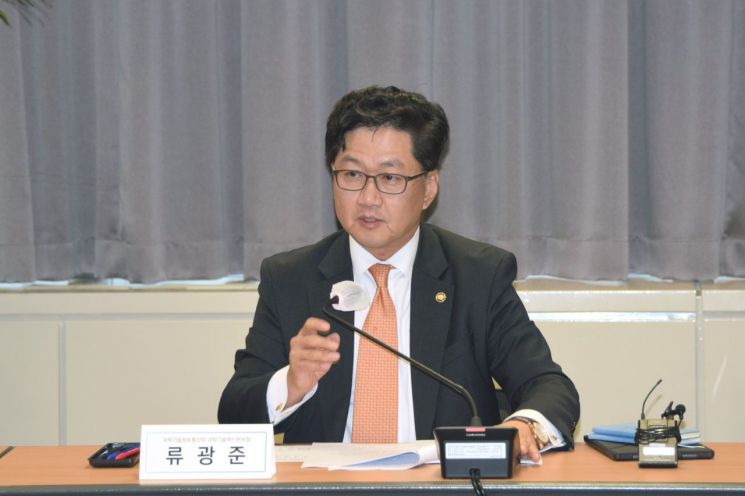 Ryu Kwangjun, Director of the Science and Technology Innovation Bureau at the Ministry of Science and ICT, is presiding over a meeting. Photo by Yonhap News
The "Quantum Science and Technology Flagship Project" of the Ministry of Science and ICT, which has been allowed to commence immediately due to exemption from the preliminary feasibility study, is a project that aims to achieve an early leap to the level of leading countries in quantum technology and to secure industrialization capabilities. The project will undertake challenging tasks in the fields of quantum computing, quantum communication, and quantum sensing.
In August last year, the project was exempted from preliminary feasibility study by a Cabinet decision, as it was recognized for its challenging and innovative goals, the need to strengthen national security, and the urgent necessity for national-level support to secure future markets. As a result of the recent project plan appropriateness review, an investment of 645.4 billion KRW over eight years until 2032 has been confirmed, allowing the Ministry of Science and ICT to immediately begin project execution.
By 2032, when the project concludes, the ministry plans to develop and build a 1,000-qubit quantum computing system based on superconductors and neutral atoms (quantum computing); develop a quantum repeater based on quantum memory and realize a three-node, 100-kilometer quantum internet at the network level (quantum communication); and develop a quantum sensor convergence platform to lead innovation in defense and advanced industries (quantum sensing).
Notably, this project will be the first national R&D project to take on the challenge of developing a superconducting-based quantum processor unit (QPU) with error correction functionality. Error correction technology is crucial for resolving the accumulation of errors that occurs as the number of quantum qubits increases. Google unveiled its error-correcting QPU, Willow, last year, and research in this area is actively underway worldwide. This project is expected to serve as a key milestone in Korea's journey to become a leading country in quantum technology.
At the committee meeting, the results of the preliminary feasibility studies for seven projects, including the "Korean-Style Hydrogen-Based Steelmaking Demonstration Technology Development Project," which was selected for preliminary feasibility study in November last year, were confirmed for implementation.
The Ministry of Trade, Industry and Energy's "Korean-Style Hydrogen-Based Steelmaking Demonstration Technology Development Project" is the world's first project to demonstrate a 300,000-ton hydrogen-based steelmaking process using a spectral hydrogen fluid reduction furnace. According to the results of the preliminary feasibility study, the total project budget is 814.6 billion KRW, and the project will be implemented over five years (2026-2030).
Upon completion of the demonstration, the current carbon-based blast furnace steelmaking process will be fully converted to a 100% hydrogen-based steelmaking process by 2050, in accordance with the "2050 Carbon Neutrality Scenario (Draft)" established jointly by relevant ministries in November 2021. The hydrogen-based steelmaking process can reduce carbon emissions by more than 95% compared to the existing blast furnace process, and is expected to contribute to achieving the greenhouse gas emission reduction targets for the steel sector by 2050.
In addition, the committee approved the implementation of six ongoing projects with unique missions from five ministries.
These include the Ministry of Science and ICT's "Digital Media Innovation Technology Development Project" (total budget: 136.3 billion KRW); the Ministry of the Interior and Safety's "Disaster and Safety Management R&D Project" (186.2 billion KRW); the Ministry of Trade, Industry and Energy's "Semiconductor Advanced Industry Technology Development Project" (313.5 billion KRW); the Ministry of Environment's "CLEAN AIR Technology Development Project" (97.2 billion KRW) and "Climate Change Adaptation and Water Disaster Management Technology Development Project" (106.6 billion KRW); and the Ministry of Land, Infrastructure and Transport's "Construction Lifecycle Safety Innovation Technology Development Project" (138.9 billion KRW).
Ryu Kwangjun, Director of the Science and Technology Innovation Bureau, stated, "We will continue to contemplate and make efforts so that national R&D investments can lead to improvements in the quality of life for the people and enhance national competitiveness."
© The Asia Business Daily(www.asiae.co.kr). All rights reserved.












