Ceasefire Implemented in 12-Hour Phases, Official End to War in 24 Hours
Qatar Mediates Truce
Easing of Middle East Tensions Expected, but Nuclear Dispute Remains
The military conflict between Israel and Iran, which began with Israel's airstrike on Iran, appears to be coming to an end. U.S. President Donald Trump announced that both sides have agreed to a ceasefire, raising expectations that the '12-Day War,' which shook the Middle East, will soon conclude. However, there are concerns that this ceasefire may only serve as a temporary fix, as it focuses solely on halting military clashes without reaching a comprehensive agreement on key issues such as the 'verifiable and irreversible disposal of nuclear materials,' which ignited the Iran war in the first place.
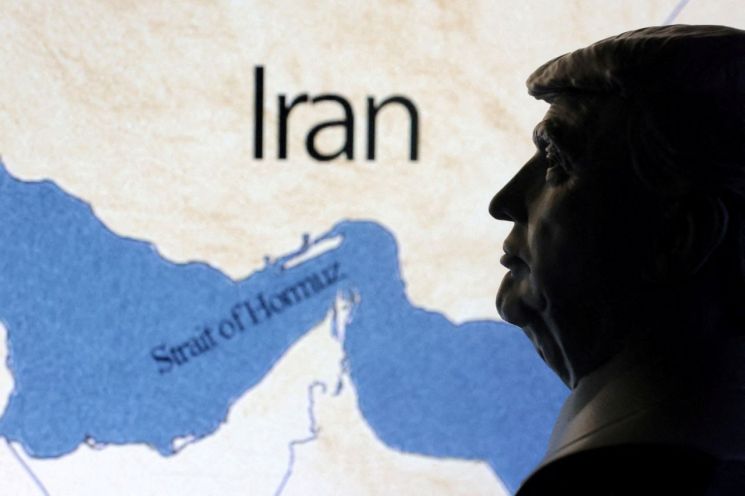
On the 23rd (local time), President Trump officially announced on his self-created social networking service, Truth Social, that a "Complete and Total CEASEFIRE" had been agreed upon between Israel and Iran. He stated, "About six hours from now, after both sides complete their current final missions, a 12-hour ceasefire will begin, and after that, the war will be considered over." According to his explanation, Iran will first observe a 12-hour ceasefire (halting attacks on Israel), followed by Israel observing a 12-hour ceasefire (halting attacks on Iran). If both sides comply, the war will officially end at midnight on the 25th, Washington D.C. time.
This ceasefire announcement came after Iran launched a missile attack on the U.S. Al Udeid Air Base in Qatar. Of the 14 missiles fired by Iran, 13 were intercepted, and there were no casualties. President Trump emphasized that "there were no casualties because Iran gave advance notice of the attack," expressing his gratitude to Iran. This is interpreted as a deliberate signal from President Trump to de-escalate tensions with Iran.
The Guardian analyzed, "The U.S. joined Israel's airstrikes to target Iran's nuclear facilities, and Iran appears to have chosen a strategically cautious response to counter the West's attempt to cripple its nuclear program before the completion of nuclear weapons."
President Trump named this conflict "THE 12 DAY WAR," emphasizing, "This war could have lasted for years and could have destroyed the entire Middle East, but that did not happen, and it never will." Since Israel's airstrike on Iran began on the 13th, if the war ends on the 25th, as President Trump mentioned, it will have lasted exactly 12 days.
He stated, "Both Israel and Iran have demonstrated the strength, courage, and intelligence to end this war." In an interview with NBC, when asked how long the ceasefire would last, he replied "unlimited," effectively expressing hope for a permanent end to the conflict.
U.S. Vice President J.D. Vance also said in an interview with Fox News on the same day, "It appears the 12-Day War is essentially over," adding, "Now there is an opportunity to resume a genuine peace process." Regarding Israeli Prime Minister Benjamin Netanyahu's call for "regime change in Iran," he drew a line, saying, "That is for the Iranian people to decide."
This ceasefire is reported to have been achieved with Qatar playing a key mediating role. According to Reuters, President Trump first conveyed Israel's agreement to a ceasefire to Qatar's monarch, Sheikh Tamim bin Hamad Al Thani (Emir), and then Qatar persuaded Iran. Vice President Vance reportedly coordinated the details with Sheikh Mohammed Al Thani, Qatar's Prime Minister. Citing a senior U.S. official, Reuters reported, "This agreement was the result of direct high-level coordination between President Trump, the Vice President, the Emir of Qatar, and the Prime Minister of Qatar."
There was also a positive response to the ceasefire within Israel. Amichai Chikli, Israel's Minister for Diaspora Affairs, expressed gratitude to President Trump and Prime Minister Netanyahu for their decision on X (formerly Twitter), stating, "This decision, marked by faith, courage, and moral clarity, will be recorded in history." Israeli media Channel 12 reported that Prime Minister Netanyahu told President Trump during a phone call that "if Iran stops its attacks, Israel will also agree to a ceasefire."
According to reports from Reuters, Al Jazeera, and other foreign media, the Iranian government stated, "If Israel stops its attacks, we also have no intention to respond." However, they added, "For now, there is no official agreement on a ceasefire," and "the final decision will be made later." This is interpreted as Iran conditionally indicating its willingness to accept a ceasefire. A senior Iranian official also stated, "The cessation of Israeli aggression is the starting point for dialogue, and whether the ceasefire will be implemented will be discussed within a few hours."
This war resulted in massive casualties and destruction of infrastructure in a short period. According to Reuters, at least 24 to 25 people were killed and more than 240 injured in Israel due to Iran's missile attacks. Iran's Ministry of Health estimated that more than 430 people were killed and 3,500 injured in Iran as a result of Israeli airstrikes. Key Iranian scientists were also killed in these airstrikes.
Although the airstrikes have stopped due to the ceasefire, the issue of Iran's nuclear material stockpile still looms, highlighting the structural limitations of this ceasefire. Israel and the United States claim to have struck three key Iranian nuclear facilities, but independent verification by the International Atomic Energy Agency (IAEA) or other third-party observers has not yet taken place. Therefore, if Israel and Iran return to the negotiating table in the future, the status of Iran's highly enriched uranium and the disclosure of its storage locations are expected to be key issues.
The Wall Street Journal (WSJ) pointed out, "The nuclear program remains a core issue in negotiations, and this ceasefire does not mention IAEA verification, nuclear material handling, or nuclear facility dismantlement." Al Jazeera-affiliated Arab News also reported, "The start of the ceasefire is only the initial stage of the diplomatic solution suggested by analysts," and pointed out that without a fundamental agreement such as a halt to uranium enrichment, the ceasefire is merely a "temporary fix."
© The Asia Business Daily(www.asiae.co.kr). All rights reserved.
![Clutching a Stolen Dior Bag, Saying "I Hate Being Poor but Real"... The Grotesque Con of a "Human Knockoff" [Slate]](https://cwcontent.asiae.co.kr/asiaresize/183/2026021902243444107_1771435474.jpg)
















