Sharp Rise in Insomnia Patients, Sleeponomics Gaining Popularity
Apps That Help You Sleep Also Emerging
"Improving Lifestyle Habits Comes Before Medication"
Han, a 35-year-old resident of Gangdong-gu, Seoul, has been struggling with sleepless nights for three years. In her battle with insomnia, she has tried everything from cleaning her bedding to drinking tea and doing light exercise before bed. Recently, after hearing that looking at her phone before sleep is not good, she purchased a "phone jail." Since she kept reaching for her phone, she decided to lock it up before getting into bed, blocking access entirely.
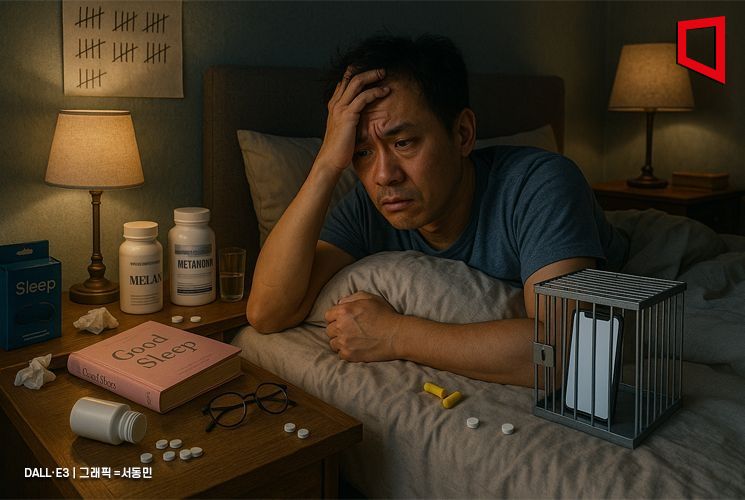
Kim, a 29-year-old officer working in Seoul, has also been suffering from stress-induced insomnia for a year. He has tried buying pillows and blankets said to promote good sleep, eating candies that help with sleep, and spraying sleep-inducing sprays in his room. When these measures fail, he sometimes takes antihistamines, but even then, he occasionally spends the night awake and goes to work without any sleep.
As more Koreans find themselves unable to sleep due to stress and work fatigue, the "sleeponomics" (Sleep+Economics) market is expanding. Sleeponomics is a portmanteau of "sleep" and "economics," referring to the entire market related to sleep.
According to global market research firm Search and Markets on June 24, the domestic sleeponomics market surpassed 3 trillion won four years ago. The firm also projected that the global sleeponomics market would reach 153 trillion won in five years.
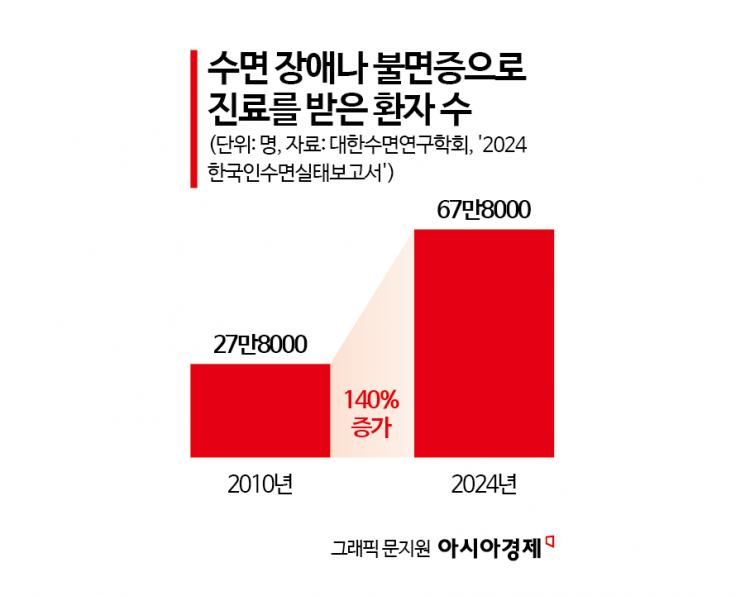
This is not surprising. According to the "2024 Korean Sleep Status Report" released by the Korean Sleep Research Society, the number of patients who received treatment for sleep disorders or insomnia increased by 140%, from 278,000 in 2010 to 678,000 in 2024. The average sleep time for Koreans is 6 hours and 58 minutes, which is 18% less than the average for member countries of the Organisation for Economic Co-operation and Development (OECD). In terms of sleep, Korea still falls far short of advanced countries.
As more people experience sleep deprivation and sleep disorders, a variety of sleep-promoting products such as beds, pillows, and supplements have emerged. Sleep technology is also advancing, with smartwatches and rings that collect biometric data being prime examples. There is also music designed to help with sleep.
With the growth of the sleeponomics market, some hospitals have developed and prescribed applications to help patients achieve better sleep. These so-called insomnia treatment apps come equipped with sleep induction programs, and patients who follow the programs as instructed reportedly see improvements in their sleep. Lee Junhee, a professor of psychiatry at Seoul St. Mary's Hospital, said, "Since last year, we have been prescribing apps that improve sleep habits as digital therapeutics, and some patients who have used them diligently according to the program have seen positive results."
Experts say that to improve insomnia and sleep disorders, it is best to first change one's environment and lifestyle habits rather than resorting to medication. Lee Ara, a professor of psychiatry at Kyung Hee University Medical Center, said, "In treating insomnia, sleep hygiene education comes before medication," adding, "Correcting bad habits or sleep environments that cause insomnia is most important, and if that does not work, medication is tailored to the individual's sleep pattern."
© The Asia Business Daily(www.asiae.co.kr). All rights reserved.


















