Contraction in Postpartum Care and Child-Related Industries Due to Declining Birth Rates
Price Increases Observed in Essential Sectors Such as Medical and Education
Expansion of the "Care" Market Amid Aging Population
Growth in Pharmacies, Veterinary Clinics, and Nursing Homes
Changing Consumption Patterns by Generation
People in Their 50s Increase Spending on Education and Leisure
People in Their 20s Drive Market Trends but Cause Rapid Shifts
Intensifying Polarization and Concentration Within SOHO Sectors
Distinctive Businesses and Price-Competitive Stores Show Diverging Performance
Digital Transformation Accelerates Across Industries
Need for Customized Support Policies for SOHO Businesses
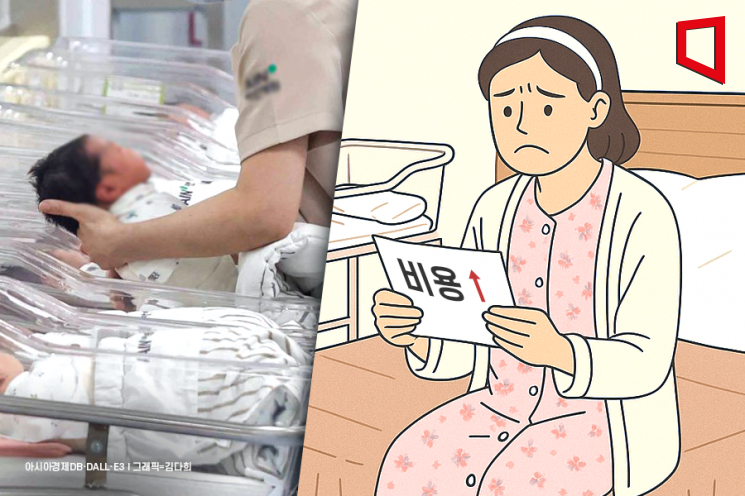
As the market for postpartum care centers and related industries has contracted due to declining birth rates, companies have responded by raising prices.
On June 23, Hana Bank's Hana Institute of Finance reported these findings in its report, "A Review of SOHO Industries Amid Changes in the Consumption Environment," which analyzed detailed domestic SOHO sectors based on Hana Card's credit and debit card transaction data (including approval amounts and number of merchants) from 2019 to 2025.
The report defined "SOHO" as a comprehensive concept encompassing small business owners, sole proprietors, and self-employed individuals.
According to the report, the decrease in the number of newborns in the SOHO market has led to a contraction in demand for related industries. In this environment of shrinking demand, price increases have also been observed as a means to offset declining sales.
For postpartum care centers, the number of merchants decreased by an average of 4.0% per year from 2022 to 2024, while the amount approved per transaction increased by an average of 23.6% per year.
In addition to postpartum care centers, a decline in demand and rising prices were also observed in pediatric clinics, children's clothing stores, and private tutoring academies.
Price increases were particularly notable in the medical and education sectors, which are considered essential goods and services.
Hana Institute of Finance analyzed, "Due to market contraction and price increases, the decline in the number of newborns is leading to a decrease in the number of businesses and rising prices, which in turn reduces accessibility to stores, increases childcare costs, expands the burden of parenting, and perpetuates a vicious cycle of low birth rates."
On the other hand, the institute forecast that the "care" market is expanding as a result of declining birth rates and an aging population.
In particular, the number of businesses has been increasing in sectors such as pharmacies, veterinary clinics, neuropsychiatric clinics, and nursing homes.
The institute stated, "With the increase in single- and two-person households and dual-income families, it is becoming increasingly difficult to handle 'care' solely within the home. As a result, activities such as childcare, elder care, pet care, and self-care, which were traditionally performed within the household, are now being transformed into economic activities, leading to the expansion of the care economy."
Consumption characteristics are also changing by generation.
People in their 50s are expanding their influence across various sectors, while those in their 20s are exhibiting rapid changes in consumption patterns.
For those in their 50s, the proportion of sales at private education academies accounted for by this age group increased from 18.7% in 2019 to 26.9% in 2024, due to the trend of older parents. In addition, as demand for re-employment after retirement has grown, the share of sales at technical and professional training academies from people in their 50s rose from 26.5% in 2019 to 32.6% in 2024.
Meanwhile, there has also been an increase in active behaviors such as self-care and enjoying leisure time.
The share of sales at skin and body care centers from people in their 50s increased from 17.6% in 2019 to 22.0% in 2024, while for travel agencies, the share rose from 21.8% in 2022 to 25.5% in 2024, driving the recovery of these sectors.
Consumption by people in their 20s, who are highly sensitive to trends, has a positive effect of revitalizing the SOHO market, but it is also characterized by a rapid downturn in business conditions when the popularity of a particular trend fades.
In the past, photo studios and karaoke rooms saw an increase in the proportion of sales from people in their 20s due to the popularity of self-photo studios and coin karaoke rooms. However, as the share from people in their 20s declined, the growth of photo studios slowed from 2022, and karaoke rooms, which had shown signs of recovery, shifted back to a decline in 2024.
Polarization and concentration within sectors of the SOHO market have also intensified.
"Concentration" refers to the phenomenon where supply is excessively focused on certain sectors, and this has mainly been observed in industries with a favorable consumption environment and high growth expectations.
A representative example is pet supply stores, where the number of stores increased by an average of 1.4% per year from 2022 to 2024, but the number of merchants grew by 4.2%, resulting in a 2.7% decrease in sales per store.
"Polarization" refers to the widening performance gap among businesses within a sector, with restaurants being a representative example. As demand has contracted due to fewer evening gatherings and a preference for home-cooked meals, the price of dining out has risen sharply. In this situation, demand has become divided between businesses with distinctive features that allow them to pass on price increases to consumers (such as popular restaurants and fine dining) and those offering price competitiveness and less affected by rising dining-out costs (such as low-cost buffets).
Furthermore, as digital transformation accelerates, customer acquisition and marketing have shifted from offline to online not only in real estate and restaurants, but also across various industries.
Kim Moon-tae, a research fellow at Hana Institute of Finance, stated, "It is now necessary to develop strategies to respond to digital transformation, generational shifts in demand, and changes in consumption trends by generation. During this period of paradigm shift and consumption contraction, it is important to establish effective stabilization measures for SOHO businesses through customized support policies tailored to the consumption environment and competitive landscape of each sector."
© The Asia Business Daily(www.asiae.co.kr). All rights reserved.