Uijeongbu City Presents Solutions to Local Conflicts with 8th Popularly Elected Collaborative Governance Model
Operation of Citizen-Centered Communication Platforms and On-site Mayor's Office... Into Everyday Life
Citizen-Administration Cooperation in Responding to the Geunsik Kim Incident and Transforming Ipseok Village
Establishing a Conflict Resolution Model through Citizen-Led Public Forums
Since the launch of the 8th popularly elected administration, Uijeongbu City in Gyeonggi Province (Mayor Kim Donggeun) has been actively promoting citizen-centered "collaborative governance," bringing about a wave of change in the local community. The city is being recognized for establishing a new administrative model that designs the future of the city together with its citizens through close-to-life communication, the operation of public forums, and strengthened policy implementation.
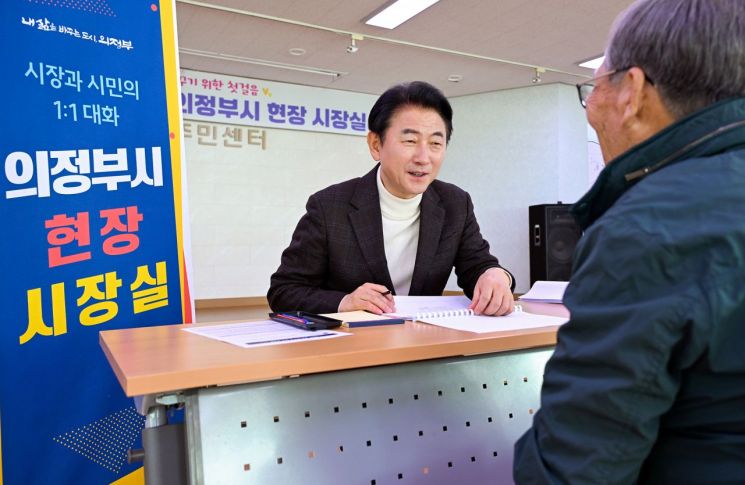 Mayor Donggeun Kim is operating an on-site mayor's office at the Nokyangdong Community Center. Photo by Uijeongbu City
According to Uijeongbu City on June 20, the "On-site Mayor's Office," cited as a representative example of collaborative governance, is a close-to-life communication platform that discovers practical policies through one-on-one conversations with citizens. As of June 2025, it has been operated a total of 98 times, with the cumulative number of consultations exceeding 1,500 cases.
The opening of the Camp Red Cloud (CRC) thoroughfare, which had been a closed section within a US military base, is a representative example realized based on citizen proposals. The establishment of a thoroughfare within the CRC, located on the border between Ganeung-dong and Nokyang-dong, began when residents participating in the Ganeung-dong On-site Mayor's Office in August 2022 suggested opening the closed road section to resolve commuting traffic congestion. The city, through consultations with the Ministry of National Defense, opened the 1-kilometer thoroughfare in July 2023. Following the opening, traffic volume was dispersed, resulting in a 63% reduction in travel time and an annual cost saving of 7 billion won.
The "Everyone's Parking Lot" project, aimed at fostering a shared parking culture, also originated from a citizen proposal made at the On-site Mayor's Office.
In August 2022, during the Heungseon area On-site Mayor's Office, a citizen proposed sharing the resident-priority parking zones near Shinsegae Department Store during daytime hours, and the city subsequently introduced the "Everyone's Parking Lot" project. This initiative has helped alleviate illegal parking issues and contributed to spreading a shared parking culture accessible to all citizens.
In October 2022, news of Geunsik Kim, a convicted sex offender against minors, moving into Uijeongbu City shocked the local community. Ipseok Village, densely populated with child facilities and schools, was gripped by fear due to concerns over the possibility of repeat offenses.
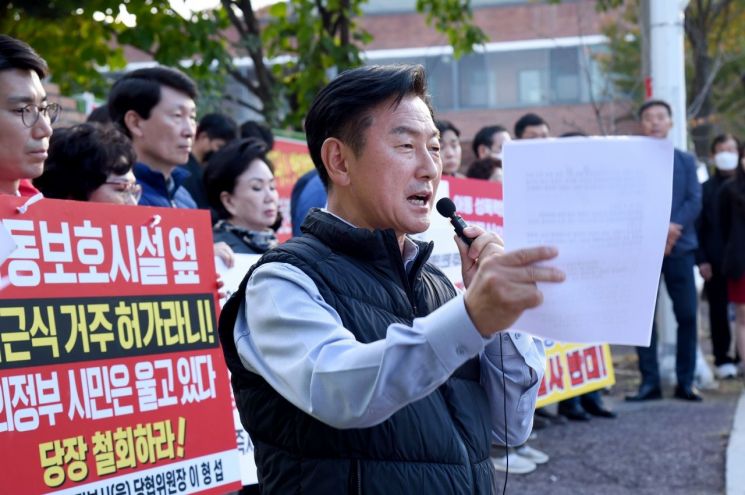 Mayor Gindonggeun leading the movement to prevent Geunsik Kim's residency in October 2022. Provided by Uijeongbu City
The city responded immediately to these citizen concerns. It conducted consultations with relevant ministries and issued an emergency administrative order restricting road access in front of the rehabilitation facility, among other administrative measures. The city also set up a temporary mayor's office in the area to directly oversee the situation, listened to residents' voices, and strongly demanded the withdrawal of the move-in at the central government level. Ultimately, Geunsik Kim's move into Uijeongbu was canceled, and the process became a symbol of collaborative governance created by the solidarity between citizens and the administration.
However, Uijeongbu City did not stop there. To fundamentally resolve the issue, the city launched the Ipseok Village Residential Environment Improvement Project. To ensure residents' safety, the city installed 15 crime prevention CCTVs equipped with intelligent selective monitoring systems, 35 pedestrian lights, 1 security light, and 11 entrance streetlights, and expanded the "Ipseok Village Night Starlight Patrol" to strengthen patrols in vulnerable areas. In addition, the city improved the physical urban environment, such as by constructing urban planning roads, transforming a "space of crisis" into a "safe daily life."
Since last year, the city has been operating the "Into Daily Life" program, which involves visiting citizens' living, working, playing, and learning spaces to listen to everyday issues and reflect them in policy.
This is a field-oriented communication administration in which the mayor directly experiences citizens' everyday spaces and reflects on-site needs in policy, moving beyond a complaint-hearing-centered communication approach. Starting with "Running with the Running Crew," this program has extended into various aspects of citizens' daily lives, including visits to small and medium-sized enterprises, pet plogging, independent bookstore bookshop keeper experiences, participation in folk painting workshops, barbershop experiences, taekwondo studio observations, and visits to houseplant studios.
Notably, an idea conceived during conversations with young people while participating in the running crew was developed into the actual marathon event "Dongo Mashil Run," demonstrating tangible results where citizen proposals are realized as actual policies.
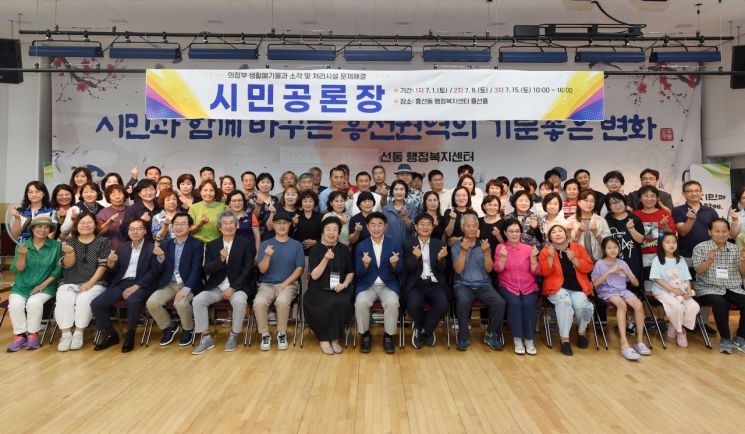 A commemorative photo taken after holding a citizen forum related to the incineration facility. Provided by Uijeongbu City
To enhance the execution of major policies and realize administration that citizens can truly feel, the city operates "working groups" involving the public, private sector, and academia, as well as "strategy meetings" focused on practical execution.
The working groups, which have been held 230 times on 35 topics, analyze the essence of problems from multiple perspectives and derive feasible solutions. The establishment of a foundation for attracting a cloud data center and the promotion of designating neighborhood parks as urban innovation zones are among the outcomes.
The working groups serve as a policy innovation platform where citizens, experts, and public officials collaboratively solve pledges and city administration issues, rather than individual departments handling them alone. Their distinguishing feature is deriving practical solutions by examining on-site problems from diverse perspectives.
To further enhance policy execution, Uijeongbu City regularly operates "strategy meetings." These meetings involve relevant departments discussing collaboration directions by topic, checking the progress of tasks, and coordinating implementation plans.
Since July 2023, Uijeongbu City has been holding "strategy meetings" as the unit of policy execution, with a total of 86 meetings held so far across five areas: corporate attraction, transportation policy, cultural policy, walkable city, and welfare policy.
In particular, strategy meetings have strengthened interdepartmental communication and broken down internal organizational barriers, laying the foundation for major city achievements such as selection as a candidate site for a free economic zone, the establishment and operation agreement for the Baek Youngsoo Municipal Art Museum, the postponement of the Sinpyeonghwa-ro BRT and abolition of the bus-only lane, the Uijeongbu City Emptying Project, and the Everyone's Care initiative.
The city is resolving public policies that are expected to cause conflict or have been stalled for a long time through a deliberative collaborative governance model called the "citizen forum." For sensitive issues such as the modernization of the resource recovery facility (incineration facility) and the selection of a new site for the reserve forces training center, the city has led policy decisions based on citizens' collective intelligence.
In July 2023, to resolve local opposition surrounding the modernization of the aging incineration facility, Uijeongbu City held the "Uijeongbu Municipal Solid Waste and Incineration Facility Problem-Solving Citizen Forum." A randomly selected group of 60 citizen participants, through a deliberative process, derived key decisions including expansion of the incineration facility's capacity, establishment of a new site, selection of Jail-dong as the location, facility undergrounding and landscape considerations, and promotion of a financial project approach.
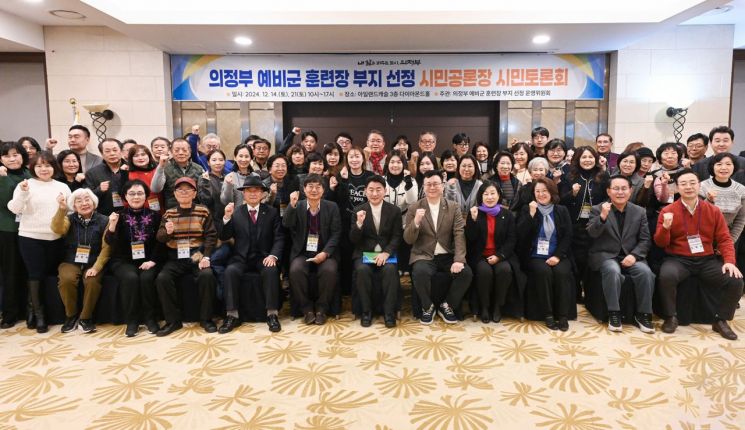 A commemorative photo taken after holding a public forum related to the relocation of the reserve forces training center. Provided by Uijeongbu City
Last year, when it became known that the relocation of the reserve forces training center had been decided by the military and government authorities, interregional conflict arose. In response, the city nullified the existing decision and decided to select the new location through a citizen forum.
After continuous consultations with the Ministry of National Defense, Uijeongbu City proposed an alternative that reduced the number of reserve trainees and the size of the site, then launched the Citizen Forum Preparatory Committee, holding its inaugural ceremony and operational meetings in October. After a deliberative process involving citizens, Jail-dong was ultimately selected as the new site for the training center.
The citizen forum has become established as a deliberative decision-making model in which citizens directly judge important administrative policies, going beyond simple opinion collection. In particular, the incineration facility forum was recognized as a model case of collaborative governance administration, winning the grand prize at the "2023 Gyeonggi-do Public Conflict Management Best Practices Competition."
Mayor Kim Donggeun stated, "The core of the 8th popularly elected Uijeongbu administration is collaborative governance that listens to citizens' voices and finds answers on-site," adding, "Going forward, we will continue the Uijeongbu-style collaborative governance model, in which citizens and the administration are partners drawing the future of the city together."
© The Asia Business Daily(www.asiae.co.kr). All rights reserved.



















