Warren Buffett, the "Oracle of Omaha" and Chairman of Berkshire Hathaway, announced his succession plan and retirement on May 3. Since then, Berkshire Hathaway's stock price has dropped by more than 10%, according to a report by CNBC on June 19 (local time).
In particular, during the same period, the company's performance was about 15% lower compared to the S&P 500 index return.
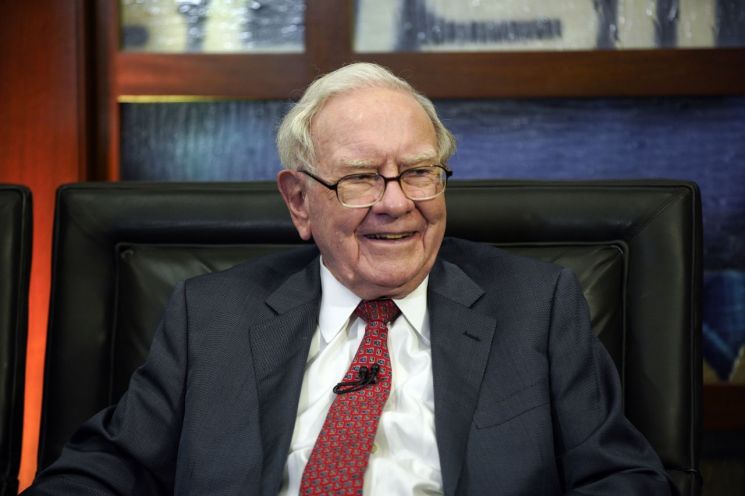
CNBC explained that this is due to the "Buffett premium" being eliminated. Investors had been willing to pay an additional price for shares because of Buffett's investment acumen and capital allocation skills.
On May 3, Buffett announced that he would remain as Chairman of the Board but step down as Chief Executive Officer (CEO) effective January 1 of next year. He named Vice Chairman Greg Abel as his successor.
David Kass, a longtime Berkshire Hathaway shareholder and finance professor at the University of Maryland, said, "Given that Buffett is not scheduled to step down as CEO until December 31, I am honestly surprised by Berkshire Hathaway's weak performance," adding, "Some shareholders have been disappointed by the recent share price trend, and the relative decline could reach up to 20% in the coming weeks."
As a result, there are projections that the stock price could fall further after Buffett fully steps back from day-to-day management.
Meyer Shields, an analyst at Keefe, Bruyette & Woods (KBW), noted that because Buffett will remain as Chairman of the Board, about 5-10% of the "Buffett premium" is still reflected in the stock price. Professor Kass warned that if Buffett steps down as CEO at the end of the year, the stock price could decline further.
Meanwhile, there is also analysis that Berkshire Hathaway's weak performance has contributed to the stock's decline. In the first quarter of this year, operating profit?including subsidiaries such as insurance and railroads?fell 14% year-on-year to $9.64 billion.
Kevin Heal, an analyst at Argus Research, said, "The initial drop in the first few days after the (Buffett retirement) announcement was definitely related to the 'Buffett premium.' However, I also believe algorithmic trading played a significant role, and subsequent declines were due to fundamental assets such as listed and unlisted holdings."
© The Asia Business Daily(www.asiae.co.kr). All rights reserved.

















