Top Military Leaders Left Defenseless in Initial Clashes
Information Leaked to Israeli Intelligence Agency Mossad
As armed clashes between Israel and Iran continue, a ban on mobile phone use has been imposed on high-ranking Iranian officials and security personnel. This measure is due to concerns over Israeli military cyber operations.
On June 17 (local time), the US political media outlet Politico reported, citing Iran’s Fars News Agency, which is affiliated with the Islamic Revolutionary Guard Corps (IRGC), that such a ban had been implemented. Iranian local media explained that using mobile phones connected to telecommunications networks could allow sensitive information to be leaked to Israel. The authorities have also reportedly urged their citizens to delete messenger applications such as WhatsApp from their phones.
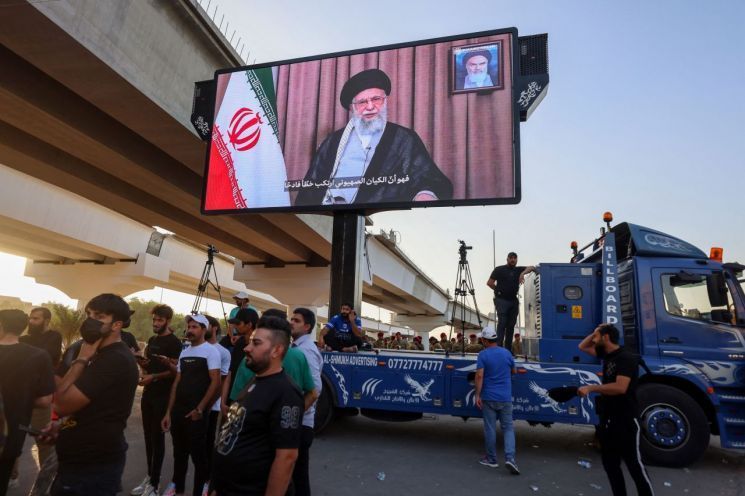 The Supreme Leader of Iran, Ayatollah Ali Khamenei, is informing the Iranian people about the situation with Israel through a broadcast. Photo by AFP and Yonhap News
Earlier, on June 13, Israel launched a large-scale airstrike on several Iranian military bases, including nuclear facilities. Not only were top military leaders such as Mohammad Bagheri, Chief of Staff of the Iranian Armed Forces, and Hossein Salami, Commander-in-Chief of the IRGC, targeted, but scientists and experts suspected of involvement in Iran’s nuclear weapons program were also eliminated.
The Israeli intelligence agency Mossad is believed to be behind the killings of these key figures. It is reported that critical information had already been leaked to Mossad, leaving the targets defenseless. Israel is known to possess exceptional capabilities in intercepting communications of hostile officials in neighboring countries using advanced technology. In fact, Israeli security firm NSO Group exports the spyware Pegasus, which can monitor ordinary smartphones, to countries around the world.
Regarding this, Lukasz Olejnik, a senior research fellow at the Department of War Studies at King’s College London, told Politico, "An adversary can track key personnel, intercept communications, and even target them by using devices connected to telecommunications networks," adding that "this demonstrates the concerns of the Iranian authorities."
Meanwhile, Iran has retaliated by launching about 200 ballistic missiles toward Israel. However, Israel has continued its strikes, bombing major Iranian military facilities using fighter jets such as the F-35I.
© The Asia Business Daily(www.asiae.co.kr). All rights reserved.