"Turning USFK into a Regional Rapid Deployment Force
and Directly Involving It in Asia-Pacific Battlefields"
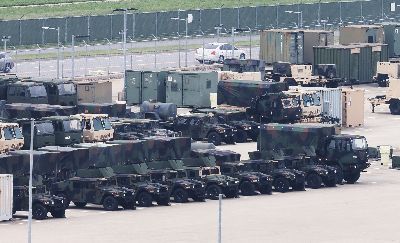
North Korea has recently condemned the so-called "strategic flexibility" strategy, which calls for an expanded role for U.S. Forces Korea (USFK) in the United States, as "an aggressive attempt by the United States to maintain regional hegemony."
In a commentary published under the name Kim Hyuknam on June 17 by the Korean Central News Agency (KCNA), the strategic flexibility of USFK was described as "an official declaration to turn USFK into a regional rapid deployment force and directly commit it to disputes and battlefields in the Asia-Pacific region."
Kim Hyuknam stated, "It is as clear as day that the moment strategic flexibility, fueled by hegemonic ambitions, is set in motion, it will ignite the various latent sources of conflict in Northeast Asia and trigger a massive chain explosion."
He further argued that if the deployment of USFK to key regions becomes a reality through strategic flexibility, South Korea would become the most effective primary outpost, adding, "Given the subordinate structure of the South Korea-U.S. alliance, the participation of South Korean forces would also be inevitable."
Kim Hyuknam also pointed out, "Behind such reckless and urgent provocative moves by the United States lies the anxiety of the White House, which is faced with the rapid rise of anti-U.S. and independent forces in the Asia-Pacific region, the resulting shift in the balance of power, and the loss of its hegemonic status."
He went on to say, "The increasingly reckless provocations by our enemies, which have intensified since the advent of the current U.S. administration, highlight the necessity and urgency for us to renew and build the most overwhelming and offensive deterrence, as well as to take powerful and practical warning actions."
Meanwhile, U.S. Secretary of Defense Pete Hegseth stated on June 11 (local time) that the new U.S. National Defense Strategy (NDS) would emphasize the Indo-Pacific region as a counterbalance to China and include greater burden-sharing among allies. Some observers predict that the new NDS may include demands for increased South Korean defense spending and the strategic flexibility of USFK.
© The Asia Business Daily(www.asiae.co.kr). All rights reserved.
![Clutching a Stolen Dior Bag, Saying "I Hate Being Poor but Real"... The Grotesque Con of a "Human Knockoff" [Slate]](https://cwcontent.asiae.co.kr/asiaresize/183/2026021902243444107_1771435474.jpg)











