As the Ministry of Trade, Industry and Energy finalizes key senior appointments?including the First Vice Minister and Chief Negotiator for Trade?there is a strong likelihood that a figure from the Ministry of Environment will be selected for the position of Second Vice Minister. Analysts suggest that appointing a climate and environment official to the role overseeing energy policy is aimed at strengthening policy linkages with the soon-to-be-established Ministry of Climate and Energy.
According to government sources on June 16, there was widespread expectation within and outside the ministry that Moon Sinhak, the newly appointed First Vice Minister, who is classified as an energy expert, would be named Second Vice Minister. However, he was actually appointed to the First Vice Minister position, which oversees overall industrial policy. Moon has been considered a "career energy official," having previously served as Director-General for Energy Policy and Director-General for Resource Industry Policy. Even though the presidential office's press release highlighted his credentials as an "energy expert," his appointment as First Vice Minister rather than Second Vice Minister has left room for interpretation.
In this regard, an official from the ministry said, "It appears that there was a political judgment made with inter-ministerial function adjustments in mind." The official explained that this personnel arrangement was made to coordinate the establishment of the new Ministry of Climate and Energy (tentative name) being prepared by the Lee Jaemyung administration. He added, "It seems that the appointment reflects the intention to assign someone familiar with the Second Vice Minister's duties, so that these functions can be smoothly transferred to the Ministry of Climate and Energy," and noted, "This could be a strategic decision to reorganize the ministry's energy functions in advance of the launch of the new agency."
Within government circles, there is also speculation that a former or current official from the Ministry of Environment may be appointed as Second Vice Minister of the Ministry of Trade, Industry and Energy. The interpretation is that by placing an expert in climate policy at the helm of energy policy, the government aims to strengthen policy coordination between the Ministry of Trade, Industry and Energy and the Ministry of Climate and Energy in the future. In fact, the Second Vice Minister oversees energy-related departments such as the Energy Policy Office, Resource Industry Policy Bureau, and Hydrogen Economy Policy Bureau, making inter-ministerial coordination on issues like climate transition and carbon neutrality increasingly important.
Meanwhile, within the Ministry of Environment, there is a growing sentiment that the reorganization should go beyond simply spinning off existing climate-related departments and instead expand to absorb the energy functions of the Ministry of Trade, Industry and Energy, thereby creating a "Ministry of Climate, Environment and Energy." This is based on the assessment that a substantive policy integration is only possible if some energy functions are transferred from the Ministry of Trade, Industry and Energy to the Ministry of Environment. Currently, the Ministry of Environment operates about 200 climate-related personnel at the headquarters level. The ministry has core departments such as the Climate Policy Office, Climate Bureau, Air Quality Bureau, and Green Transition Bureau, as well as strategic organizations like the Climate Crisis Response Team, giving it a status comparable to an independent ministry.
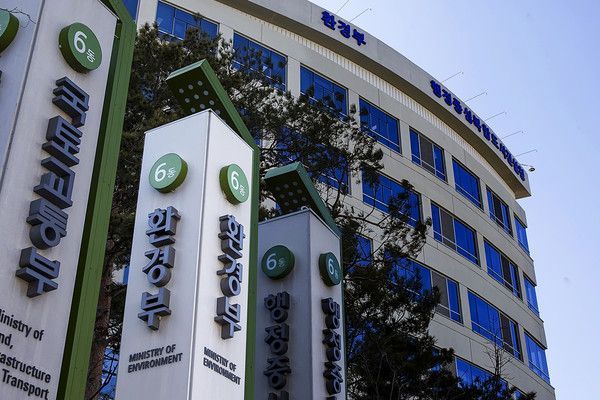
Analysts say this plan is highly plausible, as it aligns with President Lee Jaemyung's national policy direction. Since his presidential campaign, President Lee has emphasized an "industry transition centered on climate and environment," and has made it clear that carbon neutrality and energy transition will be central pillars of industrial policy.

Meanwhile, opinions within the Ministry of Trade, Industry and Energy are mixed. One senior official said, "The attempt to harmonize industry and environment is desirable in itself, but balanced policy coordination is needed to ensure that the core functions of the energy department are not compromised." Another official pointed out, "If an official with an environmental background is brought in, it could mark a turning point for the ministry's energy policy," adding, "The key will be harmonizing organizational culture and policy direction."
© The Asia Business Daily(www.asiae.co.kr). All rights reserved.
![Clutching a Stolen Dior Bag, Saying "I Hate Being Poor but Real"... The Grotesque Con of a "Human Knockoff" [Slate]](https://cwcontent.asiae.co.kr/asiaresize/183/2026021902243444107_1771435474.jpg)
















