The British broadcaster BBC reported on June 14 (local time) that the military confrontation between Israel and Iran is expected to be the most pressing issue at this week's Group of Seven (G7) summit in Canada. The conflict between Israel and Iran could trigger not only a surge in oil prices but also a major crisis for global security.
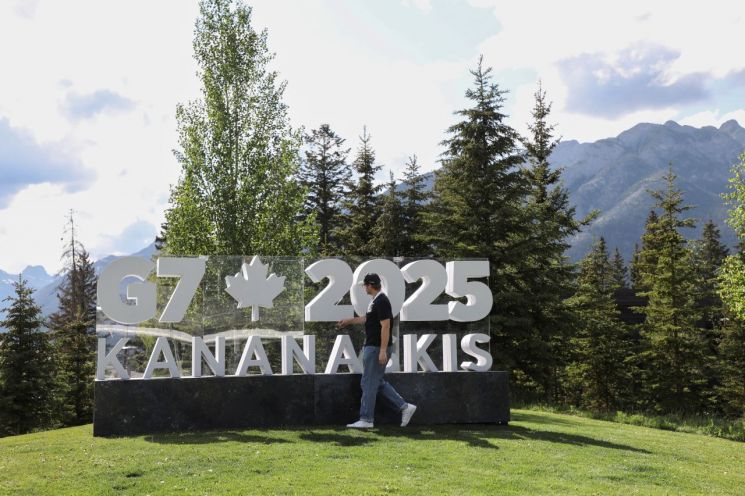
However, it appears that it will be a difficult task for G7 leaders to reach a unified stance on the Israel-Iran issue. Previously, UK Prime Minister Keir Starmer and French President Emmanuel Macron called for restraint and de-escalation from both Israel and Iran. Japanese Prime Minister Shigeru Ishiba criticized Israel, calling its actions "unacceptable." In contrast, US President Donald Trump described Israel's attack as "excellent."
Previously, during the 2018 G7 summit in Canada, disagreements over issues such as tariffs strained relations with President Trump. At that time, President Trump criticized then-Canadian Prime Minister Justin Trudeau as "dishonest and weak," withdrawing his support for the joint statement. Observers note that the atmosphere this time may be similar to 2018, as the summit is again taking place amid President Trump's wide-ranging tariff wars during his second term.
Some analysts suggest that the very reason for the G7's existence will be put to the test, depending on how substantive the discussions on President Trump's tariff policies turn out to be. Another variable is that the war in Ukraine has been included as a key agenda item. During the Joe Biden administration, the G7 served as a central platform for coordinating international sanctions against Russia following its invasion of Ukraine.
The European Union (EU) and the UK view this summit?the first since the start of Trump's second term?as a critical turning point for strengthening sanctions against Russia. This time, instead of provoking President Trump by highlighting tariff issues at the multilateral meeting, it is expected that participants will focus on commending his efforts to negotiate an end to the war in Ukraine while persuading him of the need to increase pressure on Russia.
In particular, ahead of the summit, the EU proposed lowering the G7 cap on Russian oil prices from $60 to $45 per barrel. However, there are concerns that this will be a difficult sell, as President Trump has not clarified his position on sanctions against Russia, and Russian oil is currently trading above 60 euros per barrel.
© The Asia Business Daily(www.asiae.co.kr). All rights reserved.

![Clutching a Stolen Dior Bag, Saying "I Hate Being Poor but Real"... The Grotesque Con of a "Human Knockoff" [Slate]](https://cwcontent.asiae.co.kr/asiaresize/183/2026021902243444107_1771435474.jpg)















