Government Prepares Measures to Ease Perceived Price Burden
Food and Clothing Prices Remain High Despite Overall Low Consumption Index
Focus on Stabilizing Prices of Eggs, Processed Foods, and Other Essentials
Authorities to Expand Discounts and Monitor Supply of Agricultural Products
Investigation Planned into Unfair Practices in Processed Food Price Hikes
The price level of food and non-alcoholic beverages in South Korea, adjusted for real purchasing power, has been found to be the second highest among OECD countries.
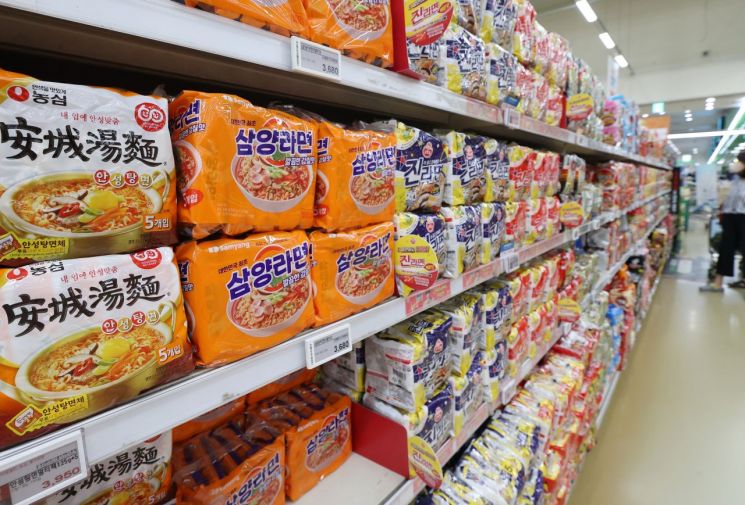
According to statistics released by the OECD on June 15, which reflect price levels based on Purchasing Power Parity (PPP), the price index for food and non-alcoholic beverages in South Korea stood at 147 in 2023. This is 47% higher than the OECD average of 100. Based on this indicator, South Korea ranked second among the 38 OECD member countries in terms of food and beverage prices. Switzerland, known as a high-price country, ranked first with a score of 163. The United States (94), Japan (126), the United Kingdom (89), and Germany (107), all of which have large economies, had lower food and beverage prices than South Korea.
The price level adjusted for PPP is an indicator that corrects for variables such as economic scale and exchange rates based on purchasing power, making it possible to compare price levels between countries. It can also be interpreted as a comparison of the actual price levels felt by people in each country.
South Korea's price index for clothing and footwear was also significantly higher than the OECD average, at 137. The price index for education (110) also exceeded the average.
On the other hand, the Household Final Consumption (HFC) price index, which covers a wide range of items, was 85, below the OECD average. Prices for transportation, culture and leisure, dining out, and housing were also lower than the average. This suggests that while overall prices are not high, basic necessities such as food and clothing are relatively expensive.
The government has recognized this issue and is working to come up with countermeasures. President Lee Jaemyung recently asked, "Is instant ramen really 2,000 won now?" during an emergency economic task force meeting, adding, "The issue of rising prices is causing significant hardship for our people."
First Vice Minister Lee Hyungil, who is serving as the acting Minister of Economy and Finance, also stated, "The price level remains high due to years of accumulated inflation, and the continued steep rise in food prices is putting a heavy burden on low- and middle-income households. We will make every effort to stabilize perceived prices."
The government, with the Ministry of Economy and Finance at the center, is preparing cross-ministerial measures to stabilize prices. In particular, the focus is on curbing the sharp increases in prices of eggs, processed foods, and other food items.
For agricultural, livestock, and fishery products, the government is considering expanding discounts through various distribution channels, including large supermarkets, traditional markets, and online malls, with government support. For items experiencing supply instability, the government is reviewing measures such as releasing reserve stocks early and monitoring supply volumes at production sites in real time to proactively manage supply and demand issues by season. There are also discussions on expanding the application of quota tariffs for imported agricultural and livestock products.
Regarding processed foods such as instant ramen, the government plans to investigate whether there have been any unfair practices, such as collusion among manufacturers and distributors, during the process of price increases. The government is also considering working with the Korea Consumer Agency and consumer protection organizations to disclose cost analyses and price information for processed foods in order to promote competition and enable rational consumer choices in the market.
© The Asia Business Daily(www.asiae.co.kr). All rights reserved.

















